High Country History Group
Contents
See images from this issue
Images from this issue
Article 1 of 14
Richard Thomas Dutton Budworth (Part II)
On September 25th 1935 a letter from Richard Budworth was published in the The Times newspaper.
FOOTBALL MEMORIES
TO THE EDITOR OF THE TIMES
Sir.- After reading your correspondent's "Football Memories" in your issue of September 19 various old memories came to me.
I can recall the time when in Rugby Football matches there was no referee, and each side appointed its own umpire. This led to various complications of course. I can recall a match in which the visitors' umpire disallowed a try by the home XV., though he was at the moment unable to see what had happened owing to a large oak tree that grew just on the touch-line. Afterwards he was always known (by supporters of the home team) as "the umpire who could see through a tree." I can also remember the delightful story of a match between two famous Yorkshire XV's. This was after referees had been instituted. The referee could blow his whistle, but only if one or both umpires waved his flag. On this occasion nothing had been scored up to nearly the call of time. Then suddenly one of the home team dropped a brilliant goal, to the huge delight of the many hundred spectators, but to their horror the referee blew his whistle and the goal was disallowed! When asked what the objection to the goal was, he said that he had seen Mr.___, the home team's umpire, waving his flag, and felt sure that unless some very gross breach of the rules had taken place, Mr.___ would never have raised an objection. He had seen nothing that could invalidate the score. As a matter of fact, Mr.___ had waved his flag in sheer delight at his own team's success!
Later on, of course the system was changed, and the referee was given the absolute decision, and the umpires being relegated to the touch-line.
I am, &c.,
R.D.BUDWORTH
Budworth spent his last days as Vicar in Horspath, Oxfordshire and died in London on 7th December 1937. He was in London to see Varsity match.
His obituary appeared in The Times on 11th December 1937, and said
CANON R.D.BUDWORTH
The funeral of Canon R.D.Budworth took place at Horspath, Oxford yesterday. The service was conducted by Prebendary L.J.Percival, Precentor of his Majesty's Chapels Royal and Domestic Chaplain to the King, the Rev.R.N.Douglas and the Rev.O.S.E.Clarendon. Family mourners and others present.
A memorial service for Canon Budworth was held yesterday at Durham School Memorial Chapel. The robed clergy present were the Bishop of Durham (Dr.Henson), the Rev.H.K.Luce (Headmaster), who officiated, the Rev.M.J.Ellingsen, and the Rev.F.A.Youngman. The Dean and Canons of Durham were absent, attending Evensong in the Cathedral, at which reference was made to the death of Canon Budworth.
On Saturday July 14th 1973 at the annual reunion dinner of the Old Dunelmian Society the headmaster of Durham School, Mr.M.W.Vallance, announced that the sports centre was to be named after the late Canon R.D.Budworth.
Images
{Article taken from the Clifton Rugby Football Club History}

Article 2 of 14
Coach Accident
A most distressing accident occurred at Harlow, on Friday night, about seven o’clock. The two-horse coach, on its way from London to the Green Man, whilst turning a corner within a very short distance of that Inn, was upset, and the coachman, John Doye, was killed upon the spot. Mr Church, a respectable farmer, at Matching, an outside passenger, was taken up in a state of insensibility, and expired at the Green Man yesterday morning. Two other passengers were bruised; but a female who was sitting on the back of the coach, and who was thrown into a ditch, escaped without the slightest injury. The cause of the overturning of the coach is not known – by some it is supposed that it came in contact with a post which stands upon the causeway; by others it is thought that the wheels went upon the path, and the sway of the coach, in turning round the corner, overbalanced it, and thus occasioned the melancholy event. A most respectable Jury, of whom Mr Crane, of the George Inn, acted as foreman, sat before R. Bartlett, Esq., coroner, at the Green Man.
After the evidence of several witnesses had been heard, the coroner, in summing up, remarked that the melancholy affair could only be attributed to accident, and as it did not appear that it had resulted from any negligence on the part of the driver, or from the unsteadiness of the horses, in either of which cases it would be their duty to fix a sum as a deodand upon the coach, he concluded they would agree to a mere nominal one. The Jury acquiesced in the opinion of the coroner, and returned a verdict, in each case, “Accidental Death,” – deodand 6d.
Mr Doye formerly drove the Stortford coach. He completed his 30th year on Sunday last, and has left a widow and three children, residing at Bishop Stortford. Several of the Jury who know him spoke of him in highest terms, as being of a steady and obliging disposition. Mr Church has left a widow and nine children. He was a stout made heavy man, and about 58 years of age.
From the Essex Standard and County Advertiser, 10 March 1832
Green Man, Churchgate Street, Old Harlow.
Matching – a village between Ongar and Harlow.
English law (formerly) a thing that had caused a person's death and was forfeited to the crown for a charitable purpose: abolished 1862
Article 3 of 14
St Margaret’s, Stanford Rivers
I have been able to discover the following names of those who served as Curates at Stanford Rivers.
1551 George Tuke
1571 Richus Wadsworth
1572 Johes Browne
1598 Geoffrey Hosier
1599 Hamo Jansor
1607 William Hodgkin
1619 John Seull
1623 Thomas Mason (Minister)
1626 George Edgley
1629 Henry Sparkman
1637 Cheyney Sparkman
1640 Francis Venellen?
1695 John Lavender
1717 Godfrey Jones
1724 Thomas Evans
1732 Daniel Bates
1754 Thomas Wetenhall
1760 Thomas Wayte
1767 Rice Evans
1775 John Holgate
1777 John Symonds
1778 H. Meene
1804 W.H. Warren
? J.P. Smith
? Montague Pennington Sparrow
1849-1854 Lewis Furnell Clarkson
1877 William Ripley
1892-1893 Arthur William Benjamin Walmsley Watts
Possibly the same Thomas Wayte who was Rector of Chipping Ongar in 1784
Article 4 of 14
Crime Watch! – 1851
From the Essex Standard 3 January 1851
Ongar Petty Session – Dec 28
Before J.F. Wright, Esq., Capel Cure, Esq., Rev. H.J. Earle, and the Rev. R. B. Turner
HIGHWAY ROBBERY – Thomas Hagg, drover, from Ingatestone, was brought up by the police, charged with robbing Mrs Ward, wife of Mr Ward, farmer, of Stanford Rivers, on the highway on Thursday evening, the 26th ult. Mrs Ward stated that she was on her way home from Chipping Ongar and at the bottom of Sandon Hill she saw the prisoner coming towards her, apparently drunk, and to avoid him she crossed to the other side of the road, when he followed and caught hold of her, and with the most dreadful threats declared he would have her money or her life; she was of course very much alarmed and begged for her life, but fortunately at that moment two children cam e in sight and her calling for assistance the fellow let her go, having obtained only sixpence for his booty. Information being given to the police at Ongar, policeman W. Smith immediately went in pursuit and found the prisoner near the place where the assault took place. He was taken into custody and clearly identified by Mrs Ward. Having heard her evidence and some corroborative circumstances spoken to by other witnesses, the Magistrates committed the prisoner for trial at the next assize.
From the Essex Standard 20 June 1885
Charge of Intimidation at Stanford Rivers
On Saturday, before the Ongar Bench, Jas. Edwards, 28, labourer, Stapleford Tawney, was summoned for having on the 5th November 1884, at Stanford Rivers, with a view to compel John Starkey Freeman to abstain from reducing the wages of the labourers and others in his service, wrongfully and without legal authority intimidated the said John Starkey Freeman.
Mr W. W. Duffield, of Chelmsford, prosecuted, and Mr J. W. Atkinson, defended. Mr Atkinson objected to the information, on the grounds that the Act of Parliament distinctly stated that it must be laid within six months of the commission of the alleged offence. It seems that on the 4th November, 1884, a letter was posted at Epping, and delivered to Mr John. S. Freeman, of the Lawns, Stanford Rivers, as follow:
‘Whoa unto him that oppresseth the poor, for he shall surely come to want.’
November 3, 1884
“Sir, You will shortly hear of something occur on your place that will make your ears tingle for it has been proved that you have been the agitator of taking down the poor man’s wage you have been to several farms where they won’t listen to you but mark you your turn is to follow you think by sinking Sir Charles men first you escape the character of it but yours is the worst character I have ever heard of. It wont be safe for you to walk out after dark yourself if you do you will be sorry you have started on the errand you have done there are men on purpose for the job but that is not the way we mean to make ourselves heard your cattle shall share in your misfortune there are one or two others that wont come off free but you are the only one that vengeance is vowed against sou you can treat this as an idle threat if you please all the same men that will do this wont belong about the neighbourhood oh no it is planed too well for that so now beware.
A CRY OF JUSTICE
“He that robeth the hireling of his hire shall meet with his reward.”
The case was dismissed on Mr Atkinson’s objection, and Mr Duffield expressed his intention of proceeding against the defendant for felony, under 36 and 37 Vic., ch.71, sec.50.
From the Essex Standard 13 April 1889.
Burglaries at Ongar and Stanford Rivers
--------------------
Breaking into the house of a County Councillor
Early on April 6th two burglaries were committed in the neighbourhood of Ongar. Shortly after one o’ clock, the residence of Mr H.E. Jones (County Councillor for the Ongar Division) at Marden Ash was entered, and some articles of value were stolen. The thieves gained admittance through the drawing room window, but being disturbed, it is supposed by a dog which was in the hall, they did not venture into any of the other rooms, but departed taking with them a silver candlestick, a valuable silver cup, and a couple of silk handkerchiefs. Had they crossed the hall into the dining room, they would have found a large quantity of valuable plate, Mr Jones having entertained a party at dinner the previous evening. Leaving Marden Ash, the burglars proceeded to Stanford Rivers, and there broke into Mrs Palmer’s house and helped themselves to wine and oranges. They took nothing else besides a silk handkerchief, a tobacco pouch, and a few small articles. No trace of the thieves has yet been discovered, but the police are making diligent enquiries.
Article 5 of 14
Kelly’s Directory of Essex 1933 – Theydon Mount
THEYDON MOUNT is a parish, on the banks of the Roding and on the London road, 3 miles southeast from Epping station on the Ongar branch of the London and North Eastern Railway, 7 south-west from
Ongar and 17 from London, in the Chelmsford division of the county, Ongar rural district and hundred, Epping petty sessional division, Waltham Abbey county court district, rural deanery of Chigwell, archdeaconry of Southend and Chelmsford diocese. The church of St. Michael, which was struck by lightning and destroyed in the year 1611, was rebuilt by Sir William Bowyer- Smith kt. and re-opened in 1614, and is now an edifice of brick in the Jacobean style, consisting of chancel, nave, south porch and an embattled western tower, containing one bell: there are monuments of the Smijths, or Smiths, from 1577 to 1815, including a canopied tomb, with effigy, to Sir Thomas Smith kt. principal secretary of state to Edward VI. and Queen Elizabeth, ob. 1577, and Philippa, his wife, ob. 1578, and another fine tomb with, effigies to Col. Sir William Smith, of Hill Hall, kt. D.L. ob. 1626, erected by Bridget Fleetwood), his widow: there are 250 sittings.
The register dates from the year 1564. The living is a rectory, united with that of Stapleford Tawney, joint net yearly value £800 in the gift of Lady Edward Hay, and held since 1913 by the Rev. Sidney Margetts Stanley M.A. of Trinity College, Dublin, who resides at Stapleford Tawney rectory, Romford. Hill Hall, a quadrangular mansion of brick with stone dressings, built in the reign of Queen Elizabeth, stands in a park and grounds, 239 acres in extent; it is the property and residence of Maj. Lord Edward Douglas John Hay. Mrs. Northcote and Mrs. Battye are ladies of the manor and the principal landowners. The soil is mixed; subsoil, London clay. The chief crops are wheat, barley, roots and beans.
The area is 1*564 acres; the population in 1931 was 169.
Letters from Epping, the nearest M. 0. & T. office.
COMMERCIAL. (Marked thus ° farm 150 acres or over.)
°Calderbank Thos. farmer, Colemans farm. T N Stapleford 304
Chambers Jack, farmer, Skinners frm
Freeman Albt. farmer, Peakes farm
Galloway Kenneth, farmer,Mount frm
°Nosworthy Jn. farmer, Hobbs Cross farm. T N Theydon. Bois 137
Tarling William John, blacksmith.
Article 6 of 14
Fare Discrimination – From the Church Magazine of Greensted, February 1927
Reverend Ralph W. Doyle (editor) turns his pen to railways . . .
“There are constant complaints about the train service and comfortless carriages – all out of date. In Germany there are better ones 4th class, and nearly all are quick, and charges not quite half what they are here.
I am also told that the L.N.E.R. Company discriminates unfairly to dwellers on the little sections of the line in regard to fares. For example, a cheap “day ticket” from Ongar to London costs 2/11. From Buckhurst Hill with its much more frequent trains any day and every day it is only1/1½ ! Is this fair? Also, when friends and strangers from London ask if there are any cheap day tickets to Ongar they are answered in a rough way: No! They are NOT told that there ARE cheap tickets to Epping which is quite near and easy, and close to the Forest that many have never seen. Is this good business Mr District Superintendent?”
From the Church Magazine of Greensted, February 1927
Article 7 of 14
Book Review – Murder & Crime, Essex
There are probably more murders in this book than in Midsomer. Martyn Lockwood has brought together an anthology of the ‘best’ of Essex murders. The book draws on sources within the Essex Police Museum in Chelmsford. Fifteen chapters each describe either a single murder or develop several related murders of a specific type into a ‘thematic group’. These groups relate to murder in circumstances such as body snatching and witchcraft. Descriptions of a number of murders, perhaps more recent, are collected together in two later chapters in the book.
Body snatching was the only way that the demands of the increasing number of anatomy schools could be satisfied. Typically more common in urban areas, the unguarded churchyards in rural Essex were still vulnerable to the snatch, as Little Leighs experienced in 1823. Witchcraft has a celebrated tradition in Essex, usually centred on Matthew Hopkins, the self styled ‘Witchfinder General’. This tradition extended even into the reign of Queen Victoria when in 1863 an elderly man died in Sible Hedingham as a result of villagers ‘swimming’ him to determine whether he was in fact a witch. Those responsible both received six months hard labour, certainly lenient even after taking into account their mental state and their eventual but unsuccessful actions in attempting to save their victim.
A chapter is devoted to poisoning by arsenic, ‘the inheritance powder’. Its label attributed to a much-feared weapon often used by a relative or acquaintance on the way to claiming a life assurance pay-out from a deceased; in some cases the life assurance had only recently been taken out, and often in the name of a young child. It is claimed that the ingestion of one hundredth of an ounce could be sufficient to cause death, and such a small quantity would be difficult to discover, of course. However, a reliable test for the detection of arsenic poisoning, developed by a Dr Marsh in the 1830s, would lead to a slow decrease in the popularity of arsenic use as the crime became more easily detectable. Changes in the law attempted to limit its availability; for example, the 1851 Sale of Arsenic Act required white arsenic to be mixed with a colouring agent, soot or indigo, to make it more difficult to introduce the powder into food without suspicion.
Comparing the crimes, trials and the sentencing of offenders, as described in the book, allows general conclusions to be drawn, as follows:
i) It is evident that sentencing was heavy but the examples quoted seem to indicate that capital punishment appears to have had limited deterrence. Its ultimate severity as a punishment resulted in a penalty that was often commuted to life imprisonment, hard labour or transportation.
ii) Examples of legislation often demonstrated reasoned attempts to adapt to changing circumstance. The restrictions, placed on the use and purchase of arsenic, demonstrate a range of reactive and resourceful measures.
iii) Without modern standards in the collection of forensic evidence, courtroom deliberations were largely dependent on witness evidence. Examples are given in the book where a crime without witness sometimes carried no safe conviction.
iv) In a number of cases, suspects absconded. It seems surprising that they could be re-arrested, sometimes apparently very efficiently even within England. Presumably the suspect would be prominent in any new locality. The arrest of suspects was generally quick and ‘justice’ followed without delay.
Martyn Lockwood is already well known through his work in the Essex Police Museum. This is an interesting addition to his successes, a book with plenty of background facts to ponder. We should congratulate our Secretary, and Journal Editor for his industry. Doubtless he will be asked to return to the subject for a further talk based on the topics raised in the book.
Lockwood, Martyn, Murder & Crime, Essex, (The History Press, 2011), pp 94, £9.99
2/11 is 2 shillings and 11pence or about 15p today.
“One might as well be hanged for a sheep as for a lamb”.
Article 8 of 14
What The Papers Said!
I have been able to glean the following articles that appeared in the Essex Newsman newspaper.
The Essex Newsman was a weekly newspaper, published on Saturdays by Meggy and Thompson in Chelmsford.
Its first edition was in 1870, and sold for half pence.
From the Essex Newsman 13th October 1883
HORSE STEALING IN ESSEX.
Among the prisoners committed for trial at the Essex Quarter Sessions next week is one George Howard, who is charged with stealing a mare at Theydon Mount, near Epping. Another man, named Wm. Herbert, is now in custody on the charge of being concerned in the offence with Howard. There is also a further charge against Herbert of stealing a horse at Woodford. Herbert, it appears was brought from Lewes to Shoreditch station, and there delivered into the custody of the police, by a brother of the prisoner Howard, this brother alleging that Herbert is the only guilty person in the matter. The police, we may add, are making praiseworthy exertions to cope with the horse stealers who infest the Epping Forest district of the county.
From the Essex Newsman 20th October 1883.
THE HORSE STEALING CASE AT THEYDON MOUNT
In this case Mr Grubb made an application that the man George Howard, who was charged with stealing a mare of John McCrae at Theydon Mount, be discharged and notice given to the prisoner Herbert, who was concerned in the case that Howard’s evidence would be given against him. The application was granted.
From the Essex Newsman 4th August 1894
STANFORD RIVERS
THE CHURCH SCHOOL CHILDREN had their annual trest in the Rectory meadow on Tuesday. Tea was served to over 200 scholars, and afterwards Mrs Rolleston distributed gifts. The Misses Rolleston, Christie, Freeman, Coe (Ongar), Milbank, and Mrtin, and Messrs Coe and C. Milbank, jun., contributed largely to the day’s enjoyment.
From the Essex Newsman 1st September 1894
STANFORD RIVERS
THE EIGHT ANNUAL OUTING AND SPORTS in connection with the Southgate Road Amateur Rowing Club took place on Saturday at Stanford Rivers. An excellent dinner was provided at the White Bear Inn. The president of the club (Mr M.T.Meredith) was presented with silver fish knives and forks in recognition of his services as captain for seven years. The sports were afterwards held, and a tea concluded the proceedings.
From the Essex Newsman 25th January 1896
STANFORD RIVERS
ENTERTAINMENT: On Tuesday an excellent entertainment was organised by the Chaplain, Revd .D. Wilkie Peregrine, took place at the Ongar Union Workhouse. Gifts of toys, sweets, &c., were distributed to the children, and of clothing to the elderly folk. Mr G. Sargent gave an interesting magic lantern show, and songs , &c, were contributed by ladies and gentlemen. Mrs Christie, Mrs Ricardo, the Misses Jones, Mrs Pelly and other ladies assisted.
From the Essex Newsman 10 February 1894.
STAPLEFORD TAWNEY.
GRAND CONCERT. A grand theatrical ballard concert took place at the Schoolroom on the evening of the 1st Inst. The Messrs. Lobb were irresistibly funny in their capital acting of the play called “Taming the Tiger.” When Mr Lobb appeared fresh from his ‘dip’ in the pond the enjoyment of the audience was at its height. The musical part of the programme was intrusted to Messrs. W. Cunliffe Smith, Sewell Lobb, Van der Gucht, H. Capel Cure, and Miss Van der Gucht. Only those who have heard these talented artistes can realise the excellence of the performances, or the applause, loud and long, of the audience. Mrs Bullock most kindly accompanied the solos, trios and quartettes throughout the evening. The kind loan of the excellent piano by Mrs Sworder was much appreciiatedl
From the Essex Newsman 1st June 1901
STANFORD RIVERS
VOLUNTEER MANOEUVRES. – On Sunday the 3rd Essex Volunteer Corps marched from their head-quarters to the Bear Inn, Stanford Rivers, which was reached late in the afternoon. The company, numbering about 100, pitched their tents in the field near the inn and stayed there for the night. On the following morning they marched off, to engage with some of their comrades who were for the time being their opponents. They were supposed to have come from Harlow, and they had an engagement late in the day.
Images
Article 9 of 14
Sarah Fuller Flower Adams
Born at Harlow 22 February 1805 - died in London on 14 August, 1848.
‘Nearer, my God, to Thee,
Nearer to Thee!
E'en though it be a cross
That raiseth me;
Still all my song would be,
Nearer, my God, to Thee,
Nearer to Thee!’
Sarah Fuller Flower was born at High Street, Old Harlow, Essex, younger daughter of Benjamin Flower, editor and the sister of composer Eliza Flower.
Her father Benjamin (1755 – 1829) was a nonconformist, journalist, political writer, editor and proprietor of the Cambridge Intelligencer, who had spent 6 months in Newgate for defamation. On his release he had married Eliza Gould and they settled down in Harlow where Benjamin became a printer. A daughter, Eliza was born on the 19th April 1803 and Sarah in 1805.
Sarah married William Bridges Adams in 1834. She had hoped to be an actress but her stage career was cut short by ill health (although she did get to play Lady Macbeth in 1837). After retiring from the stage she and her husband lived at 9, Woodbury Hill, Loughton. There she turned to writing. A friend of the poet Shelley she had a gift for lyric poetry, and also wrote 13 hymns, the most famous of which is Nearer My God, together with poems and many magazine articles. She also wrote verses for the Anti-Corn Law League.
Sarah worshipped at the Unitarian church in Finsbury, where she was influenced by the minister William Johnson Fox, a reforming journalist and social commentator. In 1841 he published, with Sarah, a book of music Hymns and Anthems.
Sarah died on August 14th 1848 at St Martin-in-the- Fields, of tuberculosis and is buried alongside her parents in the Baptist graveyard in Foster Street, Harlow. Her friends described her as ‘a woman of singular beauty and attractiveness, delicate and truly feminine, high minded and in her days of health, playful and high spirited.’ There were no children of the marriage.
Her husband William Bridges Allen (1797 – 1872) was himself a remarkable man, a civil engineer, and an ingenious and prolific inventor, especially in connection with the emerging railways. He is best remembered for his invention of the ‘fish-joint’ on rails. When he patented his new method of jointing rails, he referred to the jointing plates as Fishplates. The first large railway company to use them as standard was the LNWR, which introduced them in 1853.
Sarah authored several hymns in her lifetime, her most famous hymn being "Nearer, my God, to Thee"
There are many stories associated with this hymn. Some Titanic survivors said it was played by the ship’s orchestra as the ocean liner went down (though other survivors said it was a different song). Wallace Hartley, the bandleader on the Titanic, an employee of the White Star Line, who went down with the ship, was reportedly fond of this hymn and requested that it should be played at his funeral.
Another story concerns the death of American president William McKinley, assassinated in 1901. It was reported that among McKinley’s last words were “‘Nearer, my God, to Thee, e’en though it be a cross,’ has been my constant prayer.” On the afternoon of September 13, 1901, after five minutes of silence across the nation, bands in Union and Madison Squares in New York City played the hymn in memory of the fallen president. It was also played at a memorial service for him in Westminster Abbey, London.
The hymn was also played as the body of the assassinated American President James Garfield was interred at Lakeview Cemetery in Cleveland, Ohio, who had been shot on the 2nd July 1881.
William and Sarah are both remembered and a blue plaque can be seen on the site of the house they occupied at Woodbury Hill, Loughton,
Sarah’s elder sister Eliza completed the remarkable family. She was a composer, friend of Robert Browning, and wrote the music for all her sister’s hymns, and like Sarah was not to survive into old age. She died of consumption on the 12th December 1846 and is also buried in the family grave in Foster Street.
The Grave in Foster Street, Harlow
There is another local connection with the sinking of the Titanic.
Father Thomas Roussel Davids Byles (born 26 February 1870, died 15 April 1912)
He was born Roussel Davids Byles in Leeds, Yorkshire, the eldest of seven children of the Reverend Dr. Alfred Holden Byles, a congregationalist minister, and his wife Louisa. He attended Leamington College and Rossall School, Fleetwood, Lancashire, between 1885 and 1889, then went to Balliol College, Oxford in 1889 to study theology, graduating with a Bachelor of Arts degree in 1894. While at Oxford, Byles converted to the Roman Catholic faith, taking the name Thomas. In 1899, he studied for the priesthood, and was ordained in 1902. He was assigned to St. Helen's Parish in Ongar, Essex in 1905.
Invited to officiate at the wedding of his younger brother William prompted Father Byles to make the trip to America. He booked his passage on The Titanic.
On the 15th April, Father Byles was walking on the upper deck reciting his breviary when the Titanic struck the iceberg. As the ship was sinking, he assisted many Third-Class passengers up to the Boat Deck to the lifeboats. He reputedly twice refused a place on a lifeboat. Toward the very end, he prayed the rosary and other prayers, heard confessions and gave absolution to more than a hundred passengers who remained trapped on the stern of the ship after all of the lifeboats had been launched.
His body was never recovered. His brothers installed a door in memory of him at St. Helen's Catholic Church in Ongar, and there is also a stained glass window.
Images
Article 10 of 14
Essex To be SOLD by AUCTION By SAMUEL SECKHAM
At Mr. JOHN TANNER’S, the Globe Inn, Epping by order of the Executor and Executrix of Mr. Stephen Jones, deceased, on Friday the 17th of August 1787, at Two o’clock precisely in TWO LOTS.
A VALUABLE FREEHOLD, and COPYHOLD ESTATE, with several sticks of Oak, Ash, and Elm Timber, live fences and well supplied with water, agreeably situated near TOOT HILL, in the parish of STANFORD RIVERS, within three miles distance of Ongar, and five of Epping, two considerable market towns, and twenty miles from the Metropolis, both in very high condition.
LOT 1. A COPYHOLD ESTATE of INHERITANCE, with a convenient Farm House, called or known by the name of COLEMAN’S, with barn, stable, cow-house, cart-shed, hog-stye, &c., a good kitchen garden and orchard, well planted, five inclosed arable and pasture fields, contained of the Manor of Stanford Rivers, and paying a quit rent of 7 shillings per annum.
LOT 2. Opposite to the above, are four very valuable FREEHOLD inclosed arable and pasture fields, known by the name of KING’s; containing 10 acres, 2 rood, 16 perches, paying a quit rent of 2shillings per annum.
The above are let to Samuel Smith at will, at a low rent of £26 per annum, who will show the premises.
Printed particulars and conditions of the sale of the Estates will be issued in due time, or may be known by applying to Mr Walkley, at Epping, or Mr Seckham, Auctioneer, Grange Hill, Chigwell, Essex.
[Advertisement from the Chelmsford Chronicle 10th August 1787]
Article 11 of 14
ESSEX HISTORY GROUP
The Group meets at the Essex Record Office on the first Tuesday of the month and meetings are open and free to all.
The programme for 2012 is detailed below.
January 3 Borobadur and other sacred sites of Indonesia
Miriam Stead
February 7 Edward Costello of the 95th Rifles
Stuart Warburton
March 6 How to speak Essex
Martin Astell
April 3 Celebrating 30 years of Epping Forest District Museum
Carly Hearn
May 1 Stand and Deliver! Highwaymen in Essex and beyond
Jeff Page
June 12 Queen Victoria’s Diamond Jubilee celebrations in Essex
Jane Allnutt
September 4 Beatrix Potter – Her art and inspiration – The Lake District
Dudley Chignall
October 2 How not to dispose of a body
Doug Newlyn
November 6 The work of the Thames Sailing Barge Trust
David Gibson
December 4 Christmas Traditions
Claire Driver
All meetings start at 10.30 am and are held in the lecture theatre of the Essex Record Office. A charge of £1 is made for tea/coffee and biscuits. For more information telephone: 01245 244644, Essex Record Office, Wharf Road, Chelmsford, CM2 6YT
If you would like to receive this programme by email please email: marilyn.hawkes@essex.gov.uk with ‘ESHS’ in the subject line and we will add you to our mailing list. Your email address will not be shared or used for any other purpose. You can unsubscribe at any time by mailing us with ‘ESHS’ – unsubscribe’ in the subject line.
Article 12 of 14
A Victorian Celebration of Christmas
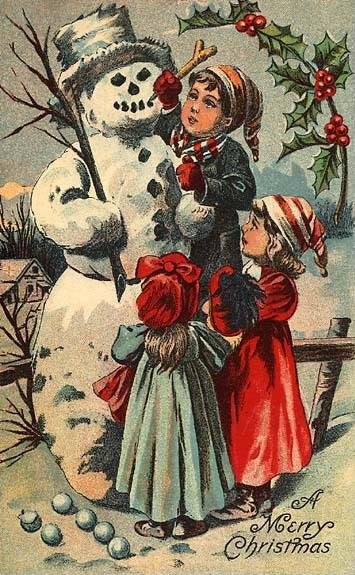
For thousands of years people around the world have enjoyed midwinter festivals. With the arrival of Christianity, pagan festivals became mixed with Christmas celebrations. One of the traditions is the custom of bedecking houses and churches with mistletoe, holly and ivy. Apparently, as well as their magical connection in protecting us from evil spirits, they also encourage the return of spring.
No era in history however, has influenced the way in which we celebrate Christmas, quite as much as the Victorians.
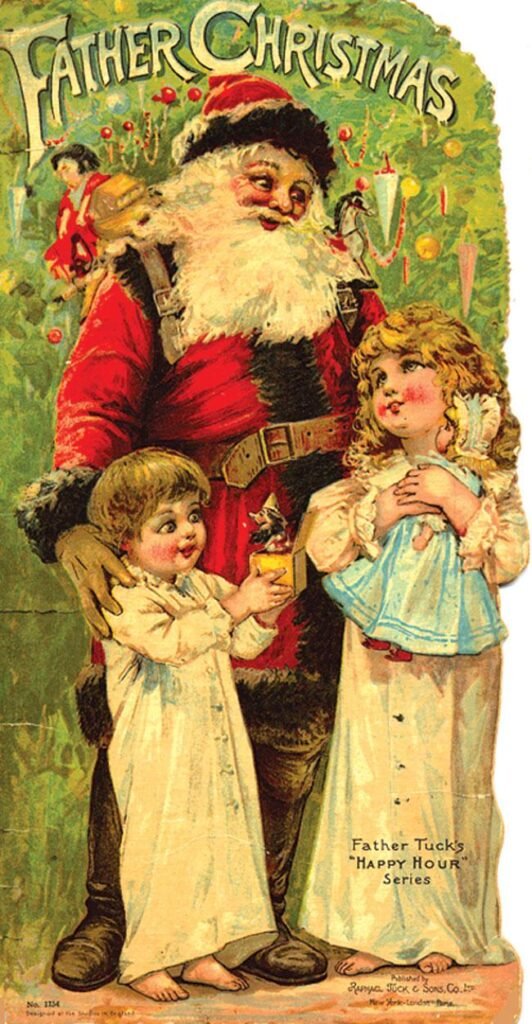
Before Queen Victoria came to the throne in 1837, nobody in Britain had heard of Father Christmas. No Christmas cards were sent and most people did not have holidays from work. The wealth and technologies generated by the industrial revolution of the Victorian era changed the face of Christmas forever. Sentimental do-gooders like Charles Dickens wrote books like "Christmas Carol", published in 1843, which actually encouraged rich Victorians to redistribute their wealth by giving money and gifts to the poor - Humbug! These radical middle class ideals eventually spread to the not-quite-so-poor as well.
The wealth generated by the new factories and industries of the Victorian age allowed middle class families in England and Wales to take time off work and celebrate over two days, Christmas Day and Boxing Day. Boxing Day, December 26th, earned its name as the day servants and working people opened the boxes in which they had collected gifts of money from the "rich folk". The railways allowed the country folk who had moved into the towns and cities in search of work to return home for a family Christmas.
The "Penny Post" was first introduced in Britain in 1840 by Rowland Hill. The idea was simple, a penny stamp paid for the postage of a letter or card to anywhere in Britain. This simple idea paved the way for the sending of the first Christmas cards. Sir Henry Cole tested the water in 1843 by printing a thousand cards for sale in his art shop in London at one shilling each. The popularity of sending cards was helped along when in 1870 a halfpenny postage rate was introduced as a result of the efficiencies brought about by railways.
Prince Albert helped to make the Christmas tree as popular in Britain as they where in his native Germany, when he brought one to Windsor Castle in the 1840's.
Crackers were invented by Tom Smith, a London sweet maker in 1846. The original idea was to wrap his sweets in a twist of fancy coloured paper, but this developed and sold much better when he added love notes (motto's), paper hats, and small toys.
[taken from Historic-uk.com]
Article 13 of 14
PROGRAMME 2011/2012
PROGRAMME 2011/2012
Thursday, 23 February, 2012
“Stanford Rivers Personalities”
Robert Brooks
**
Thursday, 22 March, 2012
AGM followed by
“The High Country Then and Now”
**
Thursday, 26 April, 2012
“How to Speak Essex”
Martin Astell (Essex Record Ofice)
The High Country History Group meets in Toot Hill Village Hall.
Meetings start at 8.00pm.
Visitors £3. Refreshments.
Article 14 of 14
Book Review – Murder & Crime Essex by Martyn Lockwood
An in-depth look at many of the county’s worst crimes and criminals
This chilling collection of true stories brings together a number of murders and other horrible crimes that have taken place in Essex over the last 200 years; stories that shocked not only the county but made headline news throughout the country. Included are: the brutal murder of Police Sgt Eves at Purleigh in 1893; the murder of a Chief Constable; the Sible Hedingham witchcraft case, the tale of Sally Arsenic; the Rayleigh Bath Chair murder; the Harwich Death Club; the infamous Coggeshall gang; the Basildon Bungalow murder and the stories of body snatchers at work.
Illustrated with a wide range of contemporary photographs and archive ephemera drawn from the Essex Police Museum
A fascinating alternative social history of the county’s villainous past
Includes crimes from around the county, many of which have not been widely covered before
Copies can be obtained from the Author for £7.99 – a saving of £2 on the published price.
Images