High Country History Group
Contents
Article 1 of 11
Coopersale House, Theydon Garnon – an enigma
The December 2013 Journal provided the later history of Coopersale House. Its earlier history is equally interesting, though it raises a number of unanswerable questions.
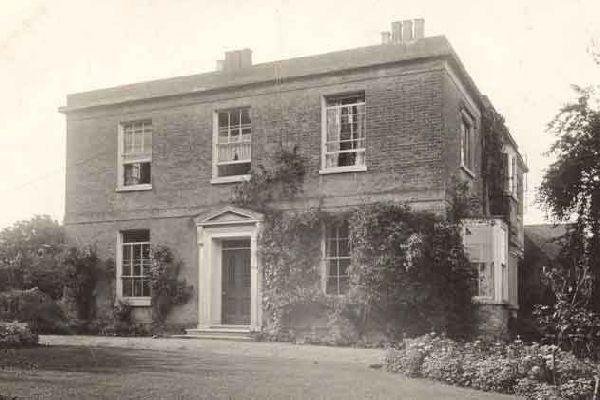
The early origins of the house are obscure. The Archer family owned land in and around the hamlet of Coopersale from the end of the C16 and they rose to particular eminence with Sir John Archer (1598-1681/2), MP for Essex in 1653 and judge in the Court of Common Pleas from 1663. He is almost certainly the Dr Archer who paid tax on an unidentified house with 24 hearths in Theydon Garnon in 1670, making it one of the largest houses in Essex at that time (Edward Smith of Hill Hall, for example, paid for 22 hearths). The oldest part of the present house dates from the 1670s or 1680s, and an overmantel of that date bears the arms of Archer, so it is reasonable to assume that Archer’s substantial 24 hearth house was indeed Coopersale House. The history of the building is complicated - part was replaced early in the C18 and there were further alterations in the 1760s by the architect John Redgrave. In the C20 the top storey was removed and further substantial alterations made.
The history of the garden is equally complicated. A delivery of live carp is recorded in 1694, indicating that a fish pond already existed. By 1738 William Eyre Archer (d.1739) had embarked on a radical now layout designed by Adam Holt whose plan and partial specification have survived. The central feature was a large lake shaped as an irregular polygon, surrounded by steeply sloping banks and tiered walks. There were other ponds too – two ‘stews’ (the ‘great stew’ being close to the NW end of the lake) - and a grand avenue running as far as the present site of St Margaret’s Hospital. Just to the south of the avenue was a ‘botte lake’ (boat lake, perhaps?). There were other odd features which a short article lacks the space to discuss, other than to mention that the vegetable garden was immediately in front of the house, a feature that rapidly became unfashionable.
The next change dates from 1758 when a new walled vegetable garden was built in the NW corner of the gardens, well away from the house, for William Eyre Archer’s son, John (1716-1800). Though his principal seat was in Berkshire, he continued to make improvements at Coopersale, including further alterations to the house in 1763-4. He diverted the road away from the front of the house in 1770, and the dogleg required to achieve this is still obvious on modern maps. Then, in 1774, John Archer was invoiced by the well-known garden designer ‘Capability’ Brown for 35 guineas for ‘visits and plans’.
No plans have survived, and it is far from clear what, if any, changes were made on Brown’s recommendations. The Chapman & Andre map, published in 1777 but surveyed several years earlier, shows the large lake thinned and elongated into a serpentine shape, and extended significantly to the NW. This is exactly what Brown would have normally advised. The Ordnance Survey surveyors’ drawings of 1799 show the same alteration, but all later maps show the lake in its early C18 form as an irregular polygon. Was the lake altered to Brown’s specifications, and then re-dug to its earlier shape with steeply cut banks in the C19?
Within two years of Brown’s visit to Coopersale House, John Archer’s wife died and the distraught widower abandoned the house, without even leaving a caretaker in charge. By the time of his death in 1800, the courtyard was a wilderness of tall weeds, owls had taken possession of the principal drawing room and pigeons ‘had long made their nests in the library’ where ‘several loads of dung cumbered the floor’. The majority of any improvements that might have been made between Brown’s visit in 1774 and Mrs Archer’s death two years later would have been lost to neglect. However the problem of explaining the shape of the lake remains. There are three possibilities.
Firstly, the lake was modified to a shape recommended by Brown, but in the years of neglect the shallower extension silted up and the whole thing returned to its early C18 form within its original steeply cut banks. There are a number of objections this – mainly that the extension would almost certainly have cut through and destroyed the ‘great stew’. This pond, however, still survives in its original position in the present-day garden. In addition there is no trace of the extension in the adjoining field on modern aerial photographs.
Secondly, as above, the lake was modified but after two decades of silting, it proved easier to rescue the steeply cut earlier section and abandon Brown’s extension. If Brown’s extension had been very shallow, the ‘great stew’ might have survived under it, and could have been restored to its original form. However there is still the problem of the lack of any trace of a scar left by the extended lake in the adjoining farm land.
Thirdly, Chapman and Andre’s survey was done between 1772 and 1774, probably before any of Brown’s improvements had been completed. Indeed a sketch plan made in June 1773 shows that the lake was still in its early C18 form. Why then is the altered lake shown by Chapman and Andre? A possible explanation is that when these surveyors arrived at Coopersale, John Archer took them indoors and showed them what he planned to do. He could have suggested that, if they wanted their map to be up-to-date, they should follow Brown’s drawings rather than what was still on the ground. In the event, the improvements were never made due to the death of John Archer’s wife. It is known that Chapman and Andre’s survey had a reputation for great accuracy. Could the Ordnance Survey surveyors have chosen to follow what the earlier map makers had drawn, rather than measuring up what was actually on the ground in 1799, much of which would have been hidden in the undergrowth after 25 years of neglect? It would be very interesting to know if there are other examples of the OS copying the inaccuracies of earlier surveys.
Sources:
Archer family papers & accounts 1726-50: ERO D/DU 363/4
Bettley, J., & Pevsner, N., 2007 The Buildings of England: Essex, Yale University Press
BRO = Berkshire Record Office
Chapman & Andre’s map of Essex 1777
Colvin, H., 2008 Biographical Dictionary of British Architects, Yale University Press
Coopersale boundary map 1773: BRO acc 6199.25
Coopersale estate plan 1738: BRO acc 6199.21
Coopersale new kitchen garden 1758: BRO acc 6181.79
Cowell, F., 1970 ‘Adam Holt (?1691-1750), gardener: his work at Coopersale House, Essex’ in Garden History, 26 (2)
Dubois Landscape Survey Group, 1995 ‘Coopersale: a Survey of the Landscape’ (typescript)
English Heritage Register of Park and Gardens: Coopersale House entry amended February 1999, edited April 2001
Ferguson, C., Thornton, C., & Wareham, A. (eds), 2012 Essex Hearth Tax, British Record Society
Houblon, Lady A., 1907 The Houblon Family; its Story and Times, ii, London
Ordnance Survey surveyors’ drawings 1799 (in ERO)
Royal Commission on Historical Monuments: Essex, ii (1921)
Stroud, D., 1975 Capability Brown, Faber

Article 2 of 11
Transportation reprived (of Samuel James of Theydon Garnon, 1797)
Samuel James, who was born in 1784 at Theydon Garnon, was on the 26 November 1797 accused of stealing 6d in money and a banknote, value £10, the property of Samuel Miller, of Theydon Garnon. He appeared at the Lent Assizes at Chelmsford in March 1798 and was convicted and sentenced to death.
However he was reprieved and instead transported to Australia for 7 years. He travelled on the Perseus, which left Spithead on the 12th February 1802 reaching Port Jackson on the 4th August journey of some 173 days.
In 1808 he married Anne Bean, another convicted felon who had also been transported and their marriage was to produce 12 children. Samuel died in 1833.
After he had served his time he was given 80 acres of land and 4 horned cattle. In the 1828 Census for New South Wales he is shown as a ‘Constable.’
As an aside to the story, Samuel’s father, also named Samuel was buried at Theydon Garnon in 1829. A note in the margin of the burial register states,
“this body was disinterred, but the shroud was not taken.”
Article 3 of 11
Boxing Match at Ongar
From the Ipswich Journal 13 October 1787
Chelmsford October 12:
Saturday last a battle was fought at Ongar, between Thomas Lloyd, of Clunn, in Shropshire, and John Smith of Toot Hill, in the parish of Ongar, for a guinea a side: it was a very hard battle, as they fought 16 rounds before it was decided, when the Welchman, giving Smith many hard blows, he was obliged to give out, and the Welchman remained master of the field.
From Jackson’s Oxford Journal 30 May 1829
Bare-knuckle Fight
The battle between Barney Aaron and Jem Raines took place yesterday on Knavestock (sic) Green, Essex, for £50 a side. After thirteen severely contested round, occupying 28 minutes, Barney was declared the victor.
Images
Boxing Match at Ongar
Article 4 of 11
Greensted Church and James Barlow, an historical record of his life
James Barlow was the son of Charles and Mary Barlow. He was baptised at about 2 years of age together with his younger sister Louisa on the 5thJune 1802 in Chipping Ongar. Charles died in 1844 aged 90years.
James married Elisabeth Sammes (baptised 3rd May 1806 at Greensted) daughter of John and Sarah Sammes at St Leonards Church, Shoreditch on 28th August 1829. For some reason they were married again in Havering Atte Bower on the 28th August 1831.
From this marriage he had a son Charles (1832 – 1858); daughter Maria (1834 – 1878) she married a James Drake and ‘died worn out after bearing 15 children’; son Harry (1835 -1890) Both sons were builders and carpenters. Elisabeth died in 1839 aged 20yrs and is buries at St Andrews, Greensted.
James then married a Hannah Trayler in London, on 25th July 1840. On the marriage certificate James is shown as a carpenter, and his father Charles as a servant. Hannah is shown as a spinster and her father as a miller. The Trayler family were a ‘comfortably off Baptist family’. From this marriage he had a son Francis (1842 – 1891); George Frederick (1844 – 1923); Walter James (1846 – 1887); Julia (1847-1917) - she married one Edward Rose; all baptised in Chipping Ongar ; John (1848 – 1849); Edward (1850 – 1922) baptised Greensted; Joseph baptised Greensted. (1850 – 1874) and Lewis (1854 – 1855 aged 10months). An oddity is that when Joseph died a newspaper report stated that he was the 7th son, not the 6th. Maybe there was a missing son but there does not appear to be much room to fit another in.
By 1816 James and Hannah were running the Kings Head PH in High Street Chipping Ongar, and ran the pub for a total of 15years.
By 1839 James is described as a master carpenter and it was then that he and his brother (brother in law?) a builder in Ongar were engaged in restoration work at St Andrews Church, Greensted between 1839 and 1840. At this time James carved the panels in the two oak spandrels which depict the martyrdom of St Edmund.
It was he also who carved the beautiful lectern using a penknife in a downstairs room when he was unable to sleep because of his bad asthma. Carved beneath the tail feathers of the Eagle are the words ‘Barlow Ongar’ and a date of 1847.
The custom of the Court of the Dunmow Flitch fell into desuetude in 1845 but was revived in 1855 when James Barlow applied to the Committee for the chance to obtain the prized flitch, and agreed to he and Hannah being examined by the court. They and another couple duly appeared before the court on the 6th July 1855, and a report in what is to be believed to be the Chelmsford Chronicle, records that ‘Mrs. Barlow was good humoured, good looking of face and exited much attention from the audience, and that Mr Barlow appears to be between 40 and 50 years of age
On being subjected to examination James stated that he had been born in the parish of Shelley, starting his working life as a ploughboy. He then stated that he had become a general factotum for 4 years to lady (this brought laughter from the audience) He then worked as a journeyman for 9 years when he then took on the business of his brother in law, and had lived in Ongar for 23 years.
Asked how long had he known Hannah before they were married , he stated 4 years and that their courtship had had been undertaken by letter as they were living 100 miles apart, but that seeing her good qualities had selected her from several others. He denied using any form of ‘sympathetic love powder’ during those years as an enticement to her.
Bothe he and Hannah answered all questions put to them under further examination, and although James stated that he was not an eloquent speaker, he caused a great deal of laughter amongst the audience with his humorous answers. The jury then all agreed that they were deserving of the flitch. (a full transcript of the ‘trial’ plus photographs of them both are retained at the ERO. It is said that Hannah resembled HRH Queen Victoria.)
James Barlow died in 1863 aged 58 years and Hannah in 1880 aged 63 years. Her address shown in the burial register is shown as Grays Farm, High Ongar. They and Elisabeth and many of the children are all buries in the churchyard at Greensted.
There is a copy of James will available but it is difficult to decipher.
He appears to have left a sum of ten pounds to Charles Barlow, Harry Barlow and Maria the wife of James Barlow Jnr. The rest of the estate is left to Hannah.
There is a copy of a bill for a Mr. John Fewell of Marden Ash dated
21st. February 1907 for the supply of a coffin, digging of the grave and various paperwork for a Mary Ann Fewell aged 65 years at the cost of £7.6.0. The heading on the bill of costs shows Harry Barlow, Builder and Timber Merchant, Plumber and Sanitary Engineer of Ongar. So it is a possibility that the date shown as his death is incorrect, or of course that this Harry is the offspring of one of James sons although I think this unlikely given the dates that are available to us.
The main body of this information was provided by Mrs Carol Day who has undertaken a great deal of research into her relative. She is the cousin of Douglas Barlow who lives in a farmhouse in Hertfordshire built in 1726 which at one time was connected to Julia Barlow. He informed me that his great grandfather was a Police Officer in the 1930’s, as were other members of the family. James Barlow’s grandson, also James was a championship walker and well known as a boxer in his day.
Images
St Andrews, Greensted
Greensted Church
[Sources: Carol and Chris Day, Douglas Barlow, Essex Records Office and Greensted Parish records.]
Article 5 of 11
Mad Dog
The Essex Standard 10 August 1878
On Monday, July 29, a hay carter, named John Hunn, who was better known in the district by the name of Blondin, was taken ill while at a beer-house at Standford Rivers, and was removed to the Ongar Union-house, where he was attended by Dr. Grattan, who found him to be in a delirious state. He gradually became worse, and manifested symptoms of hydrophobia, and he died on Thursday, August 1, Dr. Grattan being of opinion from the symptoms that death was due to hydrophobia.
The deceased was bitten on the 21st May, 1874, by the same dog which attacked Mr. Brown, son of Mr. Brown, farmer and dealer, of Standford Rivers, who, it will be remembered, died about 12 months since from hydrophobia, after suffering intensely from this terrible visitation.
Article 6 of 11
Palaeography
Palaeography is the study of old handwriting. I have recently completed two 10-week courses learning to interpret documents in a style of handwriting known as Secretary Hand.
Secretary Hand was commonly used in the sixteenth and seventeenth century. At first sight the pen and ink squiggles look utterly confusing. However with practice and guess-work it becomes possible to read old parish registers, Wills, inventories, letters and other documents. This is then a very useful skill for local and family historians.
On the basis that practice is a good thing, we begin a new series in the Journal, starting with a Poor Law document from Stanford Rivers dated 1598.
The Care of the Poor in Elizabethan Essex
This is the title of an item written in ‘The Essex Review’ in 1953 by county archivist Frederick Emmison, and is further reading should you wish to follow up Martyn Lockwood’s talk to the High Country History Group last November. On one page is a form or template of a vagrants’ certificate from “Stanford-riuers” in 1598. It appears in ‘Examples of English Handwriting, 1150-1750’ written by Hilda Grieve, another one-time employee at the Essex Record Office, originally published in 1954 and still a standard text for students of palaeography.
The following is a transcription. Palaeographers will set out the document using a new line in the transcript for each new line in the original document. They will copy as faithfully as possible the spelling of the original putting in square brackets any added letters. It is also standard practice to provide footnote references explaining difficult or unusual words.
So here goes ….
1
The forme of the certificate
2
giuen to the vagrant poore taken
3
and punished at Stanford-riuers
4
To all xpian people vnto whome this present wrighting shall app[er]taine
5
be it knowen that whereas T.M. borne as him selfe confesseth in L.
6
in the county of D. was taken at Stanfordrivers in the county of
7
Essex vagrantly wandring contrary to her Ma[ies]ties law in that behalfe
8
p[ro]vided and then and there suffered such punishment as in the sayd
9
statute is appoytnted for such offenders. wee the minister and Constable
10
of the towne aforesayd by those present[es] dismiss and direct the sayd
11
T.M. to travell the neerest and readyest way to the place aboue
12
named. Allowing and limitting him to the accomplishment of that his
13
iourney the space of [blank] dayes next ensueing the date hereof.
14
Yeoven &c.
15
The names of such vagarant
16
persons as haue received pu-
17
nishment and certificate at
18
Stanford riuers.
19
1598
Hilda Grieve provides a note that the document was intended to be used as a guide for officers in Stanford Rivers and was entered in the Parish Book.
Images
oor Law document from Stanford Rivers dated 1598.
The Care of the Poor in Elizabethan Essex
Essex Review. Volume LXII, No 248. p7-28
The letters u and v were interchangeable as were the letters i and j.
xp is Greek shorthand for Christ, so ‘xpian’ is Christian
Meaning ‘writing’. Spelling was not consistent at all
“Her Majesty’s” being Queen Elizabeth I.
Meaning ‘sayd’. This is an example of y being used for i. See also ‘appoynted’ in line 9 and ‘aforesayd’ in line 10.
Yeoven is another word for given (source: Oxford English Dictionary online – which you have an Essex Library Card you can access free of charge).
This appears to the left of the text of line 16.
Article 7 of 11
Place Names Quiz
The ‘Essex Review’ in 1936 had an item on ‘Feet of Fines for Essex’ in which the author Rev Llewellyn C Watson Bullock listed unusual spellings of Essex parishes – giving the modern name in brackets. Can you sort these out?
Essex Review. Volume XLV No 177 (January 1936)
Article 8 of 11
Greenstead Church by Henry Laver F.S.A
An Extract from the Transactions of the Essex Archaeological Society
‘New Series’ Volume X, Part II (1907). Henry Laver was President of the Society and read this “paper” when members visited the church on 6 October 1906.
It is rather surprising so little should be recorded in this Society's Transactions of either the history or architecture of this most interesting church, peculiar as it is, and as being the one existing example of a style which prevailed so universally during the Saxon period for buildings for domestic as well as for ecclesiastical and defensive purposes. It is also very remarkable that, notwithstanding the value and interest of this building, there should be no satisfactory illustration of it anywhere in the Society's Transactions.
It is true that in vol. iv. p. 90, there is a very poor sketch of the church printed in the middle of the letter-press of an article by an anonymous author on timber work in churches, but of special notices of the building there are scarcely any to be found, although the Society has on various occasions included a visit to this church in its excursions.
The fact that this most interesting and valuable historical monument has been so thoroughly neglected by the county Society, diminishes somewhat the surprise that otherwise might be felt at the scant notices which it has received in other and kindred societies, and amongst authors who have written on the ancient architecture of this kingdom.
Very little has appeared anywhere in reference to this relic, and the earliest notice we have of it, beyond the information contained in early Charters, is in a communication to the Society of Antiquaries of London by Mr. Smart Lethieullier, dated January the 21st, 1751, in which he gives a full description of the church, as then existing, and he also enters somewhat fully into its history. In the Builder for October the 8th, 1904, p. 351, is an excellent article on this church. The author of this article writes:-
The following is an exact transcript of a letter dated from Aldersbrook on January 21st, 1751-2 (Stowe MSS. 752, f. 49):-
In obedience to your command I send you the best account I can collect concerning our very singular parish church at Greensted, juxta Ongar, in this county.
What is now the body of the church was the whole of the original fabrick. It is 29 ft. 9 in. long and 14 ft. wide. The sides from the present ground without, only 5 ft 6 in high, on which the primitive roof depended, but whether of thatch or of other materials, we have nothing to determine by. This structure is entirely composed of the bodies of oak-trees split and roughly hewn on both sides. They were sett upright close to one another and lett into a sill at bottom and a plate at top, where they are fasten'd with wooden pins all in a very rough manner at first, and now much corroded and worn with age.
There appears one little contrivance of art in ye building, viz., that the edge of one tree is made to slip a little within its neighbour, doubtless to prevent the wind from blowing thro, but upon the whole I think an ax, a chizzel, a mallet, and an augre were tools sufficient to compleat the fabrick.
It was no small pleasure to me to meet with a passage quoted from an ancient MS., which in some measure I think determines the time and occasion of erecting this uncommon fabrick.
Leland and the compilers of the Monasticon have extracted a passage from a register once belonging to the Abbey of St. Edmunds Bury in Suffolk, wherein it is recorded that the body of St. Edmund the King and Martyr, being on its way from London to Bury, was lodg'd one night in Stapleford in Essex, when the Ld of the manor was by its presence miraculously cured of an infirmity he had long labour'd under; and then says the register- Idem apud Aungre hospitiabaltur ubi in cjus memoria ligdea capella permanet hodie. 'Tis no wonder that the monk who drew up this register should mistake Aungre for Greensted in his placing this chapel, since they are hardly a mile asunder; but it is evident that the present road thro Ongar is a much later one, since it cutts thro the outward fortifications of the castle, which was built there in Henry ye 2nd's time. And we have both tradition and visible remains that the antient road from London into Suffolk ran thro Oldford, Abridge, Stapleford, Greensted (perhaps Green Street), Dunmowe, and Clare upon the borders of the two counties.
The forementioned Translation of the body of St. Edmund appears to have been in the year 1013. For the Danish fleet under Turkill, having committed great ravages in most parts of England, Ailwinus bishop of Elmham in ye year 1010, the 30th of King Ethelred, caused the holy body to be transported to London for safety against those ravagers, and peace being soon after bought, the body was three years after recarried to Bury. From all which I think we may reasonably conjecture that this wooden fabrick was at that time erected on purpose to receive the holy body, and having been once so honour'd was preserved with veneration and converted into a parish church with the addition of a small chancel in much later ages.
Perhaps here is better authority for the history of this piece of antiquity than we have for any other of so remote an age, and of no more considerable import in its original; I look upon it as a thing done in haste for a particular occasion, and not as any model for the style of the age it was erected in. I fear I have been tedious, but as you seem to esteem it a curious piece of antiquity I was willing to sett it in as clear a light as I was able.
Mr. Lethieullier forwarded some drawings of the church to Dr. Lyttleton with his letter, and the Society of Antiquaries considered them to be of sufficient importance to be figured in Velusta Monumenta (vol. ii., pl. 7). On that plate is given a general south view of the church drawn in 1748, of the timber wall of the north side, and of the timbers of the west end of the church. A single dormer window, of four lights, is shown in the roof of the nave on the south side. There is a clumsily-made plain wooden porch on the same side. The priests, door, of moulded brick, with a window each side, appears in the chancel. A vacant space between the logs for a north doorway to the nave is also shown, though apparently plastered up. But the most interesting feature of these drawings is that of "the west end of the church." It is an exterior view of the west gable, formed of seventeen split logs with their rounded surfaces outwards, rising in the centre to a considerable height. The date and construction of this gable is evidently coeval with the side walls. A very small doorway is shown as roughly cut through parts of the two centre logs. This drawing could not have been an invention, and is clearly intended to show the condition of the west end before the tower was added, and which must then have remained with the tower simply built up against. This very small doorway seems at that time to have been the only entrance into the tower. The west end remained, we suppose, in this primitive condition until the restoration of 1848-9.
In Vetusta Moultinenta, vol. ii. pl. 7, are some illustrations of the church as it existed in 1751. One only of these plates, that showing the west end, will be reproduced, as it affords an excellent example of the way the timbers were used in the construction of the edifice. Two of the other illustrations are those which appeared with the article previously mentioned in the Builder, and I have to thank the editor of that journal for his great kindness in allowing me the use of them, and that of the north side is from a sketch made by Major Bale, expressly for use on this occasion.
The next notice we have of this church was by Morant in his History of Essex, published 1768. He says, in vol i. p. 152:-
It is a very uncommon antique building, for the walls are of timber not framed, but trees split or sawn asunder and set into the ground. There is a print of it engraved by the Society of Antiquaries.
With this short notice lie dismisses it, apparently not seeing its value. Other Essex historians have followed Morant, in simply referring to the fact that such a building existed.
In 1869 the rector of Greenstead, the Rev. Philip W. Ray, published a history of this church and parish, he gave the same information which the Society of Antiquaries already possessed and also a most accurate description of the mode of construction, with longitudinal and transverse sections of the trees. He said:-
The building is formed of split trunks of oak trees, the top part being cut to a thin edge which is let into a deep groove in the plate and pinned. The bottoms of these upright timbers were morticed into the cill.
The timbers in the west end were carried up in the middle as high as the ridge of the roof.
Accompanying the description are two views of the church, one before the first restoration in 1848 and one after it.
It was during his incumbency the first restoration in 1848 took place under the direction of Mr. T. H. Wyatt as architect. And antiquaries can never be sufficiently grateful to all concerned for the care taken of the building and for the fact that they preserved the church, instead of erecting a brand new Victorian abomination in its place.
In the Essex Naturalist, vol. xii. p.263 is a description of an excursion of the Essex Field Club, during which a visit was paid to this church. In the report of this meeting a very good account is given of the building and of its history.
A reference has been made to an article " Timber Work in Churches," which appeared in vol. iv. p.90, of the Transactions of the Essex Archaeological Society. The author of this paper says:-
It is a veritable example of the rude log churches which our Saxon ancestors used to build in the far off days, before the Norman conquest. Its preservation to the present day, and in a very perfect and unaltered condition, owing, doubtless, to the peculiar sanctity which attached to the building as having been the temporary shrine of the remains of St. Edmund, the King and Martyr, is a very remarkable fact. This Saxon log church forms the existing nave of the present parish church of Greenstead.
There is a foot-note to the same page which says that the church which Finan built at Lindisfarn, according to Bede, was composed not of stone but more scollorum of cleft wood covered with reeds. In continuation of the same article on the next page is a description of the wood-work of this church of Greenstead; but there is nothing further that we need quote at present.
On the 28th of July, 1881, the Essex Archaeological Society met at Chipping Ongar and in the course of the excursion visited this church.
In the Essex Archaeological Society's Transactions vol. ii. N.S. p 396, is a description of the visit when Mr. Chas. F. Hayward, F.S.A., in addressing the meeting, said that this structure had no often been described and illustrated that there was really nothing new to be said of it, and then some quotations were given from a pamphlet by Capt. Budworth on the church, and also from another work, Memorials of the Antiquities and Architecture of Essex by the Rev. Allred Suckling, in which there are illustrations and descriptions of this church, but Mr. Hayward gave reasons why he did not consider the illustrations quite correct.
A further mention of Greenstead church in our Transactions, is in the report of a general meeting of the Society at Colchester, on the 29th day of February, 1892. This report is recorded in vol. iv. N.S. p.223, and during the meeting Mr. I. C. Gould, F.S.A., drew attention to the recent restoration of the roof of Greenstead church under the superintendance of Mr. Fred. Chancellor, who writes:-
The fir roof which was put on about (I believe) forty years ago, was in an advanced state of decay. Whether this roof was a facsimile of the previous roof, I had no means of ascertaining, but I think it only fair to assume that, in its general construction, it was. I therefore advised that it should be taken off and a new roof, constructed entirely in oak, and in accordance with the decayed roof, but so constructing it that there was an air space between the tiling and boarding, the omission of which had brought the fir roof to grief. There was a modern brick buttress built against the centre of the nave on the north side, and as this had settled away from the building I persuaded the churchwardens to let me remove it, this was done, and the half oak trees, similar to the rest of the walls, were found behind it.
These various notices here recorded appear to comprise all that have appeared in our Transactions in reference to this church, and, as before stated, but little has appeared in print by other authors excepting short accounts in works on architecture, such as that by Professor Baldwin Brown, F.S.A., &c., on Saxon architecture. This last account is of considerable value, especially coming as it does from such a well-known authority on Saxon work.
But the latest and most complete description is that published in the Builder for October 4th, 1904, previously mentioned, for this contains nearly all that is known of the history and architecture of the building. The article commences with a description of the position of the church, and says:-
Hidden among the trees, and at first sight of no particular moment, this diminutive village church may yet fairly lay claim to be in some respects the most interesting in all England.
A statement with which we may, when we know its full history, entirely agree.
It seems pretty certain that the Saxons never made any bricks for use in building, but they frequently used those they could quarry from the remains of Roman buildings. Their favourite building material was timber and this they used for castle, manor house and other domestic building, and for their churches, but not exclusively so, as so many remains of Saxon churches testify. Of the many Saxon buildings in timber in this kingdom, this church at Greenstead is, as far as known, the one remaining example. It is very extraordinary how the idea arose, but still it is so, that when examining any very old building, the opinion is often expressed that the timber of which it is composed is chestnut. Though why should the Saxons or Normans have gone to the expense of importing the inferior material when they had the better English oak in abundance everywhere around them? Chestnut is not indigenous to Britain and could hardly have been planted in sufficient quantity to have produced a sufficiently cheap wood to have made it worthwhile adopting it for building purposes. The microscope shows in every examination made of the timber of any ancient building that it is of oak, and chestnut has never been found.
The nave is the only part that concerns us, the tower, porch and chancel being of other and various dates; and in the nave the way the timber is arranged has conduced considerably to its preservation, the trees being placed perpendicularly, wet has not penetrated far into the wood. Before the first restoration of 1848, the half trees, of which the walls are solely composed, stood on a plate, and this was supported, at intervals, by some flint stones, but, generally, the plate had come into contact with the ground and was much decayed, and the upright timbers at their lower ends also suffering from the same cause.
One of the first proceedings at the restoration was to build a brick plinth to take a wall plate: and the uprights, after having their decayed ends removed, were placed on this and so kept clear of the damp of the earth. The proceedings of the restorers aroused a considerable amount of interest and opposition whilst the work was in progress.
The Builder of those days commented on the severity of treatment, and this brought a letter from Mr. Barlow, of Ongar, which appeared on January 27th, 1849. He there states that the principal cause of the walls being taken down, was that the oak sills, having been laid on the earth with merely some rough flint put under them at intervals, had become rotten as to let the upright timbers drop through, and, had not the wall plates rested on the brick work of the chancel, a great part of the nave must have fallen. He added that it was the wish of the rector and architect that every part of the old timbers should be preserved ; and that the only parts lost were 6ins cut from the lower ends; and that the timbers had been fresh tenoned and inserted in oak sills laid on brickwork 12 ins, from the ground.
After all the criticisms of the period we may congratulate all those who had a hand in the restoration, on the success of their work, thanking them for having preserved this most interesting relic.
According to a memorial placed in the tower, the names of those who carried out the work were:-
PHILIP W. RAY, Rector.
WILLIAM SMITH, JOSEPH KEMSLEY, Churchwardens
T. H. WYATT, Architect.
J. BARLOW, Builder.
It has been stated that this church was erected to contain the relics and the body of St. Edmund, on the return of these to Bury St. Edmunds, but this can hardly be correct. There is no doubt that this village church was chosen, because it was convenient to the road from London to Bury and also that it was a handy resting-place on the journey, and also there were residents in the district that the monks in charge wished to oblige. It may also be stated as a fact that this little building is the identical one where these events occurred.
Originally the building was plastered inside or, at all events, it was in 1848, but the plaster has been stripped off as quite unnecessary, and an examination of the timbers inside will show a number of cuts by an axe, to make a key for the plaster, otherwise they are fairly smooth, showing only the marks of the adze and axe, when they were originally prepared for the building. It appears that the trees were not split or sawed into shape, but had half their substance removed by the axe. This may appear to have been a wasteful proceeding, probably it was at that time much the cheaper, timber was plentiful but steel was not and no doubt such saws as this work required were rare and expensive, whereas an axe could be found anywhere and everywhere.
The points, then, of interest in this church are - it is the one example remaining of a Saxon wooden church with an undoubted history, proving it to be the veritable building described, and also as showing that timber is almost indestructible if used with due precautions.
I cannot close this account of this most interesting building without again expressing my deep indebtedness to the editor of the Builder for his kindness in allowing me the use of the illustration and of the article on the church which appeared in his paper on October 8th, 1904.
Images
Greensted Church before the Restoration
Greensted Church Antique wood engraved print, 1849
Greensted Church Porch
Greensted Church, 1913
Greensted Church, 1913
Greenstead Church
Greensted Church
Greensted Church
Isaac Taylor (1787 -1865)
Article 9 of 11
A View of Stanford Rivers 1866 (A visit to Isaac Taylor)
A few years ago, I set out on a winter afternoon to pay my first visit to Stanford Rivers. At that time, the most convenient way of reaching it from the metropolis was by way of the train from Shoreditch, and a covered van that ran (if it could be said to run) between Romford station and the village of Ongar. The latter conveyance was somewhat primitive almost antediluvian. It took the world easily, the coachman, among other leisurely acts, pulling up at a roadside inn, and letting down the passengers to warm their feet at a comfortable fire, and have a glass of beer if they chose, or smoke a pipe. The eight or nine miles between Romford and Stanford Rivers were traversed in this way in about a couple of hours. Nothing could have been more striking than the contrast between the commencement of the journey from London and it close; between the roar and commotion at the Shoreditch station, and the sober jogging of the covered van. One could hardly have supposed that within twenty miles of London one should find such a quiet scene; but it was just what seemed appropriate for the residence of Isaac Taylor – near enough to the busy word for him to know and appreciate the forces by which it was agitated, yet so beyond the whirlpool as to favour that course of calm meditation on its currents and eddies, seen and unseen, to which his life was given.
The name “Stanford Rivers” is a puzzle to people at a distance, leading them instinctively to think of a land of streams, while nothing of the kind meets the stranger’s eye. Stanford according to Morant, in his History and Antiquities of Essex, “is the name given to this parish because of a ford through the River Rodon here was naturally stony, or was paved with stone after the manner of the Romans;” and the addition of Rivers, “is from the family De Ripariis, or Rivers, its ancient owners, distinguishing it from Stanford Le Hope.”
Of this Stanford Rivers the reader must conceive as a thoroughly rural parish with a few houses scattered over its rich fields and wooded slopes, wearing a charming aspect of seclusion and simplicity. Though thickening somewhat near the parish church of Stanford Rivers, the houses are still too much apart to form a village, or even the appearance of one. No one probably would at first sight be particularly struck by a modest house near the roadside, with the square windows and low ceilings of the old English style, having in front a small plot of grass and a few ornamental trees and behind a garden off average size, embellished with no ribbon-borders or other devices of modern gardening, but with the old fashioned shrubs and flowers of half a century ago. As the coachman pulled up at the gate, I knew this to be the Stanford Rivers from which so many remarkable books had been dated. The scene of so much intellectual activity, the home of so much warm affection and Christian grace and purity, did not indicate one on whose fortunes the world had smiled. But the evidences of mental culture and refined taste, and of the victory of mind over unfavourable conditions of life, have showed with how much more lavish a hand the higher gifts had been bestowed than the lower. On entering the house, one felt that one was welcome, and at home. Not that Mr Taylor’s manner was particularly easy or genial; on the contrary, it was abrupt and angular; but there was an honesty and genuineness about it that at once impressed you: you felt that he meant what he said, and more than he said. A slight figure, below the middle height, suggested no idea of commanding power. But besides what one gathered from the compact firmness of the face, and the finely-chiselled brow, crowned by an ample supply of crisp gray hair, the quick bright eye told the tale of intellectual prowess – what a piercing glance he could cast into the field of intellectual vision, and how much he could see where all was mist and confusion to ordinary men. The very first look indicated one incapable of yielding his convictions in deference to any one; but you saw at the same time how much genuine Christian kindness mingled with this tone of decision, and how little his intellectual throne had interfered with the simplicity and kind-heartedness of the man.
Images
Isaac Taylor (1787 -1865)
Isaac Taylor, born on the 17th August 1787 in Lavenham, Suffolk, died on the 28th June 1865 at Stanford Rivers.
Article taken from Hours at Home, Vol II. A Popular Monthly devoted to Religious and Useful Literature. Edited by J.M.Sherwood [1866]
Article 10 of 11
Obituary. Sir Richard Smijth, Rector of Stapleford Tawney with Theydon Mount, 1837
Jan 3. Aged 80, the Rev. Richard Smijth, Rector of Stapleford Tawney with Theydon Mount, and of Great Warley, Essex. He was the third and youngest son of the late Rev. Sri Wm. Smijth, the sixth Bart of Hill Hall, Essex, who also held the living of Stapleford Tawney, by Abigail, daughter of Andrew Wood, of Shrewsbury, esq.: took the degree of LL.B. as a member of St John’s college, Cambridge, in 1801, and was presented to the united churches above named in the same year, by his brother the late Sir. T. Smijth, Bart. And by other patrons to the living of Great Warley. He married Charlotte, daughter of James Montagu, esq. of Lackham, Wilts. who died in November 1811.
Taken from the Gentlemen’s Magazine 1837
Article 11 of 11
Farming in Stapleford Tawney 1902
Mr Harry Sworder, of Tawney Hall, Stapleford Tawney, where the soil is mixed with heavy clay subsoil, whose large farm I visited, complained much of labour troubles. He said that he could not get sufficient; that he had ten men and could do with ten more for a time, if he were able to find them. As it was, there was only one hand at work on a ten acre field of mangold. Four or five of his people had been on the place for an average of thirty years.
From: Rural England: Being an Account of Agricultural and Social Researches ... By H. Rider Haggard [1902]