High Country History Group
Contents
See images from this issue
Images from this issue
Article 1 of 9
The sad story of Mr Mikkish
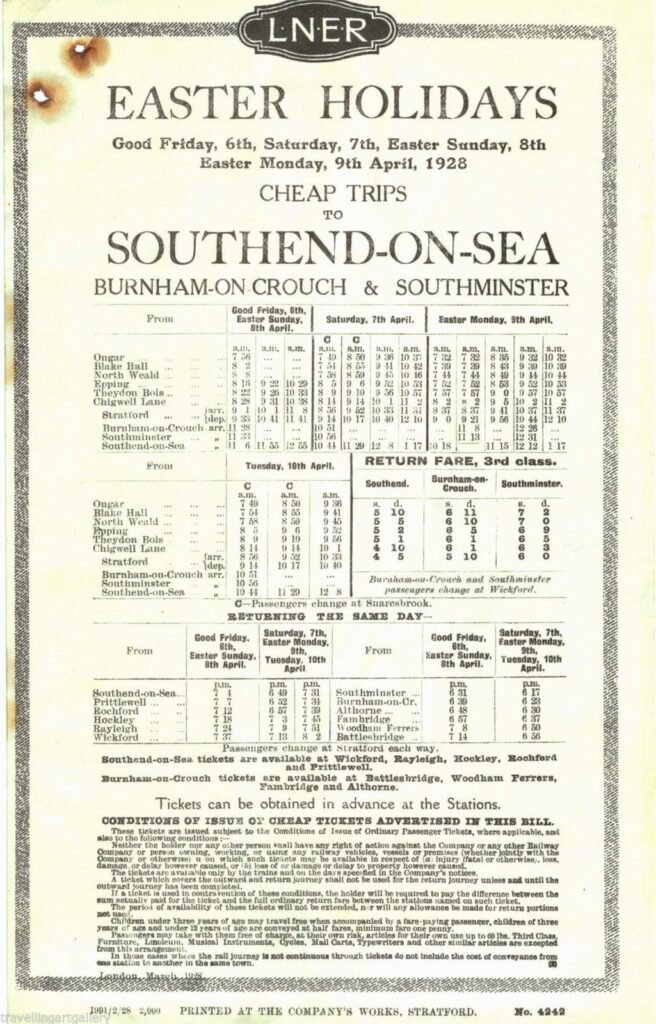
On 30 March 1890 Rudolph Mikkisch, who was living off Tottenham Court Road, told his wife that he was going out for a short walk. He did not return and four days later, on Thursday 3 April, Mrs Mikkisch received a letter from the Ongar union workhouse informing her that he was in temporary residence there. As Easter was imminent, she was unable to visit immediately but on Monday 7 April had telegraphed her intention to visit him that day, only to be informed that he had left the workhouse three days earlier.
What happened next can be pieced together from evidence given at the coroner's inquest. On Saturday 5 April, the day after he had left Ongar workhouse, he was found by a local police sergeant acting strangely on the Chelmsford road a mile from Danbury. After 20 minutes unsuccessfully trying to engage him in conversation, he flagged down a passing cart and took him to a nearby public house. He purchased tuppence worth of bread and cheese and gingerade for the wanderer and then took him to the relieving officer. Both decided that Mr Mikkisch was not intoxicated but that, on account of his strange behavior, he should be admitted to the Chelmsford union workhouse for close observation.
At the workhouse he was quiet and cooperative, and gave his name and address. He was provided with another meal, and put in a dormitory with nine other men who were asked to keep an eye on him. The coroner, with the advantage of hindsight, was clearly critical of the workhouse master for making this decision, and felt that Mr Mikkisch should have been admitted to the infirmary which was staffed all night. However there had been no free beds that night. The master had checked the ward at 10.30pm, and all was quiet.
At 9am on Sunday the master was informed that Mr Mikkisch had been seen by his fellow inmates climbing over the fence which separated the workhouse from the railway line. The final part of the story was provided by the driver of the 9.17am train from Chelmsford to London who, in spite of repeated warnings from the locomotive whistle, was unable to avoid running down and killing the unfortunate man at Margaretting.
A little more background was provided at the inquest. Mr Mikkisch was born in Poland, was aged 44 and had been employed as a journeyman cabinet maker. However he had been unable to work for the last 12 months due to "general paralysis" and had wandered off in a similar fashion several weeks earlier, ending up at Farnham in Surrey. Clearly he did not suffer from paralysis in the modern sense, having climbed a fence to escape from the Chelmsford workhouse, and then walking about two miles down the railway track before being knocked down at Margaretting. At that period, "general paralysis" was a cover-all for the devastating cerebral effects of untreated tertiary syphilis, and this is almost certainly what the brief – but unfortunate – visitor to the Ongar workhouse was suffering from.
Several points of interest arise from this story. The use of the telegraph is surprising as it seems unlikely that the Ongar workhouse was connected at that date. Were messages sent to Ongar railway station, the nearest telegraph office as far as I know? The Danbury police sergeant was commendably responsible in dealing with a confused man, and in providing him with a bread and cheese meal. Though this was acknowledged by the coroner at the inquest, I wonder if the sergeant was reimbursed for his expenditure. The relieving officer also acted responsibly by ensuring that the confused wander was taken care of, particularly at a time when wandering vagrants were not at all unusual on our roads. The coroner himself was extremely thorough in investigating the circumstances of Mr Mikkisch's death, even if he was a little hard on the master of the Chelmsford workhouse for what he clearly felt was the inadequate level of care provided.
Source: Essex County Chronicle, Friday 11 April 1890

Article 2 of 9
World War II Airfields in Essex
Martyn's article in Journal 59 (March 2016) reminded me of the conversations that I had many years ago with local residents who still remembered the construction of Chipping Ongar airfield at Willingale in the autumn and winter of 1942.
According to my informants – who were local youngsters at the time - it was built by the Americans using convict labour taken from prisons in the US. The deal was that prisoners would gain their freedom if they worked for the duration of the war. I have always wondered if this pledge was honoured, as some of the work force had been facing death sentences. My informants told me that the prisoners were housed in open-ended Nissen huts under armed guard, with only straw for bedding. This was cleared out once a week and burnt, presumably to destroy infestation. Conditions must have been grim as that winter was particularly wet and the main street in Willingale village was reduced to a sea of mud. According to one lady who had worked in the canteen, the airfield, when complete, provided work for local people, as well as more diverse forms of entertainment (both licit and illicit) with grounded aircrews. Nylon stockings and cigarettes were particularly popular with the local youngsters.
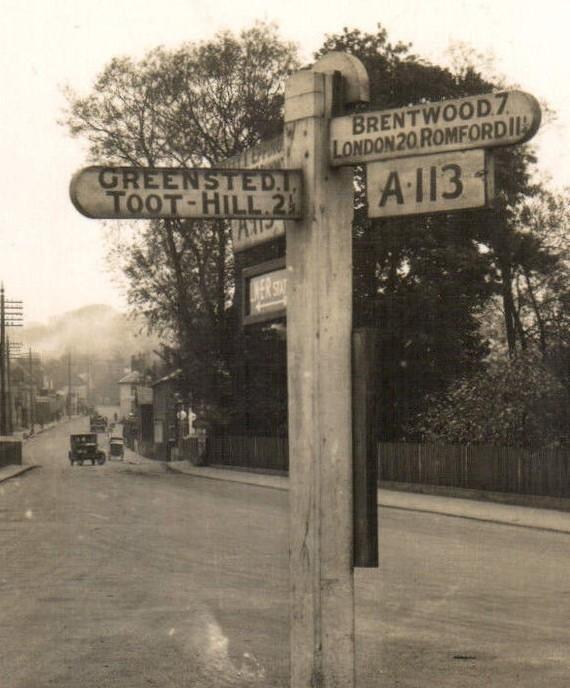
The main access to the airfield for vehicles was off the present A414 at Norton Heath along about a mile and a half of very narrow winding lane. This had clearly caused problems as the lane was effectively straightened by concreting across the inner curve of many of the bends, and anyone travelling on that road today will be aware of the joins between the original lane and its concrete extensions. In the 1970s there was still a wooden signpost at the top of the road pointing left to "Willingale Aerodrome".
The first bombing flight out of the airfield in 1943 was a squadron of Marauders, of which only one returned. Some were shot down, but many failed to navigate their way home successfully, as the aircrews were very green. Maintaining morale must have been a considerable challenge, though losses steadily reduced as the crews gained experience.
The site chosen was level and almost free of public roads or buildings. The main loss was the manor house of Newarks Hall, described as 'early 16th century with a cross wing' by the RCHM. However the perimeter roads came very close to Forest Hall which was requisitioned for air force personnel – doubtless contributing to its demolition soon after the end of the war.
Article 3 of 9
The Token Coinage of Essex in the Seventeenth Century
A brief review of the conditions which rendered necessary the issuing of the tradesmen’s tokens described in the following pages is, I think, desirable, in order that their great numbers, and wide and general circulation, may be understood and accounted for.
If we except the brass, and mixed metal, stycas of Northumberland: and a few pieces of British copper and billon, the coinage of England was, from the earliest times, to the year 1257, entirely of silver; the standard being the penny, which was frequently broken into halves and quarters, for half-pennies and farthings. In 1257 Henry III coined a penny of fine gold, and from the fourteenth century gold has been regularly employed in the coinage. It is true that silver half-pennies were coined as early as Edward I., but they were necessarily very thin and small, and being easily lost were in great disfavour with the people. The continual increase in the value of silver gradually caused the coins to be reduced in size and weight - particularly this was the case in the time of Elizabeth, when the half-penny only weighed four grains.
The absence of small change was naturally most severely felt by the poorer classes, and greatly handicapped the shopkeepers; causing considerable friction between themselves and their customers. Thus it came about in the time of Henry VIII., and more especially in the time of Elizabeth, that tradesmen began to issue stamped pieces of lead, tin, brass and even leather to remedy this evil state of affairs, and these pieces were truly "pieces of necessity" and were tokens or pledges for money; but, of course, not being regal productions, were not actually money. Continual complaints, however, were made about these as they could only be changed at the premises of the issuers, and the name and address not being on them, but only a sign or some initials, they were often a loss to their holders. Proclamations were frequently issued forbidding their use under severe penalties, but the necessity was so great that they were constantly being reissued.
Queen Elizabeth, who always took keen interest in all matters affecting the regal currency, was well aware of the difficulties the poor laboured under for want of small change, but she was so averse to introducing base metal into the coinage that when, in 1574, proposals were made for the coining of half-pennies and farthings in base silver, she would not hear of it; and the scheme had to be abandoned. She, however, granted a license to the Corporation of Bristol to coin farthing tokens which were of copper, and were current in Bristol and the country for 10 miles round that city. Three years before her death the queen was again approached on the subject, but she firmly declared she would never consent to a copper currency.
In the early part of the reign of James I. a number of proposals were put forward, without result, on the subject of a base metal coinage; and the number of leaden tokens greatly increased. At last, in 1613, a patent was granted to Lord Harrington, to coin copper farthings, and the magistrates were commanded to assist in getting them into general circulation; but they never met with public favour, and some counties refused to take them altogether, as reports were spread that they were to be altered, and the old ones would not be taken back.
Charles I., soon after his accession, published a proclamation to continue their currency, and after a time London and the adjacent counties of Essex, Kent and Suffolk had scarcely any silver or gold left: but were loaded up with these farthings, many of which (owing to the great profit in coining them) were counterfeit. The patentees, upon one pretext and another, refusing to exchange gold and silver back again for their farthings, the said farthings were left in great numbers on the subjects hands ; which was ruin to many poor people, caused tumults, and put an entire stop to their currency. These royal tokens were issued at an office in Lothbury, London, which place is still distinguished by the name Token House yard.
On the death of Charles I. tradesmen began to issue the class of tokens which I shall describe in the following pages; and being received again by their issuers were greatly preferred to the former patent farthings. No copper money was issued by the government during the Commonwealth, and therefore small change was entirely supplied by these tokens. They were issued very extensively throughout the kingdom; and increased enormously until the year 1672, when the regal copper farthings and half-pennies of Charles II were issued from the mint, and were made current by a proclamation dated August 16th in that year. These regal coins were to pass in all payments, bargains and exchanges, under the value of sixpence. The making of tokens was strictly forbidden by the same proclamation, and so they disappeared from circulation. They were in circulation a quarter of a century; and, as Boyne remarks, "they originated with a public necessity but in the end became a nuisance." When we consider that these pieces are very small, and intrinsically worthless, and that nearly two centuries elapsed after their issue before much notice was taken of them by numismatists, their rarity is a matter of small wonder.
As I hope to enumerate over four hundred varieties of Essex tokens, the present paper is the first of a series. The publication of such a subject by instalments was necessary owing to the large amount of space it requires in the Transactions of our Society; and was desirable in order that collectors, at present unknown to me, who have unpublished varieties, might have the opportunity of sending me particulars so that the present effort should be made as exhaustive as possible.
Several parishes hitherto unrecorded as token issuing localities, such as Danbury, Fobbing, High Easter, Prittlewell and Walthamstow, will appear in their proper places in the following pages, as well as a number of fresh tokens of places already mentioned by Dr. Williamson in his standard work on the subject, published twenty years ago.
With the exception of seven pieces all the known Essex seventeenth century tokens are circular in form; the seven exceptions comprising three heart-shaped tokens, three octagonal tokens and one square token. These will all be duly noted in their proper places. The earliest date found is 1650, and the latest date, 1671.
I have very carefully collated Dr. Williamson's work, which describes 356 Essex tokens, with several collections and have corrected the same where required. My collection of Essex wills has furnished notes of some of the issuers, and I am indebted to several authorities for other information. The notes have, of necessity, to be very brief. I have also to express my indebtedness to a number of collectors, and others, for their kind assistance; especially the Keeper of the Coins and Medals at the British Museum, who allowed me to carefully examine and compare each Essex token in the national collection; Mr. Guy Maynard, of the Saffron Walden museum, who loaned me the MS. index to the tokens in his care, and afterwards very carefully went through my list of queries; Mr. John Avery, who placed valuable manuscripts at my service; Mr. Stephen Barns and the Rev. Lewis Gantz, who placed their collections at my service ; Mr. R. T. Andrews, who sent me some valuable notes and Messrs. Spink and Son, who sent me information of unpublished tokens that had passed through their hands.
My experience, as a collector of coins and tokens for over twenty years, teaches me that Essex, although prolific in variety, is a very difficult county to form a large, or representative, collection of; so many of the tokens being infrequently met with. My own collection, both as regards number, and condition, is the best I have access to; but there are many tokens of which I have no specimen. I sincerely trust that all collectors, or possessors, of these very interesting little pieces, will correspond with me; as it is only by patience, and collaboration, we can hope to make progress with a study, so much of which has become engulfed by the ever onward march of time.
In conclusion I cannot do better than quote the remarks on the subject of the late Mr. Llewellynn Jewitt;
Issued by the people, they tell of the people; and become imperishable records of that most important estate of the realm … They indicate to us their occupations and their skill; their customs and their modes of life; their local governments, their guilds and trade companies; their habits and sentiments; their trades, their costume, their towns, their families, and their homes.
By William Gilbert, F.R.N.S.
An extract from the Transactions of the Essex Archaeological Society, ‘New Series’, Volume 13. Pages 184-187 (1914). This was the subject of a talk to the High Country History Group in April 2016.
Article 4 of 9
Zeppelins Over Essex: an Introduction
To be able to mark the centenary to the day when bombs were dropped over Blackmore by Zeppelin L14 was both a privilege as well as a coincidence. The timing of Easter meant that the High Country History Group had to defer its meeting and Annual General Meeting by one week, from Maundy Thursday, to 31 March.
On Friday 31 March 1916, at 11.45pm, fleeing gunfire from Kelvedon Hatch, German Zeppelin L14, commanded by Oberleutnant Bocker, dropped nine bombs in anger in fields less than half a mile south of Blackmore village. No one was killed or injured but it was clearly a close encounter. Parishioners placed a commemorative window in the church inscribed; “This window is erected as a thank-offering to Almighty God for the protection in the Great Air Raid of March 31st 1916”.
This window has been a source of interest and was the starting point of research a number of years ago culminating in the presentation to the Group. It will be repeated at the Friends of St Laurence AGM at the Priory Church of St Laurence on 16 June 2016 – if you missed it.
The presentation focussed mainly on L14, which visited Blackmore, and L15, which was the first Zeppelin to be shot down marking a turning point for Britain’s defences.
Many present were interested in reading more about the subject and keen to know about the sources used in the presentation. This note will cover this as well as provide some further notes on Zeppelin raids, and an interesting footnote on Bocker, who was captured after his crew landed Zeppelin L33 at Little Wigborough on Sunday 24 September 1916.
Sources
There are many eye witness accounts of Zeppelins, particularly those who saw the downing of “the baby killers” in flames over Cuffley, Great Burstead and Potters Bar. The presentation lent itself to a script with accounts marshalled into a documentary format anchored by a Narrator. (The eventual length was 4300 words, taking about 40 minutes to read.) Over 70 PowerPoint slides were produced many showing a picture of the witness with text read by volunteers in the audience. Voices used were: Essex Weekly News report, 7 April 1916; Revd. Reeve, Rector of Stondon Massey; Revd. Clark, Rector of Great Leighs; Captain Morris; John Fleetwood; and, John Maryon.
These are the sources used in the presentation ‘Zeppelins over Essex: 31 March 1916’.
Newspaper accounts of events are detailed but, by 1916, vague due to the Defence of the Realm Act. The Essex Weekly News provides graphic detail of the air raid but does not mention Braintree as the location where four people were killed. It is referred to as “a town in the Eastern counties”. I discovered only recently the burial place of the family and that there is a commemorative blue plaque on the house in Coronation Avenue. A Sunday afternoon drive took me to the locations for photographs.
The most important local source by far is the writing of Revd. Edward Henry Lisle Reeve, Rector of Stondon Massey, in his account called ‘Materials for a Parish History’. The three volumes were transferred from the Vestry of Stondon Massey church to the Essex Record Office many years ago (and can be found under reference ERO T/P 188/1-3). Reeve had already published a history of the village in 1900, with a supplement in 1914, but this material remains commercially unpublished. (Using this and other material in 2011 I wrote a biography of this last gentleman clergyman.) It is a unique record in that nowhere else is the location of the nine bombs dropped in Blackmore recorded: “between the Soap House and the corner of Blackmore between the Church and Miss Barrett’s house”.
A few miles to the north of Stondon Massey, the Revd. Andrew Clark, of Great Leighs, was writing his wartime diary. It eventually amounted to 3 million words, spanning 92 volumes, and stayed undiscovered in the Bodleian Library, Oxford, until James Munson took on a project to edit the work into ‘Echoes of the Great War: The Diary of the Reverend Andrew Clark 1914-1919’, published in 1985 by Oxford University Press. The work is very overlooked by historians, out of print, and available on Amazon in used condition at ridiculously low cost. The BBC featured Clark and Great Leighs in its four-part series ‘Britain’s Great War’ presented by Jeremy Paxman (January 2014) and ITV used Clark’s words voiced by actor Brian Cox in episode three of its compelling four-part documentary ‘The Great War. People’s Story’ (August 2014), available as a book and on DVD. Although the documentary did not give reference to the date of the diary entry, the extract used was from 31 March 1916: “At 11pm, just as my wife had come up, there were two tremendous explosions … and caused her to call out involuntary ‘Oh Oh’”.
Captain Joseph Morris’ book, ‘The German Air Raids on Great Britain 1914-1918’, was originally published in 1925 and was the first complete account of the German bombardment of Britain during the First World War. It describes the efforts of British airmen in tracking and firing at the Zeppelins. It has been largely superseded following the release of then restricted official reports and documents held at The National Archives. ‘Zeppelin Blitz’ by Neil R. Storey (History Press, 2015) is a full, raid-by-raid, year-by-year account of the Zeppelins. Storey records the two bombs were dropped in Doddinghurst and a further nine in Blackmore on 31 March: Reeve recorded that nine of the thirteen bomb craters were located the following day. ‘Zeppelins Over Southend’ by Ken Crowe (Southend Museums Handbook 24, 2008) includes a map of the courses of the Zeppelins on 31 March 1916 copied from The National Archives records (AIR 1/2123/207/73/7) and confirmed the location and routes of the two Zeppelins L14 and L15 on the night in question.
John Fleetwood was a retired Essex clergyman living in Blackmore when I knew him. He wrote his autobiography ‘Reflected Glory’ in 1979, and I managed to obtain a copy on E-Bay in 2007. (The copy was once owned by Revd. Monty Knott, retired Vicar of Blackmore who has died in 2006, aged 100.) In a few paragraphs he speaks of his memories of being carried out aged 6 into the street of his Walthamstow home to witness the fall of the Cuffley and Great Burstead zeppelins, and of the nightmares he had of the Zeppelin visitations over London. (Do be aware that books with titles which include the word Zeppelin may not be about the subject but general accounts of the First World War.)
Finally, John Maryon. As a local historian I got talking to a family at a Teas In the Tower afternoon at Blackmore church. They had seen the window. They told me that they were direct descendants of the farmer of Snails Hall Farm at Great Burstead where the Zeppelin has come down in 1916 and would I like some information? (I discovered subsequently that my great grandfather farmed very close by, but left no records that I know.) They kindly sent me an eye witness account for publication on the Blackmore History blog, which has also been published in this Journal. John Maryon gives a very different view of the farm being overrun by a hoard of visitors on what became known as Zepp. Sunday (24 September 1916). The presentation could not omit this information and provided further context to the events at home that year. The family photograph by the damaged tree after the Zeppelin was removed and after the media circus had moved on is an important item which I was pleased to publish.
Events in 1916
It was important also to record the other events of 1916, particularly The Battle of the Somme which commenced on 1 July. Reeve’s words add cause for reflection about how terrible this was.
“1st July 1916: As I write, the reverberation of the great guns and explosion of mines are shaking the windows of the Rectory and of all the other houses, I suppose, in the southern and south-eastern counties of England. There is evidently a very heavy bombardment in progress.
“13th July 1916: The Great advance has been in progress for a fortnight. July 1st 2nd and 3rd were especially noticeable and the papers began to bring news of heavy losses.
“20th September 1916: The War Office is calling men up. Lads who are now eighteen are finding themselves called for. … I went yesterday to see the reproduction of the Somme activities on the Cinematograph in London.”
Some supplementary notes
Neil Storey’s book ‘Zeppelin Blitz’ provides detailed information of each Zeppelin night-time raid.
Two days after the bombs were dropped over Blackmore, LZ-90 commanded by Oberlautnent Lehman was fired at by 75 rounds from the Kelvedon Hatch gun without success as it flew between Ingatestone and Blackmore at 11.30pm (2 April 1916). Ten minutes later it was over Stanford Rivers en route for Waltham Abbey.
An earlier visit on 17 August 1915 by the L10 followed the route to Waltham Abbey along the railway around 10.17pm. It was later seen between Ongar and Blackmore where it later attacked Chelmsford. A house was destroyed but the bomb failed to explode becoming embedded in the basement.
At about 10.50pm on 25 April 1916 Zeppelin LZ-97 dropped 47 incendiary bombs along the line of the River Roding between Fyfield and Ongar. The only damage was to one shed in the town. The airship continued to follow the river over Stapleford Abbots.
Finally the story of Zeppelin L33 which was brought to the ground by Bocker at 1.20am on Sunday 24 September. It was fired at by the guns of the London defences, including at Kelvedon Hatch whilst at a height of 9000 feet, and is thought that the splinters from the shrapnel had pieced the hydrogen air bags. Lieutenant Brandon did fire at the Zeppelin from his aeroplane but was unsuccessful in bringing the L33 down with incendiary bullets. He turned his attention towards the L32 but Lieutenant Sowrey was to claim success. The crew of the L33, including Bocker, were taken prisoners but were exchanged in 1918 on condition that Bocker did not fly again. He became a director of aviation training at Nordholz flying his old Zeppelin, the L14. Both had survived the War.
Images
For more on the Zeppelin raids follow the links to YouTube via our blog: www.highcountryhistorygroup.blogspot.co.uk
For more about the book and its link to the television programmes see http://esah160.blogspot.co.uk/search?q=echoes+of+the+great+war. This includes Andrew’s correspondence with James Munson.
Article 5 of 9
The Green Man Public House, Toot Hill
The earliest reference to the Green Man appears in a book written in 1818, which describes the Green Man as ‘a comfortable little inn in the midst of picturesque scenery: it is very convenient quarters for sportsmen, who will find some good shooting in this quarter.’
In the 1841 Census, which shows that Thomas Nicholls was the licensee. However in an advertisement in the Chelmsford Chronicle dated 1842, the premises are advertised for sale due to the ill health of Nicholls. The advertisement suggests that the Inn was well established prior to this date, although no earlier reference can at this time be found.
TO BE DISPOSED OF,
With Immediate Possession,
All, that old-established, well known, and respectable INN and BREWERY, in full Trade, The GREEN MAN at Toot Hill, in the parish of Stanford Rivers, on the old high road, about midway from Chipping Ongar to Epping, and 20 miles from London. The present proprietor wishing to retire in consequence of indisposition, and having realised a competency. An eligible opportunity for an industrious person, with sufficient capital for entering into an immediate and lucrative business, capable of considerable improvement, situate in a respectable and populous neighbourhood, and at a considerable distance from any beer shop. For particulars apply to J. Lewis, Water End Farm, near Ongar.
Chelmsford Chronicle 17th June, 1842.
To Brewers, Publicans, and Others
TO LET, with Immediate Possession, that much frequented FREE PUBLIC-HOUSE, known as the Green Man at Toot Hill, in the parish of Stanford Rivers, Essex, with a compact 3-quarter plant. The premises are very convenient and in good repair, with large garden, &c. attached. A considerable wholesale trade is done, and might be much increased by an enterprising man. A Lease will be granted. For particulars apply by letter (post-paid) to Mr Champness, Auctioneer, Surveyor, and Estate Agent, Abridge, Essex.
Chelmsford Chronicle 16th September 1853
Toot-hill, Essex
MR WILLIAM JONES, Sen., will Sell by Auction, on Monday, June 4, at 12, by direction of the proprietor quitting the premises, the Green Man, Toot-hill, near Stanford Rivers, Chipping Ongar, Essex, a Brewer’s 1,180 gallon STORE and other CASKS, mash tub, cooler, underdeck, pulleys, stillion, useful bay mare, spring cart, harness, stable tools, bagatelle board, percussion gun, 8-day clock, and a few lots o Household Furniture of the usual description. Catalogues may be had in a few days on the premises; Green Man Inn, Toot-hill; at the Crown Inn, Ongar; White Hart, Abridge; and at the Auctioneers Office, near Stepney Station, Commercial-road, London.
Morning Advertiser, 23rd May 1855
GREEN MAN INN
TOOT HILL NEAR ONGAR, ESSEX
BREWING PLANT FURNITURE
AND EFFECTS
C. FOSTER
Will SELL BY AUCTION, at the above Inn, by order of the assignees, on Thursday, April 22nd, 1858, at 12 o’clock,
A Capital 20-bushel MASH TUB, beer cooler, 12 feet by 1 feet 6 in,; working tubs, copper brewing pump, 5 four-hogshead store casks, about 80 smaller casks, water cart, trade cart, and useful brown horse.
The FURNITURE, consists of 4-post and other bedsteads, bedding, chests of drawers, chairs, tables, glass, earthenware, and other effects, to be described in catalogues, to be had at the place of sale, the Inns of the neighbourhood, and of the Auctioneer, Chipping Ongar and Epping.
Chelmsford Chronicle 16th April, 1858
Sudden Death – Mr John Owers, baker and landlord of the Green Man Inn, Toot Hill, died very suddenly on Sunday. He was in Ongar on Saturday, and was apparently in his usual health when he went to bed. During the night he was seized with a fit, and was found lying I an unconscious state early the next morning. He never regained consciousness. Mr Owers who was 62 years of age, was well known throughout the district, where his death caused something like a sensation. When there was a class for donkeys at the Essex Agricultural Society’ show, he generally had an animal good enough to catch the judges’ eyes and take the red rosette.
[Essex Newsman 21January 1893]
A smaller licensed investment in Stanford Rivers, known as the Green Man, Toot Hill sold for £2,225.
[Morning Post 28th April 1900]
Before The Ongar Magistrates on the 5th October, Mr. Arnold Richardson applied on behalf of the London and Burton Brewery Company for the approval of plans for the re-building of the Green Man – Approved subject to the formal consent of the Rural Council.
[The Newsman, 12th October 1907]
Licensees
1841 Thomas Nicholls
1845 - 1851 Edward Rowan
1862 John Scott
1867 James Salmon
1870 - 1893 John Owers Baker/ Farmer
1894 – 1910 Charles Owers Baker
1911- 1917 Emma Owers
1917 Frank John Owers
1922 Charles Baker
1925 James Coles
1927 W.C. Kent (temporary licence)
1929 William Charles Kent
1933 Samuel Amis
1937 George William Weston
? John Roads
Picturesque Rides and Walks, with Excursions by Water, Thirty Miles Round the British Metropolis, by John Hassell [1818]
Article 6 of 9
Richard Mulcaster, Rector of Stanford Rivers 1598
Richard Mulcaster was born in c.1532, the son of William Mulcaster of Carlisle. He was educated at Eton, Cambridge at Christ Church, Oxford, gaining a B.A. in 1555 and an M.A. in 1557. Though a prestigious student, it is suspected that sometime during his schooling (possibly 1555) Mulcaster was taken to the Tower of London for allegedly stealing from the physician, and his schoolmaster, Dr. John Caius. However, the transgression seems to have been forgiven, for by 1559 Mulcaster was serving on Queen Elizabeth I’s first parliament as one of two representatives from Carlisle.
He married in 1560 to a woman named Katherine Ashley with whom he had six children
He was appointed the first Head Master of Merchant Taylors' school, in parish of St. Lawrence Pountney in the City of London, which had been established in 1561, ‘for the better education and bringing up of children in good manners and literature.’ Its foundation deed limited its intake to 250 children ‘of all nations and countries indifferently’, but they had to know the Anglican catechism, in English or Latin, and be able to ‘read perfectly and write competently’.
100 boys could be the sons of rich parents, paying 5 shillings a quarter, 100 were to be poor men’s sons paying no fee, and the balance was tipped towards the poor by the remaining 50 boys being poor men’s sons paying 2s.2d a quarter. All of them had to pay 12d to the school cleaner.
The High Master was to be ‘a man in body whole, sober, discrete, honest, virtuous and learned in good clean Latin literature and also in Greek if such may be gotten’. He had an annual contract, a free house, twenty days’ holiday, and sick pay on full pay for ‘sickness curable, or axes (agues)’.
Richard Mulcaster seems to have satisfied all their hopes. He stayed for 25 years (1561 – 1585), teaching the usual Latin and Greek, and Hebrew as well, necessary for reading the psalms in the original. In 1569 Mulcaster was reproved for exceeding the permitted number of boys by taking private pupils into his own house, and there were rumblings of disagreement between him and the Merchant Taylors, but they had made peace by 1579.
Although Mulcaster’s lessons were known for being disciplined and orderly, he was notorious for snoozing at his desk during lessons, while his boys obediently wrote out their lines.
In 1574 and 1576 he had written plays for the boys, which were performed before Queen Elizabeth. In 1581-2 he published various educational books. However in 1585 he gave a year’s notice, and left in 1586.
Mulcaster's views were ahead of his time: he advocated the importance to children of relaxation and games, and a knowledge of the countryside and world of nature. He ‘wished that schools were planted in the suburbs of towns near to the fields’. He was also ‘tooth and nail for womankind’ in matters of education. He believed that education should fit women for their appropriate station.
He believed all children, including girls and poor children, should receive an elementary education and those who showed promise should go on to advanced education.
He proposed that there should be colleges to train teachers, and he predicted that there would be a time when most education in England would be in English! and that great ideas could be expressed in English, rather than Greek or Latin
By 1596 Mulcaster was running a private school in Milk Street, near St Paul’s Cathedral, when he was offered the post of High Master at St Paul’s school. The school had been endowed in 1510 to educate 153 boys. No fees were payable except for 4d on admission.
Mulcaster was to remain at St Paul’s until 1609.
Mulcaster was appointed the Rector of Stanford Rivers in 1598, a substantial living in the Queen’s gift, retiring there when he resigned from St. Paul’s at the age of 76.
However he was not popular in the parish, spending much of his time in London. In 1597 he was reported to the Archdeacon by his own churchwardens
'for pulling down the knobs of a pew'.
(These were probably the decoratively carved bench ends).
He remained in Stanford Rivers having been given a pension of £66.13s.4d by St Paul’s.
He died however intestate on the 15th April 1611. He is buried beside his wife in the chancel of St Margaret’s.
Mulcaster’s 'Elementarie' first published in 1582, was an attempt to make English language and culture more respected and accessible. Until the end of the 16th century, Latin had been the traditional language of learning - English was looked down upon by scholars, and only thought to be good enough for popular books and plays. By stabilising the language, Mulcaster hoped that English would be recognised by scholars for its richness and vitality. He wrote
‘I do not think that anie language, be it whatsoever, is better able to utter all arguments, either with more pith, or greater planesse, than our English tung is, if the English utterer be as skillfull in the matter, which he is to utter.’
The 'Elementarie' contains a list of 8000 words. Many of these words are familiar today, such as elephant, gunpowder, bum or glitter. Others are more obscure, like brible brable, carpetknight, or flindermouse. None of these words are accompanied by definitions, and therefore the list cannot strictly be classified as a dictionary.
On the south-east wall of the Sanctuary is a brass plaque, with incised inscription in Roman capitals, to the memory of Katherine Mulcaster. It reads
HERE LYETH BVRIED THE BODIE OF
KATHARINE MVLCASTER, WIFE TO RICHARD
MVLCASTER, BY ANCIENT PARENTAGE AND
LINNIAL DISCENT, ANN ESQUIER BORNE;
BY THE MOST FAMOVS QVEEN ELIABETH’S
PREROGATIVE GIFT, A PARSON OF THIS
CHVRCH; WITH WHOM SHE LIVED IN
MARRIAGE FIFTYIE YEARES, AND DYED
THE 6 DAY OF AVGVST, 1609. A GRAVE
WOMAN, A LOVEING WIFE, A
CAREFVL; NVRSE, A GODLIE CREATVRE,
A SAINCT IN HEAVEN IN THE PRESENCE
OF HER GOD AND SAVIO’, WHO SHE EVER
DAILIE AND DEARLIE SERVED.
Images
The original building was destroyed on 2nd September 1666, the first day of the Great Fire of London
His educational philosophy is embodied in two books, The Positions (1581) and The Elementarie (1582), the latter an instalment of a larger work and one of the first dictionaries in English.
Appointed by the Mercers’ Company.
Article 7 of 9
Hill Hall, Theydon Mount – a Haunting!
From the Guardian Newspaper 26th January 2009
A Second World War veteran has broken a 60 year silence to speak about the ghostly events he witnessed while staying at a manor house.
Evan Andrew, 92, was stationed at Hill Hall, Theydon Mount, during the 1940s when he served with the Royal Artillery, and has never been able to shake off the memory of his experience there.
He told the Guardian: “I was batman to two officers, one a Major and the other a Captain.” They picked their bedroom which was off the Great Hall.
“The first job I was given the next morning was to find another room for the two officers. It seems that, during the night, both men were disturbed by some experience they could not account for, but they refused to sleep in the same room again.”
After the officers left, two new ones were assigned to the room.
“I thought no more of it until, a few days later, the same two officers returned. They asked where they were to sleep and, on being told that they had the same room, they replied that there was no way on earth they would sleep in there and they would even be prepared to sleep outside rather than in that room.”
Hill House was built in the 1560s by Sir Thomas Smith a high profile courtier of Queen Elizabeth I.
A number of ghost stories have surrounded the building, the most common telling of seven brothers and one sister said to have lived in the haunted room 300 years ago.
The sister is said to have formed an attachment with a man her brothers did not approve of. The brothers then fought duels with the man one-by-one until all of them were killed.
The remorseful sister committed suicide and ever since Hill Hall is said to have been haunted by her ghost.
Anne Padfield, who organises tours of Hill Hall on behalf of English Heritage, said: “There are a few ghost stories associated with it. There’s supposed to be a ghost horse and carriage and a couple of other characters. Personally I don’t really believe in it but it’s nice to keep an open mind about another dimension. I would be happier if I could find a scientific explanation.”
Article 8 of 9
The Imperial Gazetteer of England and Wales
A substantial topographical dictionary first published between 1870 and 1872, edited by the Reverend John Marius Wilson. It contains a detailed description of England and Wales. Its six volumes have a brief article on each county, city, borough, civil parish, and diocese, describing their political and physical features and naming the principal people of each place.
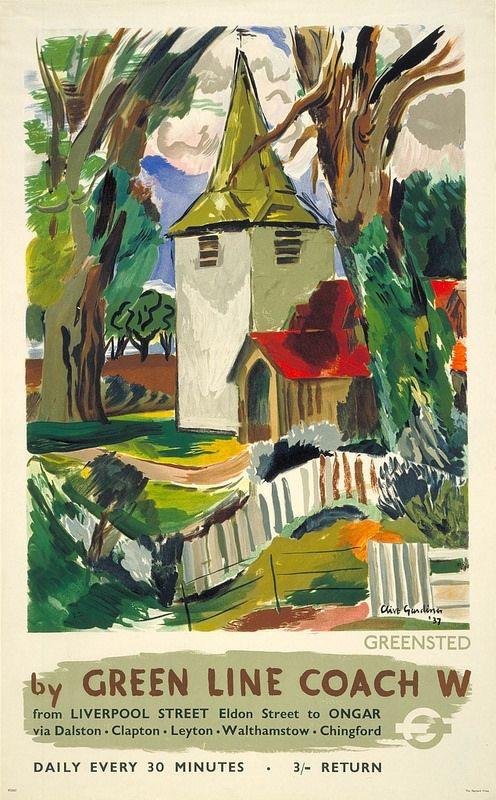
The following is a description of the High Country parishes. Note the error for Greensted, which the dictionary confused with Greenstead, near Colchester.
THOYDON-MOUNT, a parish in Ongar district; 2¾ miles SE of Epping railway station. Post town, Epping. Acres, 1,500. Real property, £2,586. Population 154. Houses, 36.
Hill Hall is the seat of Sir W. B. Smijth, Bart. The living is a rectory, annexed to Stapleford-Tawney The church is good.
STAPLEFORD-TAWNEY, a parish in Ongar district; 3½ miles ESE of Epping railway station. Post town, Romford. Acres, 1,633. Real property, £2,587. Population 273. Houses, 47. The property is divided among a few. The living is a rectory, united with Mount-Thoydon, in the diocese of Rochester. Value, £740.
Patron, Sir W. B. Smyth. The church is good. Charities, £18.
GREENSTEAD, a parish in Colchester district; near the river Roding, 1 mile W by N of Ongar railway station, and 8 NNW of Brentwood. Post town, Ongar. Acres, 1, 498. Real property, £1, 209. Population 125. Houses, 27. The property is divided among a few. The living is a rectory in the diocese of Rochester. Value, £280.
Patron, the Bishop of London in Trust. The church is one of the most ancient in England; was thoroughly restored in 1848; has a gave formed of half trunks of oaks, set upright, and close to one another, and supposed to have been erected as a temporary shrine for the body of St. Edmund; contains monuments to the Smyths, the Cleeves, and the Ords; and was found, at its restoration in 1848, to have a well preserved ancient piscina.
STANFORD-RIVERS, a parish, with a village, in Ongar district; 1¾ mile SW by S of Ongar railway station. It has a post-office under Romford, and contains Ongar workhouse. Acres, 4,386. Real property, £6,990. Population 992. Houses, 172. The property is divided among a few. The living is a rectory in the diocese of Rochester. Value, £1,007.
Patron, the Duchy of Lancaster. The church is good; and there are an Independent chapel and a national school.
Images
Article 9 of 9
The Essex History Group Programme
The Essex History Group meets in the Essex Record Office lecture theatre ten times a year. There is no formal membership, so drop in and discover something new!
Talks start at 10.30am in the ERO lecture theatre. The lecture theatre is accessible to people in wheelchairs and is fitted with an induction loop.
Admission is £1, and includes a cup of tea or coffee and a biscuit.
Tuesday 6 September, 10.30am -12.00noon
Darling Daisy, the Countess of Warwick
Margaret Mills
Tuesday 4 October, 10.30am -12.00noon
Crossrail: Layers of London, 68,000 years of history
Jay Carver, Lead Archaeologist for Crossrail
Tuesday 1 November, 10.30am -12.00noon
The Navy Against Napoleon
Dr James Davey, National Maritime Museum