
High Country History Group
Journal No.
Contents
March 2018
Article 1 of 8
Anniversaries in 2018
Just a few of the many notable anniversaries that fall in 2018.
250th anniversary of James Cook’s first voyage of discovery
Lieutenant (as he was at the time) James Cook left Plymouth in command of HMS Endeavour on 26th August 1768, heading for Tahiti where he was to observe and record the transit of Venus across the Sun. From there, he proceeded to New Zealand, mapping the entire coastline; he then proceeded on to the east coast of Australia and Botany Bay, which he named.
200th anniversary of the birth of Emily Bronte.
Emily Jane Brontë, author of Wuthering Heights (published 1847), was born in Thornton, Bradford, on 30th July 1818. She died in Haworth on 19th December 1848.
200th anniversary of the death of Humphry Repton.
Repton, born in April 1752, was a landscape gardener, who designed around 400 landscapes. He took on the mantle of the country’s most famous landscaper after the death of Lancelot ‘Capability’ Brown in 1782.
100th anniversary of the formation of the Royal Air Force in 1918
The Royal Flying Corps and the Royal Naval Air Service merged on the 1st April, to create the Royal Air Force.
100th anniversary of the end of World War One.
The ceasefire that ended hostilities was on the 11th November, 1918, although the actual peace treaty was not signed until 1919.
100th anniversary of women getting the vote.
The Representation of the People Act 1918 on 6th February gave women over 30 the vote provided they were, or were married to, a local government elector, or were a property owner. The franchise was also extended to all male resident householders over the age of 21 and restricted elections to a single day.
(see back page of this Journal).
100th anniversary of the outbreak of the flu pandemic.
Albert Gitchell, an Army cook at Fort Riley, Kansas, woke up on March 11, 1918, thinking he had a bad cold. He didn’t. Instead, he was “patient zero” in what remains the deadliest pandemic in human history, the Spanish flu. By the time the flu ran its course in 1919, it had killed between 50 and 100 million people. That was about 2-4 percent of the world’s population at the time. No one is sure where the Spanish Flu originated; or even if Private Gitchell was really the first victim. So why is it called the Spanish Flu? That’s a byproduct of World War I censorship. Countries at war suppressed news about the flu to avoiding alarming their public. Neutral Spain didn’t censor the news, however, creating the mistaken impression that it had been hardest hit. Besides being deadlier than most strains of influenza, the Spanish Flu posed the greatest risk to adults between the ages of twenty and forty.
50th anniversary of the first episode of Dad’s Army
The first episode of Dad’s Army, one of the nation’s favourite BBC TV sitcoms, was broadcast on 31st July 1968. Written by Jimmy Perry and David Croft about the antics and adventures of a fictitious band of Home Guard during the Second World War, Dad’s Army was regular viewing until 1977.
50th anniversary of the introduction of the 2nd class post
The Post Office launched a two-tier postal service on 16th September. For standard letters, a first-class stamp cost 5d for delivery the next day; the slower second-class service cost 4d. Both amounts are roughly equivalent to 0.02p. As of early 2018, the cost of posting a standard letter within the UK is 0.65p for first-class or 0.56p for second, equivalent to 13 shillings and 11 shillings 2½d respectively.
Article 2 of 8
Reports of Incidents in WW2 in the High Country Area
Whilst carrying out some research at the Essex Record Office I came across a bundle of papers that gave details of incidents during World War II in the Ongar Rural District Council area. They mainly relate to long range rocket incidents in 1944 and 1945 reported to the ARP’s.
I have extracted some of the incidents relevant to our area.
The first V2 rocket to land on British soil hit Chiswick, West London at 6.43pm on the 8th September 1944. Just sixteen seconds later another landed in Parndon Wood, near Epping. It was fired from Holland, and aimed at a point just south of Southwark Bridge. It landed eighteen miles short of its target. The sound of the explosion was heard for miles around, and was immediately investigated by Ted Carter, Chief Warden for the Urban District of Waltham Holy Cross. In his report, written the next day, he says
“Ellis took Mick and I out through Epping and Thornwood Common to a lane off to the west, and after crossing a ploughed field, found the crater in a small wood. It was eight feet deep and twenty feet across. Trees and shrubs all around were just wiped out.”
At the time it was not known what had caused the explosion.
1944
18 November
Exploded Wasp – 11.13 hrs. Stanford Rivers, north of Marsh Cottages, nr. Tracey’s Farm. Extent of damage not yet available.
18 November
At 16.07 hrs on the 18th November 1944, suspected wasp ¼ mile south of Hill Hall, Theydon Mount. Slight damage to Hill Hall only.
20 November
At 13.15 hrs. Suspected wasp Abridge aerodrome. No casualties- blast damage to RAF building.
27 December
At 01.20 hrs 27.12.45. Long range rocket 300 yds. South of Dudbrook Hall, Navestock. Considerable blast damage to Dudbrook Hall.
1945
3
January
At 19.09 hrs 3.1.45. Fly-bomb explosive in ploughed field 30 yards south-east of junction of Epping to Ongar road. 20 yards south of Epping road. Severe damage to Radleys Tea Rooms and slight damage to Rectory, Sayers Farm, Hobbans Farm and adjoining buildings.
5
January
At 00.45 hrs 5.1.45. Long range rocket exploded at the back of the Green Man Public House, Navestockside. 12 houses damaged.
6
January
At 08.30 hrs exploded long range rocket rear of Green Man Public House, Toot Hill, Ongar. Damage to Steers Farm and the Green Man Public House.
12
January
At 17.35 hrs. one long range rocket, St James Avenue, Marden Ash, Ongar. Extensive property damage
13
January
At 01.00 hrs long range rocket 150 yards southeast of Freemans Farm, Toot Hill, in open ground. Several houses damaged.
23
January
Long Range Rocket, Stapleford Aerodrome. Damage to surrounding buildings together with cottages adjoining aerodrome.
23
January
Damage reported to Arnolds Farm, and to buildings together with cottages adjoining aerodrome.
(connected to previous incident?)
4
February
Long Range Rocket explodes at Burchin Coppice, Theydon Garnon. No damage and no casualties
26
February
At 09.12 hrs. 26.2.45, L.R.R. near Radley’s Tea Rooms, Ongar, Epping Road. Radley’s Tea Rooms badly damaged. Map ref:- L/974238.
Reference to message 09.40 hrs. L.R.R. exploded 800 yards South-East of Bobbingworth Church, 600 yards east of Greensted. Epping to Ongar Rd. Damage to two cottages on Epping Road and lesser damage to surrounding property including Farm, Bobbingworth Rectory and School.
27
February
At 05.32 hrs L.R.R. exploded in wheat field at Searles Hall and Donaldsons Farm, Theydon Garnon. Slight damage to Mount Village and to surrounding open property.
1
March
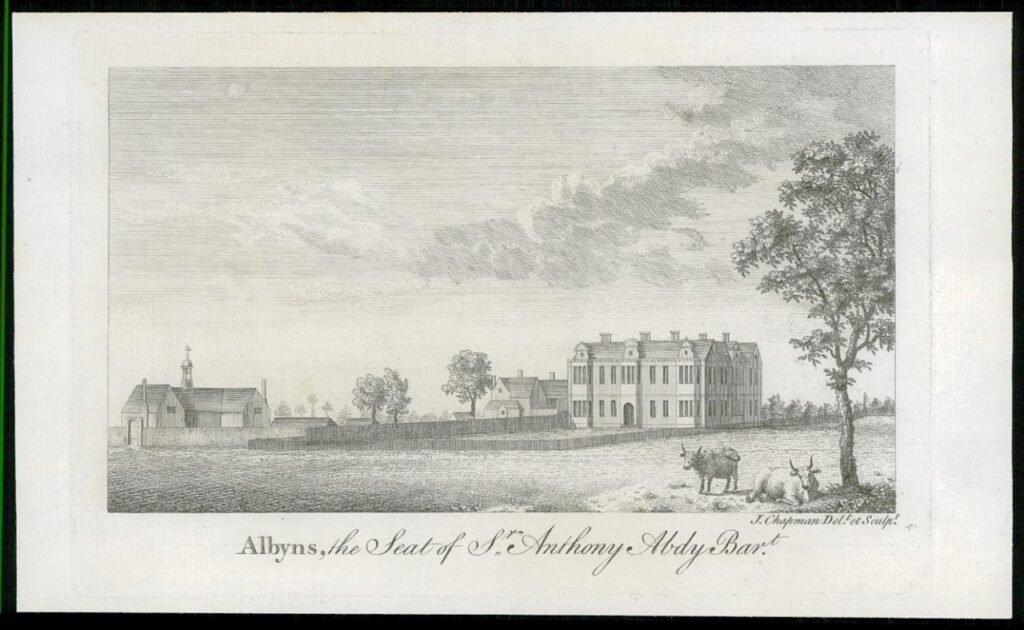
At 05.05 hrs. 1.3.45. a L.R.R. near Albyns, Stapleford Tawney. Historical building and three cottages badly damaged.
1
March
At 02.12 hrs 1.3.45. suspected L.R.R. in field between Navestockside and Dudbrook House. Damage to Dudbrook House, Green Man and Post Office at Navestockside.
7
March
03.30 hrs a L.R.R. exploded 400 yards south of Piggotts Factory, Stanford Rivers. 2 cotts. 200 yards away from main road were badly damaged. Also damage to other nearby property
12
March
At 01.34 hrs 12.3.45. a L.R.R. exploded in open field 400 Yards north of Little Colmans Farm, Stanford Rivers. Slight glass damage to buildings to within 400 yards of crater.
Map ref: L/987202. Size of crater 20ft x 5ft.
25
March
At 07.55 hrs. 25.3.45. exploded fly bomb in open field at Wash Farm, 600yds south east of Piggots Tent Factory, Stanford Rivers. Slight damage in the vicinity.
26
March
At 00.33 hrs. 26.3.45. L.R.R. half – mile south of Beehive Hotel, Manor Road, Lambourne End, in Hainault Forest. Map Ref. L.921128. Slight damage to one Hotel, one farm. Ten cottages, Forest Café and The Stores.
26
March
At 09.05hrs. 26.3.45. L.R.R. exploded in field 100 yards south of Waterhales Farm, Navestock. Map ref. L/985144. Slight damage to property.
ERO Ref 19613
Article 3 of 8
Samuel Playle of Stanford Rivers
The Essex Records Office at Chelmsford hold the will of Samuel Playle of Stanford Rivers, dated 1711.
The will reads thus:
In the name of God Amen I Samuel Playle of Stanford Rivers in the County of Essex being sick in Body but of sound disposing mind and memory (thanks be given to almighty God) do make and declare this my last will and testament in manner and form following (that I to say) first commend my soul into the mercifull hands of God my creator, trusting thro the merits and mediation of Jesus Christ my alone Saviour and Redeemer my sins will be forgiven me. My body I comit to the earth to be decently buried at the discretion of my executors hereafter named. And as for the worldly estate wherewith it hath pleased God to bless me I dispose there of as follows.
……I give to my loving wife Mary all my houses and lands for ten years from the date hereof both Free Hoppy and the Farm called Clark, in Stanford Rivers during her life and I give her all my personal estate with in doors and without.
Item I give to my eldest son Samuel and his heirs for ever the two Farms in Stanford Rivers called Blakes and Susslands and after the space of ten years wch my wife is to enjoy them.
Item I give to my younger son Mathew and his heirs for ever the Farm in Stanford Rivers called Clarks after his mother has enjoyed it for her life.
Item I give to my two daughters Mary and Elizabeth an hundred pounds a piece to be payd them on the day of their marriage or at the age of one and twenty wch shall first happen and for the payment thereof I…my copyhold land in ……. Wch I order my wife to sell…if it fall short of that money to make it up out of my Lands and personal estate. If one of my daughters die without heirs of her body the other is to have her portion if both die, the next heir at law, for my will is that in case of death their portions should legally descend from one to the other in my family.
I doe nominate and appoint my loving wife Mary sole executrix of this my last will and testament in witness whereof I have set my hand and seal this fifteenth day of February 1711.
Signed sealed published and declared by the said Samuel Playle to be his last will and testament in the presence of us who have subscribed our names in his presence.
Robert King
Thomas Smith his mark
James Mills
Richard Hewytt
Samuel Playle was born in 1671 in Stanford Rivers the son of Samuel Playle (1645 - 1703) and Clemence. He married Mary King on the 24 August 1704 at Stapleford Tawney, and they had five children:
Mary born 1705
Samuel born 1706 died 1707
Samuel born 1708 died 1781
Matthew born 1709 died 1794
Elizabeth born 1710.
In 1705 and again in 1708 and 1709-10, Samuel Playle is a churchwarden in Stanford Rivers.
His son Samuel (born 1708) was baptized at Stanford Rivers on May 2, 1708. He married Sarah Mills of Stanford Rivers at Stapleford Tawney, on April 15, 1740,
Samuel wrote a will on October 20, 1774 that stated:
"... unto my Daughter Mary the wife of Mr. John Waylett and her Heirs All that my customary Messuage or Tenement where in Charles Robinson doth now dwell with the Barns Stables outhouses buildings yards gardens orchards and appartenances and als all the arable meadow and pasture lands to the said messuage or tenement belonging containing together by estimation Eighteen Acres moree or less as the same are situate and being Stanford Rivers aforesaid and now in my own Occupation and which I pruchased of Sarah Beckwith Widow John Beckwith her son and John Crooke"
"I give and divse my loving wife Sarah Playle all that my freehold Messuage or Tenement called Blacks otherwise Blakes and Seslands and also all that my cottage or tenement with the Orchard Garden and the appurtenancnes... and now in the occupation of Samuel Playle and Thomas Crabb my undertenant..."
also owns land in Stapleford Common in the Parish of Stapleford Tawney
"...to the use of my grandson Richard Waylett..."
"... the use of my grandson John Waylett shall happen to die before he shall attain his age of twenty one years..."
"I bequeath unto my nephew Matthew Playle and to my Nieces Mary Playle and Maragretta Maria Playle the sum of Ten pounds a piece..."
"... my son in law Mr John Waylett"
A Samuel Playle, son of the above Samuel and Sarah (Mills) was buried in the churchyard at Stanford Rivers on 17 August 1744. He is described in the burial register as ‘an infant.’
Cesslands Farm.
In 1768-73 Stanford Hall farm, with Crumpscroft and Fresholts, consisted of 298 acres and was leased to Matthew Playle for £160 a year gross. Land-tax and the cost of repairs were deducted from the rent and in 1768 he paid £129 to his landlord.
Article 4 of 8
The Overseers’ Book of Stapleford Tawney
The office of Overseer was established by the Poor Law Act 1597/8 and made compulsory by the Poor Relief Act 1601. It superseded the less formal office of Collector of the Poor. At least 2 persons were appointed yearly by each vestry, subject to the approval of the Justices of the Peace, to levy a poor rate and supervise its distribution. They were unpaid and selected from among the parishioners.
Most of their duties were transferred to the Guardians of the Poor in 1834, leaving the Overseers with the duty of assessing and collecting the rate, although the legislation enabled the parish to appoint paid collectors under the control of the Overseers. The office was abolished by the Rating and Valuation Act 1925.
The Overseer was required to keep and accounts and present them at each meeting of the vestry in order that the latter could keep strict control on the money that was being spent. The following is an example of the accounts kept by the Constable and also the Overseer for Stapleford Tawney in 1745.
A paper book bound in vellum, 16 inches by 6, and 2 inches thick – ‘This book was bought by John Harris, in the year 1746, for the use of the parish of Stapleford Tawney,’ – is written on the first page.
Thomas Franks Constable of Stapleford Tawney for ye Year 1745. His disbursement for the year £1. 15s 6d, including ‘a return to Epping 1s 6d or to Ongar 2s 6d.’ Another item ‘for searching for Arms, 2s.’
John Harris Churchwarden for ye year 1745.
His disbursement.
£ s d
April ye 30
At ye vey (vestry) 0 5 0
Paid to ye Parater 0 1 0
For my joney 0 3 6
For ye Brad and ye Wine 0 3 7
July ye 13
At ye Insitaison 0 3 0
October ey 12
The Prockelemaison 0 2 6
(? Of Charles Edward the Pretender)
Releved 5 Slaves 0 2 6
Releved a woman and 2 children 0 0 6
Releved three Pore Man 0 1 0
A Bitch Fox 6 8
A Bock (Badger) 8 2
Paid the Church Clark wife for Washing ye Sirplis and Clening ye Church and Oyle for ye Bels 0 9 6
Note that one shilling to the Apparite for Citing to the Visitation at Rumford Aprl. 18, 1746 is charged above.
1745 Overseer’s Account.
April 21
Releved the widow Taylor for 50 weaks at 2s p. week.
A Louder (allowed her) for a nus to nus her one weak 0 2 0
A Louder Saben for his Grand Dafter
2s a weak for 4 weaks 0 8 0
Paid widow Read for Bread and Bear 0 1 6
Releved Him 0 1 6
Paid Widow Read for cleaning of him 0 1 10
For My Going to Epping 0 1 0
1746
Paid Donford for 7 weaks Board 1 8 0
For a shurt to Oyntgin (Anointing?) 0 2 0
For a Sheat and things to Lay him in 0 6 0
James Pavley for Dressing of Him 0 5 0
For a New Pear of Sheus and nailing 0 5 2
Paid Wm. Felested for his Oath for his
Setiffiket 0 1 6
June 19
For County Bridge Money 1 4 2
For ye Warrant 0 1 6
(Both of the above occur for several years)
For 8 Badges (? Badgers) 0 2 8
Ann turner for 5 Els of Clorth 0 4 7
A form of prayer &c 0 3 0
Church Clark 0 10 6
A Coffin for Ednd. Bowles 0 10 0
Affidavit &c 0 1 0
Wool 0 1 0
The principal expenses of the Constable for this year 1746 are:
A warrant to Epping 1s., the same to Ongar 2s. and to Harlow 3s 6d.
Pd ye Chief Constable for returning ye free holders list 2s.0d.
For a paper put on ye Church Door for Cattle 2s.0d.
The two Surveyors’ account for the same year shows an outlay of £2.15s. including:-
£
s
d
For sharping of ye petchexes
2
0
For six helves for ye Peetchexes
2
0
And a receipt of a guinea from the Revrant Mr. Lloyd
1749
March 19
A buttock of beef
7
7
A Gallon of Rum
8
6
2 pound of Sugar
1
6
Oranges and Lemmons
8
A half-peck Loaf
10
1749
John Grailin The Oversear of the Poar of Stabelfoot Tauney
March 31
Paid for my Instrucksions [this is an annual charge]
4
0
Paid to Mr. King
2
6
Paid for baco and pipes, buter and greens
2
6
April 2
A weaks pay for the Poare
5
6
Bought 2 shifts for prity Jane
5
0
Bought a pear of Stockins
1
2
May 22
Paid for Nursing of William Drache of the Small Pox
4
2
0
Novbr 15
Paid for things at the Vestry Rum and Leamons
4
10
1750
February 6
Paid for Janey Pretty a near pen [new apron ?] and clogs
6
6
1759
Paid Felstead for nealing [heating] the oven
1
6
1760
August ye 1
For a Coffen and Shroud for Mary Baker
12
3
Ditto for Bear and Bread and Cheas
4
0
Ditton for payen ye feas and oth
1762
Nov 7
Paid Mrs Forlong for laing the widow Cumberford.
5
0
1763
June 25
Paid for a Cooffin
2
0
1764
Bought James Cumd. A hat
1
4
Shurts
5
0
A paer of britches
2
0
A paer of Stockons
1
0
1764
Aug ye 18
For Cloose for Threaders Daughter
For a Coate
5
0
A paer of Stays
3
3
For Aprons
2
0
For a Coate
2
3
For a Stomicheher
1
0
1765
Paid Mr Palmer for A new Comongate and Postes
1
16
4
1766
Paid for the widow Sitchs affidavit
1
0
July 11
Paid towards the Goal
9
13
4
1775
June 4
Gave Dame Crab for Nusen of Edwd. Boreham wife of ye smolpox
6
0
June 11
A weaks pay
6
0
Gave Black Jack
5
0
1776
For a cart and hors carrin May Pain to Walthoms and home to Latten with a Norder
17
0
1776
Thomas Glasscock overseer for the parish of Stapleford Tawney. Disbursements
April 19
Bought a paier of Shows for Harsnetts Gil at Mrs Woods
3
0
Gave Wider Hills for Nussin Mary Stils
5
0
Gave the Wider Wood by meens of her compaing to me for more weekly collection
2
6
September 6
To a Jorney attending at Epping Place.
2
6
1778
Aug. 4
paid for presentments
7
0
paid for a prayer
2
0
Boarham journey to Rumford
3
6
Several bills for divers years for repairs to Tawney Church house.
1784
Mr. Glasscock was paid for highway work
1785
Paid for a spinning Wheal for young Pewter
4
0
1788
Paid for a Spinning Wheel for the widow Burrell
3
6
1788
To a Bill for taking, keeping and carrying away John Ferrant to Haverhill in Suffolk the sum of
9
0
0
Paid for a Buttock of Beef for the Vestry
11
8
Relieved four Widers with their families with passes.
2
0
1789
For ye Afad a vey for Nightingale wife.
1
6
For Laieig of hur Ought
1
0
Pade for Nusen
1
8
0
The book ends with the year’s accounts for 1794. Boarham, Threader, Nightingale, Crabb, Freshwater are names frequently mentioned, and although variously spelt by different overseers during the period covered by these accounts, are still well known in this and adjoining parishes at the present time.
C. B. SWORDER, Epping
This article was taken from the Essex Review Volume 20 [1911]
Daughter is spelt dafter by most of the officials all through the book.
The Burials in Woollen Act was passed in 1665; the Act of 1677 was repealed in 1814.
Buried on the 13 July.
The oath prescribed under the Burials in Woollen Act.
Burial Register shows an Edmund Cumberford was buried on the 20th June 1762.
This expenditure was probably for a gate and posts to prevent cattle straying from a part of the parish still called Tawney Common, which has been enclosed within the memory of some of the old inhabitants.
Epping Place was at this time the principal posting hotel in Epping.
The burial register shows Mary Nightingale buried on the 15th December. Described as a Pauper.
Article 5 of 8
Ongar Volunteer Rifle Corp
In December 1860 the formation of the 18th Essex Volunteer Rifles was gazetted. They joined the 3rd Admin Btn. and became G Company of the new 1st Corps in 1880.
The following newspaper cutting gives as an idea of what they did!
On Tuesday last this corps, through the generous hospitality of their gallant comrade, private Sir Charles C. Smith, Bart., of Suttons, enjoyed one of those pleasant holiday excursions which, ending as they generally do with that popular English institution, a good dinner, go far to strengthen and encourage that esprit corps and hearty good feeling, which are the very life and soul of the volunteer movement. The corps mustering 36 rank and file headed by their excellent brass band and accompanied by Capt. Commandant Budworth, Lieutenant Meyer, Ensign Fane, and Hon. Assistant-Surgeon Potter started from the police-station, Chipping Ongar at three o'clock, and after a pleasant march of about five miles, arrived at Suttons, where they were hospitably welcomed by Sir Charles Smith, and invited to refresh themselves with draughts of nut-brown ale.
After short halt the corps marched to an adjacent field, in the occupation of Mr. Charlton, where they were put through a number of battalion and other movements, including marching past in quick time and quarter-distance column, forming square, manual and platoon exercise, and file and volley firing, the various manoeuvres, which were admiringly witnessed by large number of ladies and other spectators, being executed with a spirit and precision which reflected high credit both on officers and men, and especially on the indefatigable drill instructor, Howard, of Chelmsford.
At the close of the evolutions the corps, with appetites sharpened by their healthy and invigorating exercise, marched to the Talbot Inn, where, at the hospitable invitation of Sir Charles Smith, they sat down to a sumptuous repast, served up by Mr. Cooper, in style that gave great satisfaction to all, the wine, especially, of which there was an unlimited supply, being of excellent quality.
Sir Charles C. Smith, Bart., the founder of the feast presided, and among those present were Captain Budworth, Lt. Meyer, Ensign the Rev. F. A. S. Fane, Hon. Assistant Surgeon Potter, W. G. Gellibrand, Esq., Sergeants Johnson, Hart, Howard, Corporals Barlow, Darby, Webster, Ac, Ac.
Chelmsford Chronicle 18 July 1872
Article 6 of 8
Craven Ord of Greensted Hall – English Antiquarian
Craven Ord was born in 1756 in London the younger son of Harry Ord, of the King's Remembrancer's Office of the Exchequer, and his wife, Anne, daughter of Francis Hutchinson of Barnard Castle. His uncle Robert Ord (1700–1778) was chief baron of the Scottish exchequer.
Ord's schooling seems to be undocumented and he did not matriculate from either of the English universities. He was, however, a competent classicist, and he developed a strong interest in the middle ages. He was elected a fellow of the Society of Antiquaries on 26 January 1775, when his tastes were probably already formed, and there he found congenial companions. In June 1784 he married Mary Smith, daughter of John Redman of Greensted Hall, in Greensted. They had five sons and a daughter, most of whom were born at Greensted Hall, where Ord lived until the last few years of his life.
Ord's marriage probably accounted for a substantial part of his fortune but it evidently did not make him idle. He was a purposeful and energetic student of history whose works are mainly to be found in other men's books. He made several contributions to Archaeologia, the first of which (1790) was an edition of the inventory of the crown jewels made in 1329–30. His interests were not narrowly focused. He ranged over southern England in search of antiquities, in and out of churches, and he read in manuscripts and printed books even more widely. He gave substantial assistance to John Nichols (1745–1826), the geologist Gideon Algernon Mantell (1790–1852), and George Ormerod (1785–1873) in their respective histories of Leicestershire, Surrey, and Cheshire.
Mantell and Ormerod were younger men but Nichols, the master printer and antiquary, was of Ord's own generation. Ord was also a friend of Richard Gough, and worked with him closely and harmoniously. Gough's Anecdotes of British Topography appeared in 1768 and in an enlarged edition, of two volumes, in 1780. It led on to his celebrated edition of Camden's Britannia (3 vols., 1789; 4 vols., 1806) but its wide array of material also suggested a more detailed study, which was warmly encouraged by Sir John Cullum, of Hardwick, Suffolk, another learned enthusiast, and Ord. Gough had always made sketches of subjects that interested him, and he came to recognize the exceptional value of tombs and memorials as records of costume and other features of medieval life. The outcome was his Sepulchral monuments of Great Britain applied to illustrate the history of families, manners, habits, and arts from the Norman conquest (1786–99), a carefully documented survey extending to the end of the fifteenth century. Ord in the meantime had been taken by the lure of medieval brasses. The three friends made a particularly successful tour of the great parish churches of the Lincolnshire and Norfolk marshland in 1780, which began in Wisbech and ended in King's Lynn, proving rich in architectural wonders, and yielding a splendid crop of brasses in Lynn.
Ord's concern, besides assisting Gough, was to further the detailed and comparative study of brasses, which lent themselves to accurate reproduction at a time when other artefacts could only be, with whatsoever pains, drawn and engraved. Instead of taking a simple rubbing from the surface of the brass he took a reverse impression with equipment of his own devising. Its only disadvantage, trifling to the enthusiast, was that inscriptions appeared in mirror-writing. His operations required large sheets of French paper kept damp in a specially commissioned case, a supply of printer's ink, some lengths of cloth, and an abundance of rags. The paraphernalia were clearly such as a gentleman might use for his own dedicated purposes, but probably not such as he might himself carry. He inked the surface of the brass, then wiped it clean with the rags, leaving ink only in the incisions, as though it were an engraver's plate. He then arranged the paper over the brass, covered it with an adequate thickness of cloth, and trampled on it to take an even impression. For intricate images he wetted the paper more thoroughly, on one occasion at least in the neighbouring Thames. At home he cut out the figures and any accompanying features, mounted them, and finally bound them in enormous volumes in deal boards more than 6 feet high. They were acquired after his death by the British Museum and have since been transferred to the British Library (BL, Add. MSS 32478–32479).
Ord collected manuscripts, printed books, drawings, and engravings. He assembled and indexed some twenty volumes of material relating to Suffolk but he also acquired fine manuscripts for their own sake, and large numbers of medieval deeds. He took a close interest in the business of the Society of Antiquaries, and served for several years as its vice-president. He was elected a fellow of the Royal Society in 1787. He began to sell his collections in 1829, when he travelled abroad for his health. Ord died at Woolwich Common in January 1832.
His eldest son, Craven Ord (1786–1836), a prebendary of Lincoln, succeeded him at Greensted.
Three other sons, Sir Robert Hutchinson Ord, William Redman Ord, and Harry Gough Ord, served in the army, the artillery, and the engineers.
Harry Gough's son Sir Harry St George Ord (1819–1885) became a major-general of the engineers and a colonial governor.
Ord's fourth son, John, practised as a physician in Hertford. His daughter, Harriot Mary, married the Revd George Hughes of Stanford Rivers?
Information taken from the Oxford Dictionary of National Biography
Article 7 of 8
Another Grangerized Copy of Salmon’s History of Essex
A search for a copy of this work in the Essex Record Office unearthed three volumes one of which was bound up with additional handwritten notes as well as sketches, engravings and printed pages from other sources. The front paste down provided ample evidence for its provenance from 1897, and including extracts from booksellers catalogues indicating that it had been assembled by the antiquary, Craven Ord (1755-1832). He had lived at Greensted Hall, near Ongar, having married the daughter of the previous owner in 1784. Any doubts about Ord’s responsibility for making this collection is dispelled by a pedigree of the Harvey family of Chigwell on the back of a letter cover addressed to him at ‘Greensted Park’.
Ord was elected a fellow of the Society of Antiquaries in 1775, and corresponded with a number of like-minded enthusiasts, including Richard Gough. In 1780 a group of them made a tour of Lincolnshire and Norfolk, looking at church architecture and taking prints from monumental brasses – a messy process involving the use of printer’s ink, numerous rags and large sheets of damp paper. Ord’s substantial collection is now in the British Library. He also gathered material for a history of Suffolk, and acquired a large number of books, manuscripts, drawings and engravings. He was in declining health by 1829, sold off much of his collection and died three years later.
It is difficult to categorize the material that he bound up with his copy of Salmon’s History. Most of the additions relate to southwest Essex, and, in particular, to the area around Ongar. They are by no means comprehensive or systematic, and appear to have been the result of numerous random visits. There is varied information extracted from parish records – excerpts from registers, notes on monumental inscriptions and charities as well as various other parochial affairs such as receipts from the collection of seventeenth century briefs. The range of dates for the various parish registers correspond exactly with those surviving in ERO today, apart from those from the early registers for Norton Mandeville (now lost) where Ord’s extracts commence in 1538. There is non-parochial material too, such as a printed list of acting magistrates, dated 1812. This has a number of amendments in ink, including the striking out of John Vandermeulen, clerk of Messing with the surprising endorsement ‘run away’. Vandermeulen was appointed to the Messing living in 1807, adding that of Belchamp St Paul inn1812.
Among the manuscript materials are a small number of sketches and watercolours including a pencil drawing of the north side of Greensted church dated 1719. Though this is the earliest known image it does not contribute anything to the history of that unique building. An unsigned but detailed and dimensioned watercolour shows the sidilia in Fyfield church. Another signed MT and dated 1778 is of a monumental brass in Harlow parish church. There are some armorial prints (probably from ledger stones) and one monumental brass inscription which may have been made using Ord’s printer’s ink process. A drawing on poor quality paper of a round-headed doorway with dogtooth ornamentation at South Weald has the impression ‘IAR del’. A fine and very detailed water colour of the ancient church door at Willingale Doe reveals the identity o the last artist as it is signed ‘IA Repron del’.
This can only be John Adey Repton (1775-1860), son of Humphrey Repton the well-known landscape designer from Hare Street, Romford. From 1796 John Adey had worked for the architect John Nash who made use of his knowledge of Gothic detail in his own work. Nash, however failed to acknowledge the indebtedness of his young assistant, and a resentful John Adey left in 1800 to work on the architectural side of his father’s practice. After his father’s death in 1818, he moved to Springfield where he continued his architectural work. He certainly had a keen interest in historic Gothic detail, and his accurate measured drawings of Norwich cathedral were published in 1816.
There is nothing to indicate how Craven Ord acquired the two images by John Adey Repton. No records suggest that Ord had been a client, though it id conceivable that John Adey might have worked on Greensted Hall. However there is no obvious evidence of this in the surviving house which was much altered in the nineteenth century. It is perhaps more likely that Ord was joined in his antiquarian outings by the young Repton who then presented him with the images – perhaps at a later date, as the Willingale Doe image is a carefully finished piece of studio work rather than a sketch made on location.
Sources:
Colvin H, 2008 A Biographical Dictionary of British Architects 1600-1840, Yale UP.
ERO: Salmon, S, 1740-1 History of Essex (volume grangerized by Craven Ord).
Foster, J (ed) 1890 Index Ecclesiasticus, Macmillan and Bowes.
Martin, G H, 2004 ‘Ord, Craven, antiquary and brass rubber’ in ODNB
This article first appeared in Spring 2018 Newsletter of the Essex Society for Archaeology and History and is reproduced here with the permission of the author.
Article 8 of 8
High Country Programme for 2018
High Country Programme for 2018
26 April
The Budworth Family of High Laver and Greensted
Martyn Lockwood
24 May
One Day in the Battle of Britain – 29th October 1940
Neil Wiffen, Essex Records Office
28 June
The Bardfield Painters
Jacqui Eykelbosch
26 July
The Tidal Thames – its Folklore and Traditions
Mark Lewis
Meetings are held in Toot Hill Village Hall.
Meetings start at 8.00pm.
Members £1 ~ Visitors £3.
Refreshments