
High Country History Group
Journal No. 68
Contents
June 2018
Article 1 of 12
A day in the life of Mr Potter, surgeon of Ongar
It is rare to get a glimpse of the work of a medical practitioner a century or more ago. However the Essex Standard of 2 July 1875 provides a brief glimpse of Frank Dobson Potter's work in the previous month. Potter lived and practiced from Greylands in the High Street, a house that was built for him, complete with a consulting room and a side door for patient access, an integral part of the architect's design.
Potter was called to Ongar police station late in the evening of 14 June to examine a young man who had been found unconscious in a field between Chipping and High Ongar. The patient, John Butcher, had been working that day as a labourer on Castle Farm, carting and stacking tares, and had had an altercation with two fellow workers.
This had led to a violent assault after work when the three men were walking together over the fields to High Ongar. This was witnessed by two individuals who later gave evidence at the trial. Butcher did not recover consciousness, and died early the next morning, presumably still in the police station. Potter then conducted the post mortem examination which showed extensive fractures of the skull with massive bleeding in the brain itself. He was closely questioned by the coroner at the subsequent inquest, but was firmly of the opinion that such extensive injuries could only have been caused by a blow or blows to the head with a heavy object. He was dismissive of the suggestion that they could have been caused by an accidental fall.
The coroner's verdict does not seem to have been recorded by the Essex Standard. However Butcher's assailants were committed to the Assizes on a murder charge, convicted of manslaughter and imprisoned in Pentonville within 6 weeks of the event. Justice moved swiftly in those days.
At about the same time, Richard Moore, Captain Budworth's coachman and gamekeeper, was doing his evening rounds, looking for vermin and armed with a shotgun. William Flack of Stanford Rivers, who had been working at New Barns Farm, Bobbingworth, was walking home via Greensted and – for a reason never explained in the later court appearance – was crouching in a ditch. It was dusk and, in the half light, Moore mistook Flack's partly visible white jacket for a white cat in search of rabbits. He discharged his gun, his aim was good and he hit Flack in the face and arm. Captain Budworth was immediately informed and arrived on the scene with brandy and lint. Potter was then summoned and, after examining the unfortunate victim, had him removed to his house for treatment.
Captain Budworth followed soon after, equipped with more brandy and a supply of paper to enable him to take down a deposition in case the injuries were to prove fatal. However, Potter reassured him that the victim was likely to recover. The unfortunate coachman was taken before the Ongar magistrates, and remanded on bail of £70 (to which Captain Budworth contributed £20). There were no further reports in the Essex Standard, so presumably Flack recovered and Moore was eventually exonerated.
Today all this would have happened in hospital, including the post mortem. However a medical practitioner at that time (and well into the twentieth century in rural areas) had to be almost entirely self-sufficient, and it is often forgotten that this included performing post mortem examinations, usually in highly unsuitable premises such as barns or stables. It was also the duty of the jury at the coroner's inquest to view the body before reaching their verdict, which could be a disturbing experience in the case of a violent death.
On a lighter note, Captain Budworth must have taken a leaf out of the book of Sherlock Holmes' companion, Dr Watson. A colleague of mine combed Conan Doyle's stories to note when and how often Dr Watson administered brandy as a medication, and concluded that he had been very fortunate not to be arraigned before the General Medical Council for excessive and inappropriate treatment!
Article 2 of 12
The Willingale Ring
Epping Forest District Museum has launched an appeal to save a medieval gold ring found in the parish of Willingale, near Ongar, before the item goes on sale on the open market.
It is the first medieval gem set ring to be found in the district, and the first known finger-ring to be discovered in the parish of Willingale. The decoration is of an extremely high standard and, to the best of our knowledge, unique.
In total £11,500 is needed to acquire the ring and purchase a secure display case to house it, ensuring the ring can be on free public display for generations to come. The campaign has already received support from the ACE/V&A Purchase Grant Fund and SHARE Museums East and Epping Forest District Museum has committed funding from its reserves leaving £3000 to be raised.
If the target’s reached the ring will go on public display in the museum’s newly renovated Core gallery, saving it for current and future residents to enjoy. The museum would also ensure the long term preservation of the ring making it widely available to the public through free exhibitions, inclusion in the school education programme, public talks as well as the ring being made available for loan and research.
If the funding is not raised, the ring may be sold on the open market and possibly leave the UK permanently.
The ring was unearthed by a metal detectorist and is thought to date from c.1200-1399 based on stylistic similarities with other rings of this date. The method of manufacture is typical of the period, but is a particularly fine example of application and techniques.
This very well preserved example of a medieval sapphire set finger ring would have been worn by a wealthy medieval nobleman. The maker of this item is unknown – there are no identification marks. However the craftsmanship of the piece demonstrates great skill and technical ability, from which it is possible to infer that the goldsmith responsible was highly accomplished in their craft.
Jewellery at this time was increasingly used to signify rank, especially after the passing of the 1363 Acts of Apparel, which restricted the wearing of jewellery, especially that containing precious metal or gemstones to the highest and wealthiest social classes.
Goldsmiths were always highly regarded, but as gold became more easily available, and people wealthier, trade flourished and they prospered during the 14th Century. This ring would allow this topic to be explored in more detail than the museum’s current collections allow.
Gemstones were thought to possess magical and medicinal powers in the medieval period - sapphires supposedly protecting chastity and uncovering deception, in addition to treating eye-ailments and hysteria, providing another area of investigation that would be enabled by the acquisition of this ring.
Epping Forest Museum
Article 3 of 12
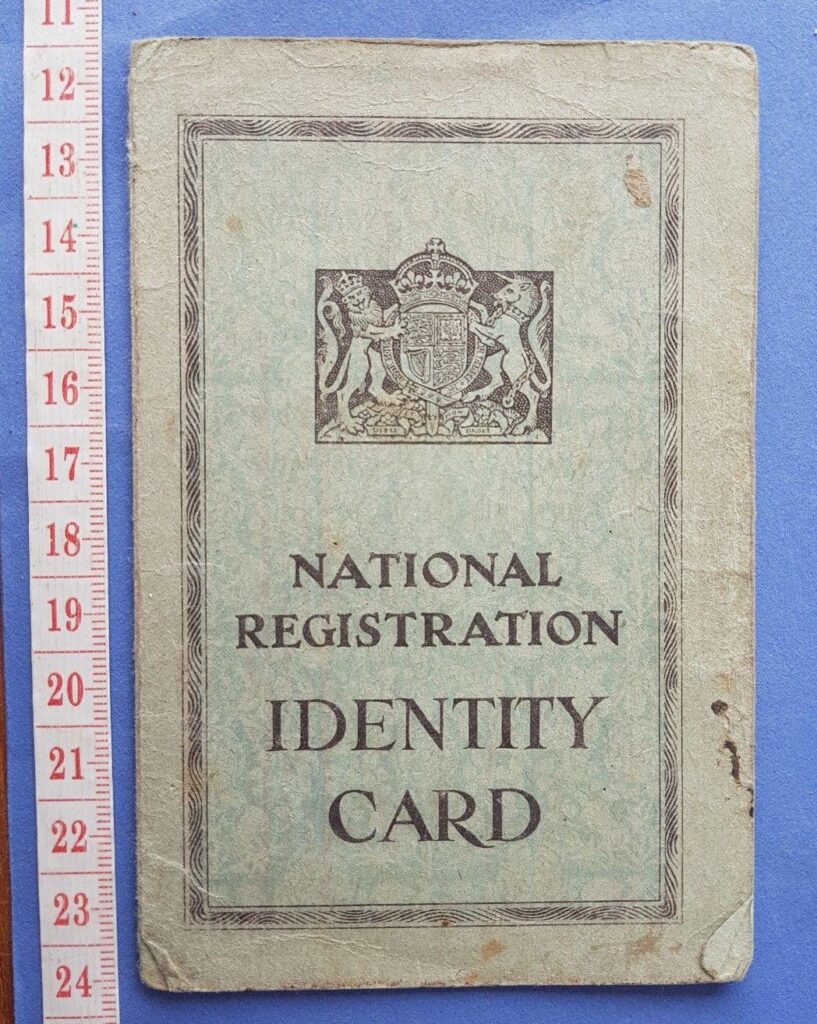
The 1939 Census
If you are interested in tracing the history of your family via the internet may be interested to know that the 1939 Census is now available through Ancestry and Find My Past. Alternatively if you are a member of Essex Libraries you can access Find My Past for free at Libraries across the County.
Dubbed ‘The Wartime Domesday Book’, the 1939 Register is the most comprehensive survey of the population of England and Wales ever taken. It was taken on 29 September, just after the start of the Second World War. 65,000 enumerators were employed to visit every house in England and Wales to take stock of the civil population. The information that they recorded was used to issue Identity Cards, plan mass evacuations, establish rationing and coordinate other war-time provisions. In the longer term, the 1939 Register would go on to play a central role in the establishment of post-war services like the NHS.
The 1939 Register is particularly significant as the only surviving record of the population between 1921 and 1951. It bridges a 30-year gap in history as the 1931 census was destroyed during the war and the 1941 census was never taken.
Just as in a census, the 1939 Register will reveal everyone who was in the household on the night of the 29th September 1939. For each individual, the 1939 Register will tell you: Full name; address; date of birth; marital status; occupation; and whether the individual was a member of the armed services or reserves. However it does not include place of birth.
The 1931 census for England and Wales was destroyed by fire during the Second World War, and there was no census taken in 1941, making the information contained in the 1939 Register even more valuable.
An average of three people lived in each household. The register provides unprecedented insight into those 12 million households, including the composition of the labour force in England and Wales at the time.
Writer and broadcaster Andrew Marr said:
“The 1939 register is one of the most important documents in recent British history. A comprehensive record of the civil population on the outbreak of war, it captures a people whose lives were about to change forever. It records streets that within months, under the assault of the Luftwaffe, were to disappear; families that would be separated by the events of war: evacuation, conscription and sometimes worse. ”
Article 4 of 12
Mr Isaac Taylor of Stanford Rivers
Isaac Taylor (17 August 1787 – 28 June 1865) was an English philosophical and historical writer, artist, and inventor. He was the eldest surviving son of Isaac Taylor of Ongar. He was born at Lavenham, Suffolk, and moved with his family to Colchester and, at the end of 1810, to Ongar. In the family tradition, he was trained as draughtsman and engraver. After a few years' occupation as a designer of book illustrations, he turned to literature as vocation.
In 1825 he settled at Stanford Rivers, about two miles from Ongar, in a rambling old-fashioned farmhouse. He married, on 17 August 1825, Elizabeth, second daughter of James Medland of Newington, the friend and correspondent of his sister Jane.
In 1836 Taylor contested the chair of logic at Edinburgh University with Sir William Hamilton, and was narrowly beaten. In March 1841, in Hanover Square, he delivered four lectures on 'Spiritual Christianity'. Though he joined the Anglican communion at an early stage in his career, Taylor remained on good terms with friends among the dissenters.
Taylor was always much interested in mechanical devices and inventions, and he spent many hours in the workshop that he fitted up at Stanford Rivers. Early in life he invented a beer-tap (patented 20 Nov. 1824) which came into almost universal use, and in 1848 he brought to perfection a highly ingenious machine for engraving upon copper (pat. 12248, 21 Aug. 1848). The expenses and liabilities involved by this invention made it a disaster financially to the inventor; it was eventually applied on a large scale by a syndicate to engraving patterns upon copper cylinders for calico printing in Manchester.
Two of his sisters had a reputation as poets. Ann Taylor, later Mrs. Gilbert (1782–1866), and Jane (1783–1824), responsible for the well-known rhyme Twinkle Twinkle Little Star.
In the 1861 Census he is described as ‘a gentleman.’ He died in 1865 and is buried at Stanford Rivers.
Article 5 of 12
Stapleford Tawney – Notes on the Overseers’ Book of Accounts for the years 1723 – 1823
In the year 1723, Edward Luther was Rector of this Parish and signed the book at the Vestry as such. E. Smyth, of Hill Hall. Also signd. At this vestry meeting a document was drawn up and signed by those present. This stated that whereas Thomas Luther, late of Suttons, in the parish of Stapleford Tawney (sic) in the County of Essex., deceased, did in and by his last will and testament in writing, duly executed, bearing date the thirtieth day of July, one thousand seven hundred and eighteen, give and devise the sum of five pounds per annum to the poor of the parish of Stapleford Tany… for ever and charged several lands…in the said parish with the payment thereof.
Now know ye that we the Churchwardens etc., in vestry assembled…on Monday the eleventh day of April, one thousand seven hundred and twenty-six, In consideration that Jane Luther, of Suttons aforesaid widow, the mother of the said Thomas Luther, deceased, having promised to give four pounds per annum towards the school to be sett up in the said parish of Stapleford Tany, for the instructing the poor children of the said parish…Doe hereby agree and consent as much as in us lyes that the five pounds per annum so devised unto the poor of Stapleford Tany aforesaid, in and by the said Thomas Luther, be applyed and paid annually for ever hereafter to some honest schoolmaster or mistress that shall hereafter reside in the said parish of Stapleford Tany, and instruct the children of such poor persons that are or hereafter shall be, chargeable or likely to become chargeable to the parish aforesaid, in Reading, writing and Accounts, and also in learning them the Church Catechism and bringing them up in the Religion of the Church of England, which said schoolmaster or mistress after the death of the said Jane Luther, to be chosen by the proprietors of the several mansion houses hereinafter named, that is to say the proprietors of the mansion houses called Suttons, Miles, Tany Hall and Bells; and the Rector of the said parish for the time being etc.
Signed. E. Smyth Mary Haddon
Wm. Nicholson Charles Haddon
P. Parkes, Rector Hen. Mott, Jnr.
his
David X Trevice
mark
Charles B. Sworder, Epping
Article 6 of 12
The Budworth Hall Auxiliary Hospital
Between 1915 and 1919 the Budworth Hall, Ongar, became a convalescent hospital for sick and wounded servicemen. Initially the hospital had 35 beds in two large wards (the largest being on the ground floor – the Essex Hunt Ball Room, with 22 beds. Upstairs the Concert Room had 12 beds. The first patients to arrive were mainly Belgian soldiers.
The hospital was affiliated to the Colchester Military Hospital.
In 1917 an extension was built and the number of beds was increased to 60.
The hospital was staffed by the Essex/32 Voluntary Aid Detachment. The VAD’s had been established in 1909, and consisted mainly of women. They worked alongside qualified nurses. They were trained by the British Red Cross in first aid, bed making, feeding a patient, giving a patient a blanket bath, and keeping a ward clean. Their role was mainly a supportive one as nursing assistants.
The hospital closed on the 22nd January 1919, and during the time that was in existence some 1,333 soldiers had received treatment. It was only used for other ranks as Officers were accommodated in the nearby Blake Hall.
Miss Ethel Jones the Matron who lived at Marden Ash House, was awarded the Order of the British Empire for her efforts.
In July 1915 an auxiliary hospital for convalescent officers opened at Blake Hall, in what had originally been a covered-in tennis court.
The building, lent by Mr and Mrs William Buckley Gladstone, was situated in the grounds, a short distance from the house. Additions and improvements were carried out to make it into a first-rate ward with a Dining and Recreation Room at one end. The Hospital had 20 beds and was affiliated to Colchester Military Hospital. Mr Gladstone also lent a motor car and the services of his chauffeur for the use of the Hospital.
The Hospital was financed and equipped by the Joint War Committee, with an additional grant from the War Office, but Mr Gladstone also contributed £250 a year towards the cost of the acetylene lighting and other expenses. He also paid the wages of the gardeners (the Hospital received a small amount of garden produce), the chauffeur and the cowman.
By 1916 the Hospital had 30 beds.
During the summer months a large marquee, lent by Lord and Lady Wolverton, was erected in the grounds. This increased the patient accommodation of the Hospital by six, making a total of 36 beds.
By 1917 the Hospital had 39 beds.
It closed in May 1919.
[During WW2 the house was requisitioned by the Royal Air Force, who used the south wing as an operations base for the airfields at Chipping Ongar and North Weald.]
Many large houses and hotels were used as Convalescent Hospitals.
Those being treated wore a blue uniform with a red tie, known as "Hospital Blues", once a solider was deemed fit enough to leave convalescence, he would return to one of the Command Depots for the rehabilitative training after which they would be allocated to a battalion, frequently a different battalion or regiment to that in which he had previously served, as his place would have been taken by another man to maintain numbers.
Those who did not recover sufficiently to return to active service were issued with a Silver War Badge, SWB, to wear on their lapel, this signified that they had completed their war service. The badges were individually numbered and numbers are recorded the medal cards of those who received them. Silver War Badges were also issued to soldiers who had completed the length of service they had signed up for, mainly regular soldiers who had served before the war and whose period of service expired before the end of the conflict.
Below are some of the auxiliary hospitals in West Essex that operated during WWI.
Bishops Hall Romford
Braeside Loughton
Brookfield Hale End Woodford Green
Coombe Lodge Great Warley
Down Hall Harlow
Hanover House Woodford Green
Hillsborough Red Cross Hospital Harlow
Ingatestone Court Auxiliary Hospital
Ivylands Epping
Marshalls Park Romford
Oakwood VAD Hospital Chigwell
Ormonde House Buckhurst Hill
St Lawrences Hall Upminster
Theydon and Grays Retreat Theydon Bois
Theydon Towers Hospital Theydon Bois
Town Hall Hospital Waltham Abbey
Woodford Memorial Hall South Woodford
Article 7 of 12
The Effigy of Thomas Grevile, Chrysom Child
In the Sanctuary and to the north eastern corner behind the altar is a brass of a Chrysom child.
This is to Thomas Greville, the infant son of Giles Greville who died in 1492. The Chrisom or Chrism robe was used at his baptism and would usually be returned a month or so later when mother and child came to church for purification, but by then Thomas had already died and so the chrism robe was used as a shroud.
The effigy is only 7 ½ inches high. It is completely swaddled, with the exception of its face, and bound round with ornamented banding.
The inscription (on a plate 10 ½ by 5 inches) is placed below the figure
and reads as follows:
Here lythe the bodi of Thoms Grevile, Son
Of Gilis Grevile, of London, mchaunt, borne
in the conte of Gloc. Gentilman; whiche
Thoms discessyd in his tendyr Age, the viii
Day of Marche, the yere of oure Lord God, A
1492; on whoos soule Ihu haue mcy.
The formation of the “4” in the date is peculiar, and the use of Arabic numerals to indicate the year is remarkable at an early date. These numerals did not come into general use until some time later.
Above the figure is a small shield of arms (measuring 3 ¼ by 2 ¾ inches).
Anciently, a chrisom, or "chrisom-cloth," was the face-cloth, or piece of linen laid over a child's head when he or she was baptised or christened. Originally, the purpose of the chrisom-cloth was to keep the chrism, a consecrated oil, from accidentally rubbing off
Article 8 of 12
The Epping Railways Company, 1859-63
The Epping Railways Company is not well known. This is not surprising since it never built a mile of railway. There had been, of course, many railway companies remarkable mainly for their lack of achievement but they were more uncommon by the 1860’s. This company’s real interest is that it is a local example of elbowing for position, parliamentary manoeuvring and wasteful expenditure that characterised railway promotion in England generally.
The Act of Incorporation, which received the royal assent on 13 August, 1859 empowered the company to make an extension of the Loughton Branch of the Eastern Counties Railway to Epping and Chipping Ongar and to raise capital of £100,000 in £10 shares with the customary limited liability.
The directors, who were George Parker Bidder (chairman), John Chevallier Cobbold, M.P., E S Cayley, M.P., and George Josslyn, explained the purpose and prospects to the proprietors at the first half-yearly meeting at Epping on 25 February, 1860. Promotion had been supported by the Eastern Counties as a protective measure against a competing line which was threatened from London, avoiding Epping, to Ongar, Dunmow and Bury. When this line was withdrawn the Eastern Counties said the Epping line was intended only ‘as a foil’ and should be abandoned. The Epping promoters therefore carried their Bill through Parliament against the opposition of the Eastern Counties.
The directors held out the prospect of a highly remunerative line, arising from the beauty of the locality, the close proximity to the metropolis and the ‘fertile and populous district beyond Ongar.’ The estimated cost from Loughton to Epping was between £52,571 and £54,571 for construction and land not including the, always considerable, item of parliamentary and legal expenses. The company’s own common seal was duly approved.
The conflict with the Eastern Counties involved the Epping men in expensive courses. Faced with a refusal to co-operate they deposited a Bill, as a protective measure, to obtain independent connection to Fenchurch Street by a line to the Barking extension of the Tilbury Line; this was the Epping Railways Ilford Bill. They also promoted a Bill to extend from Ongar to Dunmow. Both Bills were opposed in parliament by the Eastern Counties. Negotiations were then begun. The proposal was that the Eastern Counties should come to a fair working arrangement in return for withdrawal of the Ilford Bill, provided the Eastern Counties withdrew opposition to the Dunmow Bill.
The Ilford Bill was accordingly withdrawn. The legal costs had been £1,245. 12s. 11d., the engineering costs about £500. The Ongar-Dunmow Bill was passed since parliament considered the Eastern Counties had no locus standi for opposition, but it never produced a railway. In this case the legal costs were £1,682. 6s. 4d., and the engineering costs about £700.
The end of the conflict came with the approaching amalgamation of the Eastern Counties, Eastern Union and Norfolk companies into the Great Eastern Railway. An agreement between the companies provided that the Epping-Ongar and Ongar-Dunmow lines should be made by the associated companies, the Eastern Counties to deposit five-sevenths of the money required for the Loughton-Epping line. But the Ongar-Dunmow line was to be reconsidered and so it was.
The Epping Company was not quite dead. It had its interests, its assets and, more important, its liabilities to hand on. Its interests were protected by a separate Bill to vest its powers legally in the associated companies, before the proposed amalgamation.
Then, its manoeuvres had been accompanied by other difficulties. In order to dispose of unsold shares it had offered a commission of one-eighth of each share to ‘some of the professional gentlemen of Epping.’
The purchase of land created problems. Notice had been served, in the usual way, on landowners, the chief of whom was the Revd Mr Maitland mentioned by William Addison in Epping Forest as the first clerical lord of Loughton Manor, contracts of sale had been entered into, but the company was not ready or able to pay. And so when the Revd Mr Maitland owners amounting to £9,650 had to be passed with the rest to the associated companies and so to the G.E.R..
Lastly the local people became impatient. They, shareholders and residents in Epping, memorialised the company to start the works. This too was handed on.
In 1863, then, the new Great Eastern Railway inherited from the Epping project firstly legal and parliamentary expenses of £5,029. 10s. 2d., and engineering expenses of £2,525, a total of £7,554. 10s. 2d., of which only £3,414. 11s. related to the line to be actually built, secondly a railway on paper and thirdly a certain amount of local discontent. The Great Eastern became the L.N.E.R. and today the Eastern Region.
This story deals with only quite a small affair but it could be repeated many times over. It is based on the minutes of the Epping Railways Company.
Essex Review
Extract from No 232 Volume LVIII (October 1949)
Article 9 of 12
Gaynes Park and Sir William Fitzwilliam (1406 – 1534)
FitzWilliam was an alderman of the City of London who obtained a new charter for the Merchant Taylors’ Company in 1502, purchased Gaynes Park, Theydon Garnon, in 1508, covenanting to prosecute the manors out of the King’s hands and to acquit the King of the interest he had in them under an Act of 1503. FitzWilliam was a Northamptonshire man who entered the service of Cardinal Wolsey, to whom he became treasurer and chamberlain, remaining loyal to his master after his fall. On hearing that Wolsey, while in disgrace, had been hospitably received by Fitzwilliam, HenryVIII asked him how he dared entertain so great an enemy of the State. Fitzwilliam replied that
‘he had not contemptuously or wilfully done it, but only because he had been his master, and partly the means of his great fortunes.’
This reply so pleased the king that he observed that he himself had few such servants and promptly knighted him. Sir William was heriff of Northampton 1n 1524. By the following year he owned the manors of Gaynes Park and Hemnalls, in Theydon Garnon, Marshalls in North Welad Bassett, Madelles in Epping, and Arnolds and Hunts in Lambourne.
At his death in 1534, he bequeathed £500 to mend the highway between Coopersale and Chigwell, and £100 for ‘poor maids’ marriage’s. He also cancelled all debts due to him, and forgave his debtors, writing over their names Amor Dei Remitto – for the love of God I remit.
The second Sir William (d.1152) of Gaynes Park, son of the first figures little in Essex history. In 1543 he settled Gaynes Park, Hemnalls, Madells, together wth Marshalls in North Weald – considerable estates – on his eldest son, Willian and his wife Anne, daughter of Sir William Sidney of Penshurst, on their marriage.
The third Sir William FitzWilliam (1526-1599) became Lord Deputy of Ireland. In 1561 he was appointed Lord Justice in Ireland. In 1575 he returned to England and was appointed Governor of Fotheringhay Castle when Mary Queen of Scots was executed in 1587. In appreciation of his consideration for her at the end, Mary gave him a portrait of her son – the future James I of England. He settled ll his Essex estates on his wife for life in 1569, with the remainder to their second son John, and his heirs male.
Sir William incurred debts to the Queen Elizabeth amounting to some £3,964. He was pardoned £1000, but at the time of his death he had only paid off £1,185 of the balance. The debt was inherited by his eldest son, William, and this led to a dispute over the ownership of Gaynes Park.
By the settlement of 1596 (referred to above) John, not William inherited the estate at hi mother’s death in 1602. William challenged his brother’ title, even going so far as to mortgage the estate to the queen as a means of discharging the family debt. The dispute between the two brothers was brought before the Court of Exchequer, which gave a decision in favour of John.
There is a monument to Lady Fitzwilliam (d. 1602) in All Saints church, Theydon Garnon. By her will she endowed the almshouses for four widows still standing. John FitzWilliam died in 1612 without issue.
Article 10 of 12
Wall Survey
The Essex Rock and Mineral Society are currently conducting a survey into the types of rock etc. used in the construction of walls, with special emphasis on church construction.
Blocks and cobbles of building material dug from nearby pits, cleared from the land or transported up rivers from seashores, have long been used in the construction of thousands of walls in the region, especially church walls.
Materials used in churches and walls in and around Essex may thus broadly reflect underlying geology and river transport.
These materials could therefore provide some access to geology otherwise hidden beneath the landscape.
The question is how good a reflection is this? Is there a pattern to wall building that reflects the underlying geology in any meaningful way? Does the pattern also reflect a configuration of transportation of materials from the coast and from outside the area?
This project should enable us to test whether there are any such patterns.
Church and tower walls, garden and cottage walls and estate walls all provide evidence.
Flint frequently forms the majority material in Essex cobble walls. Flint is extremely variable in size, colour, texture and shape. By far the best way to ‘get your eye in’ is to view as many different verified flints as possible. Flints that have been quarried from Chalk are very often black inside with a white surface; they may be either whole or broken. Some flints were carefully broken or ‘knapped’. Skilled knapping produced beautifully shaped blocks, squares and special shapes in flint for some walls. Many flints from gravel and glacial till deposits are stained brown to red internally with iron minerals. Some are brown, grey or black on the outside or quite mottled. Many are in strange shapes; some have holes in or through them. Red and pink flints, usually crackled, have been heated in fires. Flint pebbles and cobbles were rounded on ancient seashores and incorporated into gravel deposits. If possible, note the proportions of flints used as cobbles (naturally-worn), ‘raw’ nodules (unworn, as they came from the Chalk), or ‘knapped’ (split or shaped artificially). Flint frequently forms the largest proportion of a cobble wall.
Many flints are broken: look very closely at any breaks and observe characteristic conchoidal (shell-like) and curved fracture surfaces, a bit like broken bottle glass. These are characteristic of flint.
Flint pebbles frequently show 'chatter marks' on their surfaces: fine, slightly curved indentations into the pebble surface which look as though a fingernail has been pressed in. These marks are characteristic of flint and help to distinguish flint from the other common materials in the walls.
Other rocks which may occur include vein quartz, quartzite, puddingstone, cementstone, limestone and ferricrete. Roman brick acan also be found in the construction of churches, which indicates the presence of a roman site in the vicinity,
Visit the Essex Rock and Mineral Society website for a more details.
Article 11 of 12
High Sheriffs of Essex
The High Shrievalties are the oldest secular titles under the Crown in England and Wales, their purpose being to represent the monarch at a local level, historically in the shires.
The office was a powerful position in earlier times, as sheriffs were responsible for the maintenance of law and order and various other roles. It was only in 1908 under Edward VII that the Lord Lieutenant became more senior than the High Sheriff. Since then the position of High Sheriff has become more ceremonial, with many of its previous responsibilities transferred to High Court judges, magistrates, coroners, local authorities and the police.
The following is a list of people who were appointed to the position of Sheriff of Essex and who lived in the local area.
1615. Sir William Smith, of Hill Hall, Theydon Mount
1619. William Smith of Mounthall, Theydon Mount
1703. Sir Thomas Webster, 1st Baronet of Copped Hall, Epping
1768. Richard Lomas of Loughton
1799. Capel Cure – Blake Hall, Bobbingworth
1809. Rutherford Abdy – Albyns, Stapleford Abbotts
1811. Charles Smith – Suttons, Stapleford Tawney
1828. Charles Joshua Smith – Suttons
1830. Capel Cure – Blake Hall
1843. Henry John Conyers – Copped Hall
1844. Stanes Brocket Brocket – Spains Hall, Willingale Spain
1846. John Clarmont Whiteman – The Grove, Theydon Garnon
1847. William Coxhead Marsh – Park Hall, Theydon Garnon
1852. Sir Charles Cunliffe Smith – Suttons
1857. John Francis Wright – Kelvedon Hall, Kelvedon Hatch
1875. Sir Thomas Abdy – Albyns
1878. Philip John Budworth – Greensted Hall, Greensted
1884. Sir William Neville Abdy – Albyns
1889. Sir William Bowyer-Smyth – Hill Hall
1892. Willian Swain Chisenhall Marsh – Gaynes Park, Coopersale
1901. Ernest James Wythes – Copped Hall
1915. Sir Drummond Cunliffe Smith – Suttons
1932. Harold McCorquodale - Forest Hall, Ongar
1951. Major George Nigel Capel-Cure - Blake Hall
Article 12 of 12
High Country Programme for 2018
High Country Programme for 2018
28 June
The Bardfield Painters
Jacqui Eykelbosch
26 July
The Tidal Thames – its Folklore and Traditions
Mark Lewis
25 October
More Essex Churches – Then and Now
Andrew Smith
Meetings are held in Toot Hill Village Hall.
Meetings start at 8.00pm.
Members £1 ~ Visitors £3.
Refreshments