
High Country History Group
Journal No. 69
Contents
September 2018
Article 1 of 6
Buried in Woollen
For centuries the woollen trade had been important to the wealth and prosperity of England, but with the introduction of new materials and foreign imports, some people thought that the industry was under threat. To protect the trade Parliament enacted the Burying in Woollen Acts. The first Act was passed in 166 and was later replaced by the better known Act of 1678, which stated;
"No corpse of any person (except those who shall die of the plague) shall be buried in any shift, sheet, or shroud, or anything whatsoever made or mingled with flax, hemp, silk, hair, gold, or silver, or in any stuff, or thing, other than what is made of sheep's wool only."
Failure to comply resulted in a £5 forfeiture. One-half of this went to the informer, the other half to the poor of the parish where the body was buried. Within 8 days of the burial, an affidavit had to be provided attesting that the burial complied with the Act. The affidavit confirming the burial in wool had to be sworn before a Justice of the Peace or failing that the parson could administer the oath. Confirmations of the affidavit appear in the burial registers of some parish registers.
The legislation remained in force until 1814, although the requirement was generally ignored after 1770.
Article 2 of 6
Revd. E.H.L. Reeve: Chronicler of the Great War
Preface
Edward Henry Lisle Reeve (1858 - 1936) was Rector of Stondon Massey in Essex from 1893 until 1935. In his spare time he researched and wrote what is regarded as a “model parish-history”. Three books were published between 1900 and 1914.
Reeve went on to record local events through to 1929. He provides a fascinating and unique insight to the First World War (1914 – 18) writing as events unfolded. These extracts relate to Ongar and the High Country area.
8th October 1914
The German fleet is still inactive. Thus the thought of the present invasion of our shores is more remote than was the case at the opening of the War. But London is darkened by order after sunset in the present month, in view of the possible advent of a Fleet of German air-ships – the Zeppelins – which, if they could trace the position of the chief streets and principal buildings, would doubtless drop destructive bombs upon them as they did recently in the towns of France and Belgium.
Parties of recruits, lately sworn, may be seen taking trains at Ongar for London and some appointed training station.
Artillery and Engineer Officers have been busily surveying the district during the past three weeks with the purpose, I believe, of deciding on the best method of obstructing a possible raid on London. An outer line of defence appears to run through Ongar, Stondon and Doddinghurst: and my little field has received attention. Field guns I think would, on necessity, be brought here, and would range eastward in the direction of Chelmsford. I approached a number of officers and politely enquired whether they were about to make entrenchments. “Not at present” was their reply.
10th November 1914
Since writing the foregoing events in the Parish and District have developed. It appears to have been decided to carry out thoroughly the work of preparing this, the third, line of defence from the Essex coast for London. It would hardly be too much to say that Stondon is becoming honeycombed with trenches, and the Church, owing to its being set upon a hill, is a prominent centre. The slopes declining from the Hall to the brook contain a network of passages, giving shelter to riflemen who will give, if necessary, a stern reception to the enemy coming down the opposite hill from Paslow Common. Flanking trenches face toward the Rectory, while others are taken southward along the course of the brook to the village. In adjacent parishes the same work is observable. On the slopes of High Ongar, and on the confines of Blackmore and Doddinghurst towards Swallows Cross bodies of men are busily engaged.
The principle adopted for these defences is to establish certain strong positions at intervals. The enemy is assumed to have penetrated through the Chelmsford and Writtle defences (the 2nd line) and to be coming from Nine Ashes and Paslow Common. It would be the objective of our Generals to induce him to press on to London through Stondon, when the trap prepared would be sprung upon him.
These “strong positions” are intended to be held at all costs. The position at Stondon would be held by a force of from 800 to 1000 men.
A vast importation of London navvies, chiefly the employees of great breweries and other large firms has been made: and the work in digging has been attacked and largely carried out under military direction, supplemented by a party of Civil Engineers. Some 600 of these navvies arrived on the morning of November 2nd, some by railway to Ongar, and some by road in motor omnibuses. The plan being somewhat unexpectedly adopted, little or no preparation had been made in the locality for the reception of the men. Some 400 were to commence work at once in Stondon. In the event, at the cost of considerable discomfort, the first few days were successfully surmounted and then tents were erected here and there for the accommodation of the men, or they contrived to find themselves temporary billets. A canteen was put up at Brook’s and Cannons Farm, which to some degree supplied the place of shops. This was afterward moved to a centre at Hooks End, Blackmore. The appearance of a canteen was hailed with delight by the villagers, publican, and all: for it was becoming a real difficulty to know how to meet the wants of the invaders.
Preparations have been made at Ongar for the reception of any wounded men. Red Cross parties have been formed, and a considerable body of ladies specially trained in “first aid” knowledge and the art of sick nursing. The Budworth Hall has been fitted up for the purpose, and beds arranged for the accommodation of thirty men. The first arrivals have now made their appearance. Twenty Belgian wounded have been drafted to Ongar, and placed under the care of local surgeons.
No doubt when they are convalescent they will be succeeded by others, the fierce fighting in progress around Lille and Ypres adding every day to the number of loss in combat. Up to the present we have heard no air vessel arriving.
28th January 1915
When travelling by train to London from Ongar on Jan 25th I had for a fellow passenger for part of the way a Lancashire man who had returned wounded and frost-bitten from the front, and was now sufficiently convalescent to be going for a short spell to his native county before returning to France.
His first-hand report of the conditions of things abroad was very interesting. He had often been for days together standing in water in the trenches, and the plight of the soldiers in the cold, wet, and filth was, he said indescribable. The Germans were in as bad or worse plight. During an interval on Christmas-day some of the enemy had approached our trenches and joined in conversation with our men. One German soldier had given his cigarettes and offered him brandy.
In reply to the German invitation to drink with him the British soldier declined, until by way of assuring him took a pull himself at the flask he was offering! Lancashire shyness was then overcome, and the soldier accepted a draught of the “Cognac” for such it proved to be. The time was soon over for these pleasantries, and the two dropped back again into their several positions, having apparently no special desire to kill one another, save at the call of duty! I wished my fellow passenger a safe return to England at the close of war.
22nd April 1915
A Battalion of the Berkshire Regiment marched into the district on Monday April 12th, some of the men being billeted at Marden Ash and Chipping Ongar, some at Kelvedon Hatch and Blackmore, and about 60 at Stondon.
During the day they have been employed in continuing the making of the trenches and there have been special night assemblies with a view of accustoming to men in making a trench at night, in the dark and as silently as possible.
On Friday night, April 16th, a little after midnight, I, in common with others in the Parish, heard the sound of distant bombs, and at once attributed it to the work of German “Zeppelins” or air-ships.
In several nights subsequently the military were on duty throughout the dark hours, barricading important positions on the roads, and calling passers by, in carts or motor-cars, to halt and give a satisfactory account of themselves.
The belief was that the course of the Zeppelins was directed by strong lights on the roads below, handled by aliens or by unworthy payees of Germany, acting as the enemy’s scouts and informers. Rigorous rules as to lights are again put into force.
8th September 1915
During August a body of some 150 officers selected out of many different Regiments came to Ongar and the neighbourhood. These officers were billeted in the town and in houses round about.
At the Rectory we were asked to accommodate Lieut. Waldo Littlewood and his wife who has come to join her husband during his fortnight’s training.
On the 15th August a complete Register was compiled of all persons in the country between the ages of 15 and 65, the object of the Government being to ascertain the number of men of military age should an emergency render a call upon them necessary: and to discover any who might be able to render assistance by expert knowledge in the making of ammunition or army clothing. It was understood that, as far as possible, women would be employed to take the place of men who had enlisted or who might enlist if a substitute could be found.
The Germans have a strong desire to impress a notion of their power and “frightfulness” on our population.
On August 17th at 10.15pm a Zeppelin was heard overhead, making its way from the coast in the direction of London. It passed apparently over that part of Stondon which lies nearest Paslow Common, and made its way over Stanford Rivers and Leytonstone. There a number of bombs were dropped, killing five persons, and doing extensive damage to property. On the return journey, about 11.45pm, a vessel with fuse, containing petrol, was dropped in the fields lying between Hallsford and High Ongar, not far from Castle Farm at Ongar. Expert opinion inclines to think that this was not a “bomb”, but a petrol can being dropped by accident from the Zeppelin. Under the supervision of experts the liquid contained in the vessel was burned on the spot.
25th April 1916
No fewer than 45 bombs were discovered in the neighbourhood of High Ongar, Ongar and Shelley after the visit of the hostile air-craft on Easter Tuesday. They were not heavy explosive shells which tore the cavities in the Blackmore fields on March 31st, but bombs of an incendiary character intended to set fire to buildings. Examination showed that these incendiary bombs carried a fuse of ten seconds duration. Many of them had not burst, and the police had 26 of them on view at Ongar police-station which I visited on April 27th.
19th January 1917
A great explosion at a munition factory at Silvertown occurred at about seven o’clock in the evening. Had we looked outside we should have seen the bright light from the fire which was visible all around for many miles. Some parishioners coming from Ongar were startled by the sudden illumination.
5th March 1917
About 20 wounded men arrived at Ongar this morning from the French Front. The number to be accommodated at the Budworth Hall has now been raised to 62. A change has been made in the arrangements at Blake Hall. The private soldiers who have been well cared for there during the winter by the tenant, Mr Gladstone, in the riding-school have lately been removed, and Mr Gladstone has placed his mansion at the disposal of the War-Office for wounded Officers. Some 24 are likely to come into residence shortly, and accommodation can be made for 35 or more.
29th March 1917
An Official called at the Union House a few days since to enquire as to the suitability for the reception of wounded soldiers at an early date. It is well understood that the final overthrow of the Germans will be costly, and that the authorities are said to be making preparations for a million casualties!
9th May 1917
It becomes increasingly difficult for the wayfarer to get served in pastry cooks’ and refreshment houses. At Ongar the confectioners refuse to supply the traveller with a “sit-down” meal: and at Brentwood recently I was told that only between three and six o’clock in the afternoon may a cup of tea and light refreshment be supplied. Similarly at Chelmsford two or three weeks ago the proprietor was only allowed to serve an individual customer up to the limit of one shilling and threepence for eatables.
7th July 1917
A few minutes past ten (summer time) this morning a Fleet of hostile aeroplanes was heard approaching from the East, and at 10.30 they were in our near neighbourhood. I counted 24 myself, flying compactly, and very much remembering a body of rooks flying westward towards Kelvedon Hall on an autumn evening. The German aeroplanes appeared from the Rectory to extend from ourselves towards Kelvedon Hatch and Stanford Rivers. They flew unopposed till apparently over North Weald and Epping when firing commenced, and seemed to scatter the formation. They rallied however, and then appeared to make rapidly westward, over the Loughton and Chigwell district for N London. The firing and bomb-throwing circled more and more to the south until at last the fleet was again visible over the Romford quarter, and the sound of machine guns was plainly audible. The aeroplanes were now at a much greater distance. They were lost in the haze, in little over ¾ hour from their first appearance, as they vanished in the direction of the mouth of the river Thames and Southend.
11th July 1917
The Prime Minister stated in the House that there were 22 of the planes, and that they carried 800lbs of explosive apiece. We saw 22 over the Rectory compactly together, followed by two more which appeared to by stragglers. These two are believed to have been British, and some claim to have heard machine-gun intercourse between them and the Germans.
Information given subsequently in the papers tells of 43 persons killed and 193 injured.
8th September 1917
Some 40 German prisoners have been brought to Ongar to assist in agricultural work, and are located at “Bowes”, a house just outside the town on the Shelley and Fyfield road. They will be let out to farmers in gangs of five or ten who will be in charge of a guard.
21st September 1917
One may meet batches of German prisoners any day now passing through Ongar on their way to out-lying farms. Pole, hang-dog, dejected lacking fellows. People stare at them rather too rudely. The farmers say some of them work well. It can be no joke to be a prisoner in the enemy’s country though I believe these Germans and Austrians are glad enough to be out of the firing-line.
24th September 1917
Fruit of all kinds has been abundant this summer owing to the genial and uninterrupted Spring. In other years the blossom would have been withered by successive frosts and perhaps only a tithe of the crop promised would be gathered. We have has more pears, and peaches than we could eat. Numerous presents have been made to friends and we have today sent down a heavy consignment to Ongar, for use of the convalescent soldiers at the Budworth Hall Hospital. Our apples are stored, and we have in the house as much jam from currants etc as the limited supply of sugar has rendered possible.
14th March 1918
I spoke to Wm Maryon, an Ongar baker, who has lately on several occasions been stopped on his rounds with his baker’s cart by little batches of German prisoners, asking for bread. He told me that they were ready to pay for the bread. It seems strange that they should be without their guard, and that they should have this “bread-hunger”, as they are generally believed to be well cared for.
15th April 1918
It remains to be seen how the Man-Power Bill will affect the local Clergy. They are to be called up at the same age as the laity but for non-combatant service. It will be in the care of the Bishop to decide how to provide for the parishes.
Brigadier-General Charles Budworth, whose father was well known at Greensted Hall, and whose family still hold the estate has won a good name as commanding the Royal Artillery in the “Fourth Army” on the British front, and we trust may be spared to come safely through the ordeal.
16th April 1918
William Maryon, the baker has been fined £1 for supplying German prisoners with bread, though confessedly against his will.
11th May 1918
The collection of money to provide the “sinews of War” is an important matter now-a-days. The greater among the Citizens have contributed in princely fashion to the War Loan and the lesser fry according to their ability have purchased “War Savings Certificates”.
Yesterday in Chelmsford the County Town was doing its best to raise the £50000 which it had undertaken to contribute during the week which closes today and over £40000 had already been forthcoming. Now Ongar and the villages contained in the Union, 26 in number, have been asked to take the week commencing June 17 as a period of special effort. We cannot expect to raise sufficient to enable us to name a “Tank”, “Aeroplane”, or even a small gun or mortar after us, but some are bold enough to hope that our contribution may mount up to a figure denoting some thousands of pounds!
The Military Authorities have authorized the officer in command at the aerodrome at North Weald to send an aeroplane to the Town and district during Collection week as a stimulus. But of course to loan to the British Government at 5 per cent is in itself an attraction to the investor.
24th June 1918
Our financial week at Ongar (June 16-22) was a most enthusiastic one. We were urged by the National War Savings Committee to invest £20000 in the National War Bonds, and I am bound to say that I regarded the figure as altogether too high as one for our purely agricultural District. Fact, however, proved in this case stranger than fiction, and residents, farmers, and cottagers all produced their savings amounting to £37600 and this was Ongar’s answer to HM the Kaiser!!! Essex people still believe in the stability of their country, and recognise their country’s obligation to bring the War, under the Divine Blessing to a victorious conclusion.
10th September 1918
I visited the Convalescent House for Officers at Blake Hall today for the special purpose of calling on a Lieut Eyre commended to me by a mutual friend at Hampstead. I found the patient a bright young man of 23 or 24 years slowly recovering from a spinal wound received at Passchendaele in July 1917 which has partially paralysed his lower limbs and necessitated crutches. He had great hopes of the war being brought to a conclusion in 1919, but believed that in any case the weight of America would tell by 1920.
11th November 1918
The Armistice was signed at 5 o’clock this morning, to take effect from 11 o’clock. The news was known early in London, and was made known by the hooting of sirens and the noise of maroons. Some in Stondon heard the distinct bells at Brentwood. But it was not till the afternoon that definite tidings reached the villages and then it filtered through chiefly the form of private messages. News came to Stondon that flags were being hoisted on the Military Hospital at Ongar, and that the veteran Field-Marshall Sir Evelyn Wood VC had visited the place and communicated the splendid message to the wounded men. As soon as I had this official intelligence the Stondon Church bells were chimed with all the old vigour by Ernest Baines, our sometime sexton. His son, a young fellow of 19 bearing the same name, has recently been wounded in one of the last engagements on the Italian Front and is in Hospital in Italy with injuries (as we at present understand) to both legs.
Distant rockets and other tokens of joy were heard around us as the evening advanced.
Article 3 of 6
Agriculture Unrest in Stanford Rivers 1841
The following article was written by Rob Brooks to accompany a walk that the group undertook in 2001. It is printed here for the first time. It is being spoken by James Miller of Repentance Farm who was our ‘guide’ on the walk.
‘My name is James Miller. I live in Repentance Farm, just outside the parish in Grinstead. I’m a tenant farmer. Now I understand that you are of the middling sort so maybe this walk will give you some feel of the Parish today. We are walking to Coleman’s Farm and down Mutton Row and back to this substantial church.
In the parish we continue to live through hard times. The Napoleonic Wars, now 25 years over, took so many of our young people from us that farm labour was in short supply; thus wages were good. Since then our wages and conditions have worsened. Around here summer wages in agriculture used to be about 12 shillings a week but over the last five years they have been near to 10 shillings. In the rest of Essex wages have been nearer to 8 shillings and that is not a living wage.
That and the labourers out of work! The new machinery that is being brought onto the farms for threshing, and the like, can do the work of many men. There are many now in Essex able to work who have no work to go to. Indeed about 7,000 labourers out of the 41,000 in Essex are without honest work.
It will be no surprise to you that there has been much unrest. There have been many instances of petty theft, of chickens and the like, just to feed one’s own children. Those who are caught are better fed in Springfield gaol than they would be in their sparse dwellings.
Some have taken it upon themselves to directly oppose the introduction of the new machines. Groups have refused to work. A year or so ago in Stapleford Tawney, Samuel Whitbread wrote a letter rallying the workers in the neighbouring parishes. Samuel demanded 15 shillings in summer and 14 shillings in winter in exchange for labour. This is all right if you are united locally, otherwise it is just cutting off your nose to spite your face.
Others have set fire to the machines. There have been many instances east of here. There is little chance of you being caught when you are with your friends and neighbours. If you are caught, you may be deported, but in the county we all remember the example made of James Ewen who was hanged for arson in Springfield on Christmas Eve of all days.
The Government brought in the New Poor Law. This has meant the end of the old Speenhamland system where the overseers of the poor in the parish supplemented the wage of the poor from the rates. Many farmers just paid less since they knew the lowest wages would be supplemented. The number of poor rose as a consequence. This new Act of Parliament introduced a new system based on care for the poor across unions of parishes. You may have seen the Ongar Union Workhouse, recently enlarged to hold 240 inmates.
Other workers have sought changes in the political system. The London Working Men’s Association recently set down a 6 point Charter. The Charter demands universal male suffrage, equal electoral districts, annual Parliaments, payments of members, secret ballots and no property qualification of MP’s. Those who support this are called Chartists.
George Loveless is one of those behind the movement. You may remember that George was one of the Dorset labourers, now rightly returned to these shores. He now lives in New House Farm in Grinstead. George, of much bitter experience, has held Chartist meetings at the farm. Newspapers have reported that the Chartist Association in Grinstead recruited the local farm labourers ‘by the combined or alternate influence of persuasion and of terror.’ Terror? The terror is only caused by the inability of honest folk to care for their families.
Anyway it is going to be a long time before we see any progress here, and our wages will not increase in the next week.
Stanford Rivers in 1841.
The Tithe Commission has recently completed the tithe apportionment for this parish. This has given us our first large scale map and survey of the parish. There is much of interest in the maps and schedules. It is this map that we will use for our walk.
From the work of the commissioners, we know that the total acreage of the parish is nearly 4,387 acres. Sir Charles Cunliffe Smith, Baronet, is the major landowner, owning approximately 1,354 acres, all tenanted. Mr Capel Cure rents out 816 acres to tenants, but he also owns Ongar Park Wood adding a further 292 acres to his landholding. Thomas Wilson owns Stanford Hall Farm of 704 acres. These account for 72% of the parish acreage..
Hannah Andres and Maria King, widows of Stanford Hall, rent the whole of the farm at the hall. Tabrum Mosely and John Stallibrass farm 252 acres and 319 acres respectively, but there are a further 14 farms in the parish with an acreage of 100 to 160 acres, and a number of smallholdings. The farming is mixed.
The population of the parish from the recent census is 438 males and 393 females, with a further 46 males and 30 females living in the workhouse. There are 158 occupied houses in the parish, but a further 6 were inhabited at the time of the census.
James Miller, June 1841.
Our walk began at St Margaret’s church.
James Ewen, aged 26 years was hanged on the 24 December 1830 for the offence of Arson. In March 1829 a 16 year old boy James Cook was hanged at Chelmsford for arson at his masters farm at Witham.
The 1839 Tithe Map for the parish is held at the Essex Records Office, Chelmsford.
Article 4 of 6
Samuel Whitbread of Stapleford Tawney
The article above referred to a letter supposedly written by a Samuel Whitbread of Stapleford Tawney. The letter is reproduced here.
Samuel Whitbread, Laborer
Stapleford Tawney, nr. Romford, Essex.
To the hard working (but ill used) Laborers of Stapleford Tawney, Stanford Rivers and other Parishes.
Countrymen,
The time is now come when the poor labourer is determined to have more of those comforts that he produces, than he has had at present. In the counties of Kent, Surrey, Sussex, Hampshire, Berkshire, Wilts, Lincolnshire and Norfolk, the laborers all have struck for higher wages, they say they won’t starve upon 8 or 10s a week any longer. They go to the farm houses after they have got together as may laborers as they can, perhaps 200 or 300 men from 5or 6 different parishes and make the farmers promise to give them 14s a week in Winter and 15s in Summer, and now the men have 14s instead of 10s. They don’t mind the farmer bouncing and blustering. They said they would have it and now they have got it. The men in Kent and Sussex that first struck began to plan the thing on Sunday and went about it on the Monday. If Essex rises, it will make 10 counties, and I know this, that it is the fault of the laborers themselves if they have 10s a week instead of 14s, which the brave men of Kent, Sussex and the other counties are getting. This is god news my boys, and make good use of it.
I am,
A Poor Man’s Friend.
They make every man leave off work and join them. No more 10s. a week my lads.
Show this letter to your fellow workmen, as I know what they will say and what they will do. Beware of spies.
The ’Morning ’Post, Tuesday, Dec. 17, 1839
The following statement, upon the accuracy of which the public may confidently rely, affords a striking illustration of the industry, zeal, and success with which the Chartist principles have been diffused and the Chartist organization established among the labouring population of Great Britain.
None of our readers can have forgotten the conviction: and transportation of the Dorchester labourers. The arrival in London of the returned convicts was signalized by a public procession, public dinner and a public subscription. The cause of Radicalism and
of unlawful oaths had gained a splendid victory over social order . . .
The new settlers at Grinstead and High Laver had not long been established among the hitherto quiet and well conducted population of these parishes before they began to agitate and to agitate in a manner, and with a degree of success which showed only too plainly that their mission of mischief had not been entrusted to unpractised or unskilful hands. Chartist newspapers were quickly seen in active circulation. The beer-shops in which they were to be found became more frequented and more noisy than heretofore. A Chartist association was formed at Grinstead and by the combined or
alternate influence or persuasion and of terror, nearly the whole of the agricultural labourers in that and adjoining parishes were induced to join it . . . The effect of these proceedings was to diffuse a general sense of insecurity throughout that part of the country, and so far to disturb the habitual relation between the farmers and the labourers
that the former thought it necessary to adopt a system of hiring for the last harvest different from previous practice and to engage their labourers on such terms that, in case of desertion from their work, they might be liable to summary punishment.
It is gratifying to us to be enabled to add, that since the discomfiture of the Chartists at Newport, the Essex disciples of the Dorchester labourers have dwindled, or seemed, to dwindle, alike in numbers and in courage.
We fear that only one inference can be drawn from this narrative viz... that the Chartist organization is very extensively diffused throughout the country What spot, it will naturally be asked, can be supposed to be free from this foul infection, when it seems to have pervaded even the quiet and secluded hamlets of the County of Essex.
………………
To the editor of the Morning Post
Sir,
I must request your insertion of the following remarks, as I consider that reports such as the one I have undertaken to contradict re especially calculated to inflame men’s minds, and to produce in stern reality the very evil which is now nearly, if not quite, imaginary….
I feel it is my duty as a magistrate in the neighbourhood alluded to, and almost within sight of the alleged Chartist demonstration, to set you and the public right on the subject.
It is true that some half dozen radicals in Ongar subscribe certain weekly halfpence to take in that immaculate print the People’s Charter.
It is true that a waggon load of delegates from some political union in London came down one day some six months ago, with ribbons in their buttonholes, to endeavour, I presume to get some beer and bread and cheese out of their Chartist brethren, in which praiseworthy object however, I believe they failed as signally as they did in endeavouring to enlist the people of Essex under the banner of Chartism.
It I true that these firebrands, the dreaded Dorchester labourers, are four ignorant creatures, who literally do not know how to plough the land they occupy.
And lastly it is true (and let me tell them they are marked men) that of these half dozen ignorant democrats (neither Essex men nor true agriculturalists are they) should attempt to disturb the peace of the county, they would be put down, not by military force as at Newport, not by an armed gendarmerie of the TRUE agricultural yeomen and labourers of Essex and I would stake my existence on the fact) would follow their landlords to the last drop of their blood in defence of the good old cause - the cause of their religion, teir laws, and their own firesides.
I am sir,
A Conservative magistrate for the County of Essex.
December 28, 1839.
The Reverend Philip Ray, Rector of Greensted was not a friend of the Tolpuddle martyrs, who had settled in Greensted and High Laver. The Essex Standard reported,
"George Loveless, instead of quietly fulfilling the duties of his station . . . is still dabbling in the dirty waters of radicalism and publishing pamphlets to keep up the old game."
Article 5 of 6
The Tragedy of Spriggs Oak, Epping
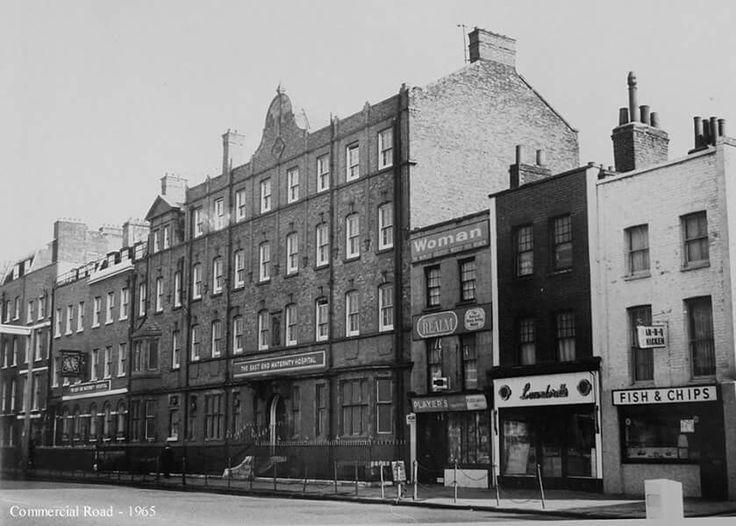
In Journal nos. 33 and 34 we recounted the story of the use of Hill Hall, Theydon Mount as a maternity hospital during WW2. In September 1939 the staff, patients and hospital equipment were moved lock stock and barrel from the East End Maternity Hospital, which was located at Commercial Road, Stepney, in the heart of the East End.
The East End Maternity Hospital.
Local Authorities ‘in safe areas’ were required to provide hostels which would provide short-term accomodation for expectant mothers, prior to their confinement when they would be transferred to the nearest maternity hospital.
Epping Urban District Council was offered a house, Spriggs Oak, in Palmers Hill. The house was owned by Councillor William Edward Trent, who moved his family out and went to live in Devon. Spriggs Oak was furnished and provided accomodation for around 30-35 persons. A paid resident cook/superintendent was in charge of the hostel. From September 1939 until April 1940 there had been some 472 admissions to Hill Hall and some 350 babies had been delivered.
Spriggs Oak, Epping
On the 21st September 1940 a magnetic parachute mine had fallen in the grounds of Hill Hall. It had buried itself in the soft mud without exploding, just a few yards in front of the wall, near the iron entrance gates.
The 70 staff, mothers and babies were evacuated as a precaution and taken to St Margaret’s hospital and Writtle Park Maternity Home, near Chelmsford.
The Navy who were responsible for parachute mines attended , but the defusing of the mine proved difficult and the operation went on for 6 days. Eventually it was decided that it was not possible to de-fuse it and it ws detonated in a controlled explosion. However the house suffered considerable damage as a resut. The Ministry of Health inspected the premises and decided that Hill Hall could no longer be used as a maternity hospital, and the Eat End Maternity Hospital was moved to Newport Pagnell, Buckinghamshire.
In the days after the incident at Hill Hall, evacuated expectant women were still arriving in Epping and were billeted at Spriggs Oak prior to confinement. Local women were also allowed to use the hostel. The women were usually sent to St. Margaret’s Hospital to have their babies, but it appears that some actually gave birth at Spriggs Oak. It is likely that these women and others, had begun labour before they could be taken to the hospital.
Spriggs Oak was run by a Superintendent, who was responsible for the administration of the hostel and the control of the staff and the residents. A small laundry was provided for the expectant mothers to wash their own clothes, and if they were fit and able, they were expected to assist with the cleaning and cooking in the hostel. A Charwoman was employed to attend to the cleaning and work that could not be carried out by the mothers. She was paid the sum of l shilling per hour, but did not work for more than two days a week. The mothers were charged 1/6d per day to cover food and shelter, which they had to pay one week in advance to the Superintendent. If they could not pay this amount they had to approach the Ministry of Labour to obtain assistance.
Miss L.C. Hart was the appointed Liaison Officer of the Epping Urban District Council Evacuation Committee, which was responsible for the hostel, and from time to time she visited the house to make sure that everything was running smoothly.
To the evacuated women, Spriggs Oak, with its large garden and comfortable surroundings, must have seemed a world away from the poor areas of the East End. It must have also seemed a lot safer, especially after the weeks of heavy bombing that had occurred in that part of the capital. However there had been recent incidents in Epping that must have brought the war back home. Bombs had fallen in the town on the 18th September; two days later some bombs fell, but did not explode at the gasworks in Bower Hill. More bombs fell in fields at Bury Lane on the 4th October; about an hour later a high
explosive bomb caused damage to the roof of the Infants School and to the Women’s Institute in St. John‘s Road. Here there were three casualties who received minor injuries, and approximately forty-five
evacuees, who had arrived in the town a few days beforehand and were using the school as a rest centre, were taken to the school air-raid shelter for safety. Luckily in all these incidents both injuries and damage to property were relatively minor.
Wednesday 9‘" October was a cloudy, overcast day. In the early hours there had been a couple of incidents in the Epping area; bombs had fallen at Epping Green and Theydon Bois, but there had been little damage and no casualties. During the daylight hours there had been a few raids on London and other areas of the south-east, but things had been quiet in Epping. At Spriggs Oak, some of the mothers had decided to give themselves a treat by paying a visit to the cinema. In the early evening they left the hostel, made their way down Palmers Hill and along the High Street to the Empire Cinema. There they would have seen Clark Gable and Joan Crawford in "Strange Cargo”, and "The Farmers Daughter" starring Martha Raye and Charles Ruggles. The rest of the mothers who remained behind probably spent that autumn evening playing cards, reading, listening to the radio, or knitting clothes for their soon-to-be born babies.
At 7.57 pm. that evening, the air-raid siren, which was on the roof of the police station, sounded its baleful wanting like it had done so many times in recent weeks. There were no air raid shelters in Spriggs Oak, nor were there any public ones nearby. It is not known what procedures those inside the hostel were instructed to follow during an air raid. There probably was a cellar, and it is likely that the mothers and staff would have made their way to this for safety. It is also possible that no one thought that they were in any danger and carried on with their normal activities.
Outside the hostel there were a few people about, making their way home through the blackout to the safety of their shelters, if they had one. A few cars were on the road, travelling up or down Palmers Hill with covered headlights. There were a number of Civil Defence Personnel about, including ARP Wardens, hurrying up Palmers Hill making their way to Ivy Lodge, the Civil Defence Headquarters, to report for duty. As they went they might have made an occasional nervous glance up to the sky to see if they could see or hear a German plane nearby.
Walter Osborne was walking home from the town with a friend when the siren sounded. Walter was a member of the Local Defence Volunteers, but this was his night off. He lived in James Street and he and his friend were making their way along the High Street and were heading towards the junction of Palmers Hill and Lindsey Street. Suddenly, they heard a noise that was familiar to them both:
“As we hurried along we heard the whistling sound of a bomb, it sounded close. On the corner of Lindsay Street there was a container that held sand for use on the roads and pavements in icy weather. Behind it was a ditch and as soon as we heard the bomb we threw ourselves into the ditch. Suddenly there was a huge explosion nearby and the ground shock as we lay there.”
'There had in fact been more than one bomb; the first had dropped, but did not explode, a few hundred yards away at Stonards Hill, in the second field on the north-east side of the road. This had left a "small mound" two feet high. Another was reported to have fallen in the Maltings Lane area. The third bomb, dropped at 8.05 pm. eight minutes after the siren had first sounded, hit Spriggs Oak. It hit the side of the house that faced Maltings Lane, the exact part of the house where the staff and expectant mothers were taking shelter. This section was totally demolished. The air was filled with dust and debris; flames lit up the darkness. The electricity supply had been cut off and a gas main had ruptured, escaping gas ridding to the shock and confusion. Somewhere buried in the rubble and what remained of the house, were twenty-four women.
The Civil Defence Headquarters at Ivy Lodge had received a preliminary report from the scene within seven minutes of the third bomb exploding. Essex County Control at Chelmsford, responsible for the organisation of Civil Defence in No 4 Eastern Region, was immediately informed. The report made it clear that many casualties were expected and many were trapped. Less than six minutes after receiving the report, County Control ordered that two ambulances and one First Aid Party be dispatched to the scene. St. Margaret‘s Emergency Hospital was readied to receive the injured.
Walter Osborne and his friend climbed out of the ditch and made their way to the house. They were shocked to see that the bomb had hit Spriggs Oak. They saw that the house had been badly damaged; the whole of one side had been blown out. There were already AR and Rescue Services on the scene. The two shocked youngsters realised that there was nothing that they could do, and they made their way home.
"We knew that the house was used for expectant mothers. of all the places the bomb could have fallen, all the field: around where it would not have caused any damage, but it hit Spriggs Oak. It could not have been much worse. ”
Local Wardens, police, members of the Auxiliary Fire Service and other Civil Defence Personnel had arrived to help with the search and rescue effort. Some shocked members of the public also came to help. One of them was Millicent Stevens, a parlour maid at the Vicarage in Hartland Road, who had seen the bomb hit the house. She ran from the Vicarage to a nearby ARP Warden Post and informed the staff there of the situation. Then with amazing courage, calmness and little thought of her own personal safety, she went to the scene to help with the rescue and recovery of the victims trapped inside.
At 9.12 pm. Essex County Control reported to Regional Control, Cambridge that at least twelve people had been seriously injured. All arrangements had been made for their accommodation at St. Margaret's Hospital. Six minutes later Essex County Control instructed another Rescue Party to attend the incident.
By 9.45 pm a report stated that two high explosive bombs had made a direct hit on the house, although this was never confirmed. It was established that there had been twenty-four women in the house, but
only twelve of them had been accounted for. As the rescue continued, more survivors were pulled from the wreckage. shocked. upset and covered in blood and dust. The First Aid Party attempted to help, but the injuries were so serious there was little that they could do. The unfortunate women had to be taken straight to St. Margaret’s Emergency Hospital.
At St. Margaret‘s Hospital the Red Cross manned a First Aid Post, This had been set-up in one of the hospital buildings at the beginning of the war. Attached to this post was 20 year-old Joyce Gowland (later Hollingsworth). Joyce lived in Station Road, and she had received a telephone call that evening instructing her to report to the post immediately. Some of the women injured at Spriggs Oak began to arrive at the hospital; some went to the First Aid Post. Many of the Doctors, some of them quite young and inexperienced were shocked by the injuries to the pregnant women, and Joyce recalled that all of the medical staff found the experience very emotional and upsetting.
One of the injured women seen by Joyce had managed to stagger all the way to the hospital, despite having her arm almost severed.
“There was very little bleeding and the woman was not surprisingly in deep shock; but she remained calm and courageous. Luckily there was no sign of the baby arriving. I remember seeing her again a week later. She was sitting up in bed knitting a jumper for her husband, supporting one knitting needle against her body with the stump of her amputated arm. "
Some of the women had similar terrible injuries, but the ones who were making the loudest cries were the ones who were not so badly injured, but had begun premature labour. Two of these women were taken to the Maternity Ward, and both gave birth a few hours later. Louisa Nelson, age 38 from Stepney, had her child at 12.25 am, while Christina Deacon, aged just 18, of Manor Park, had hers an hour later.
Back at Spriggs Oak, the explosion had blown a large amount of debris onto the road, and Palmers Hill had been partially blocked. As the rescue work continued the debris was gradually cleared making it easier for ambulances and other rescue vehicles to get to the scene.
By 10.15 pm. eighteen of the twenty-four women in the house had been found and were being treated in hospital; three more were known to have died, while another three remained unaccounted for.
It was around this time that Essex County Control at Chelmsford received a report from Epping Police and this also stated that two bombs had made a direct hit on the house.
By the early hours of the next morning, the bodies of five of the women had been removed from the rubble and taken to the hospital mortuary. Two of the women that had been receiving treatment at the
hospital had died; there were fourteen with serious injuries, two more with minor injuries. One woman was still missing, buried beneath the rubble. There was no longer any hope of finding her alive. The rescuers, dazed, emotional and tired, returned home. Many like Millicent Stevens were covered in blood and dust. Their minds were full of the horrible things they had witnessed and sleep proved difficult.
As dawn broke, the Rescue party and other Civil Defence personnel returned to the scene to continue the Search for the one remaining body. As more of the rubble and debris was removed, someone discovered what they thought was an unexploded bomb in the garden. The area was evacuated and the object was examined by the military. After a short delay it was confirmed that it was not a bomb and the search could continue. Eventually, the last body was located and removed from the scene.
In total, eight women died following the incident at Spriggs Oak. The six who died in the house were:
May Banks, age 30, North Street, Romford. Wife of Sapper. L. Banks, Royal Engineers.
Violet Irene Buckle, age 19, of Balham. Wife of Len Buckle, and daughter of George Victor Rodwell, both of the same address.
Ellen Campbell, age 24, of Barnardo Street, Stepney. Wife of D. Campbell.
Rose Rcvcnski, age 34, of King Edward Road, Hackney. Wife of Harry Revenski. Daughter of J. Kaufman, of Folgate Street, Bishopsgate.
Lily Sly, age 29 of Glen Park Road, Hackney. Wife of E. Sly.
Elizabeth Louisa Smith, age 22, of Goresbrook Road, Dagenham. Wife of A.E. Smith. Daughter of Atkinson Moore and Elizabeth Moore of 32 Wren Gardens, Dagenham.
The two women who were injured at Spriggs Oak, but died later at St. Margaret’s Emergency Hospital were:
Bertha Fleischman (Russian National), age 25, of Newbold Street, Commercial Road. Wife of Otto Fleischman.
Adela Franks, age 28, of Ashfield Street, Stepney. Wife of S. Franks.
The bodies of these eight women were returned to their families and buried in their local areas. Their families, who thought they were safe away from the dangers of the capital, must have been devastated. Not only had a daughter or wife been lost, but also the unborn child and this must have made their tragic loss even harder to take. The death toll could have been higher still. The women who had decided to go
to the cinema that evening had had a very lucky escape.
As the days passed, the rubble was cleared away and the house was boarded up. Some of the survivors remained in hospital for sometime, while others were transferred to other hostels ready to give birth to their babies. Spriggs Oak was let empty and would not be repaired for sometime.
For the people of Epping, life gradually returned to normal. Millicent Stevens, who went on to become a Corporal in the Auxiliary Training Service, was dubbed “The Heroine of Spriggs Oak” by the “West Essex Gazette” when she was married nearly three years after the incident. By coincidence, a photograph of her (right) appeared in the “West Essex Gazette” following the report of her marriage, in the edition dated Saturday 9th October 1943.
In the weeks following a rumour began to spread that the bombs were dropped after the German aeroplane saw lights of cars driving along Palmers Hill. This cannot be confirmed but a captured Nazi airman was quoted in the then West Essex Gazette, in January, 1941, saying the Luftwaffe would always drop a bomb where a light could be seen if their primary target could not be found. There is a possibility that North Weald Aerodrome was the intended target but the lights of passing traffic put Spriggs Oak in the firing line.
© Mike Osborne
This article written by Mike Osborne in 2006 was given to me by Doris Messenger who provided information regarding Hill Hall to the author.
Article 6 of 6
V2 Rocket at St Margaret’s Hospital
It was 2.43am on March 22, ten days after a rocket exploded in a field south of Bridge Hill in Epping, when the town shook during the Second World War as 463,000 gallons of water gushed from a water tower in the grounds of St Margaret’s Emergency Hospital after being hit by a V2 long-range rocket.
Houses in Fairfield Road and Union Terrace, the elderly unit and laundry block at the hospital and a single storey timber built casual ward which housed vagrants were destroyed.
At 3am, only 17 minutes after the blast, two Incident Officers Posts were set up, one by residents whose homes had been flooded, and one in the grounds of the hospital.
“Group Seven”, a local search and rescue team who operated in Chigwell and Waltham Abbey, were called to the scene and asked to prepare ambulances and rescue parties in hopes of finding survivors amongst the wreckage of the casual ward.
Rescue parties operated in the ward and after an hour they had recovered the bodies of vagrants John Baker, 67, William Harris, 72, George Luxton, 75 and James Price, 75 and pulled 15 others from the wreckage, seven severely injured.
The body of Epping man, Alfred John Brace Ford, 67, was also found on the grounds of the hospital.
Despite his address being Briar Cottage in Epping Green, the former farm labourer had been staying in the casual ward when it had collapsed due to the attack.
At 4.20am, Mr. England, the Master of the Hospital, confirmed that a long-range rocket had fallen at the hospital, practically destroying the Old People’s Section, and that the forty women and twenty men would need to be transferred to alternative accommodation.
The community pulled together to help those affected.
The National Fire Service (NFS) worked to pump the flooded areas out into a crater which was situated in the East of the town and mobile canteens arrived in the area to provide food and hot drinks to the rescuers and the injured.
Two days later, it was announced that hospital clerk John Parish, 30, who had spent the night in a room on the casual ward after missing the last bus back home to his wife in Harlow, had died from his injuries.
On April 18, almost one month after the attack, the seventh and final fatal victim, William Dalton, 82, died from his injuries.
Prime Minister, Winston Churchill, sent the following message to the hospital: “Mrs Churchill and I deeply regret to hear the grave news and wish to express our sympathy with casualties and their relatives.”
Source: Epping Forest Guardian April 2015