
High Country History Group
Journal No. 70
Contents
December 2018
Article 1 of 11
For King and Country: Blackmore during the First World War.
An extract from the book written by Andrew Smith released to coincide with the talk by the same title given on 9 November 2018 at St Laurence Church, Blackmore, as part of ‘Remembrance 100’, a community commemoration of the end of the First World War.
Chapter 9 - Armistice
Saturday 9th November 1918. After a week when the enemy was in hasty retreat on the Western Front, on this day the Kaiser abdicated. There were rumours spreading around that the war was over. Chelmsford, on market day the previous day, was full of gossip that the Germans had laid down their arms.
David Lloyd George, the Prime Minister, would have dearly liked to have made such an announcement at the Lord Mayor’s Banquet in London, it being the second Saturday in November when the new Lord Mayor of London was paraded through the streets of the capital. Lloyd George’s speech could have run, “Today this could be the greatest day of our lives, before it all ends, before we run out of time. Tonight this could be the greatest night of our lives. Let’s make a new start, the future is ours to find”. But that would have been fake news. All he could do was to allude that it would all be over soon. Hopefully.
The war, which the parties engaged was to be long and drawn out: bogged down, quite literally in the trenches of the Western Front, did end quickly when the Germans sought an armistice, having suffered heavy losses of men, desertion, Spanish ‘flu and food shortages at home.
Herbert Asquith, the former Prime Minister, had been a victim of fake news, talking about the British victory with his wife and daughter since the very early hours. He had been told by the War Office, only to be told about 6 o’clock that the news was not true. But a few minutes later his wife learned over the telephone from an American friend that it was, truly, over.
Miss Baker of Margaretting wrote in 1983:
“The First World War came to an end at the eleventh hour of the eleventh day of November 1918. It was a tremendous relief to all of us to have the fearful struggle brought to a successful conclusion although the price that was paid in human lives and suffering cannot be measured”.
The armistice was signed in a railway carriage at just after 5 o’clock on Monday 11th November. The talks were short. It was agreed that the ceasefire would begin at 11 o’clock.
News reached Paris about 9.30am, but by then the day’s business of waging war was well under way. King George V had been told by the French that the War was over before Lloyd George had received official tidings. Even when news of the ceasefire was announced there were some British and American units who were happy to go on fighting, some to avenge the Germans and some with the ambition to push the enemy back through Belgium to their own border. It was something of an anti-climax as the clock struck eleven. On 11th November 1918 the Western Front saw something like 10,944 casualties, including 2,738 dead. Nicholas Best says that was nearly as many who were killed in the D-Day landings of 1944.
People in London had gathered in crowds since first light awaiting official news. At 10.55am the Prime Minister opened the door of No. 10 Downing Street and Lloyd George announced repeatedly, “At 11 o’clock this morning the war will be over”. Crowds gathered outside Buckingham Palace, the King making a balcony appearance. Bells rang, which had not been rung since the air raids. There was no radio, television, or twitter of course to convey the news. There was no BBC.
Chelmsford heard of the armistice soon after 11am. Revd. Andrew Clark records that “The works there immediately went on holiday. The news was passed on to Great Leighs Post Office from Chelmsford, spread rapidly and the cottagers were very excited. In Felsted village, by 1pm, nearly every house had hung out a flag. Little Waltham was gay with flags”.
Revd Reeve, the Rector of Stondon Massey, wrote:
“Some in Stondon heard the distant bells at Brentwood. But it was not till the afternoon that definite tidings reached the villages and then it filtered through chiefly the form of private messages. News came to Stondon that flags were being hoisted on the Military Hospital at Ongar, and that the veteran Field-Marshall Sir Evelyn Wood VC had visited the place and communicated the splendid message to the wounded men. As soon as I had this official intelligence the Stondon Church bells were chimed with all the old vigour by Ernest Baines, our sometime sexton.”
But for some celebration did not seem appropriate, sad at the loss of friends and family.
Blackmore’s Church Council met as planned on Monday 11th November 1918. The minutes record that “Discussion took place with respect to erecting some memorials of the Great War. Mr D Wilson moved ‘That the Church Council desires to express its thankfulness to Almighty God for the establishment of peace and to record its appreciation of the sacrifice to those who served in the forces of the Crown in the war by the erection of a Cross in the Churchyard, a painted Window and a roll of Honour to be placed in the Church’. This was seconded by Mr Reed and adopted”.
With only three men in attendance, including the Vicar, it was decided to hold a public meeting to endorse support. This was held on the following Tuesday, 19th November.
During the winter of 1918/19, 150,000 people died in Britain as a result of the virulent Spanish Influenza Pandemic. Worldwide it killed more people than had perished during the whole of the War. The illness reached Blackmore and Stondon Massey in November 1918.
Revd. Reeve wrote:
“Stondon is passing through a Visitation of the prevailing ‘Influenza’ epidemic. In England Schools have been closed in many districts, and mortality has been very serious.
“Our neighbours at Blackmore and Kelvedon Common were attacked before us, but we were to be no exception. The School has been closed as from the 15th November and the sickness has found victims in almost every house. When the fever is followed by pneumonia and complications it becomes of course a dangerous visitor. The doctors are barely able to attend their numerous patients, and are at a loss to account for the origin of the scourge. It suffices to keep in check the superabundant rejoicings of Peace”.
Reeve wrote at the end of January 1919:
“Private Arthur Roast … returned safely from France. Like the rest, he is to take a 28 day furlough, and then will consider himself ‘demobilised’, sending off his military great-coat from the nearest railway station into ‘store’, while he retains his khaki suit of uniform. He had the choice of a new civilian suit or a gratuity of 50 shillings when he left active service and chose the former, which in view of high prices was probably the sensible line of action”.
Bibliography
The main source used in this talk, ‘Notes for a Parish History’ written by the Revd. E.H.L. Reeve of Stondon Massey can be found at the Essex Record Office, ref. T/P 188/3.
Baker, Miss G.M. Margaretting. The Village with a Beautiful Name (G M Baker, 1983)
Best, Nicholas. The Greatest Day in History (Phoenix, 2008)
Clark, Revd. A. (ed. James Munson). Echoes Of The Great War. The Diary of the Reverend Andrew Clark 1914-1919 (Oxford University Press, 1985)
Article 2 of 11
Spanish Influenza Pandemic 1918
“I had a little bird
its name was Enza
I opened the window,
and in-flu-enza.”
(1918 children’s playground rhyme)
2018 marks the 100th anniversary of the Spanish Flu epidemic. Over 50 million people died worldwide and a quarter of the British population were affected. The death toll was 228,000 in Britain alone. It is generally believed that the epidemic started in the Near East and reached Britain in early 1918. Although not caused by World War I, it is thought that in the UK, the virus was spread by soldiers returning home from the trenches in northern France. Soldiers were becoming ill with what was known as ‘la grippe’, the symptoms of which were sore throats, headaches and a loss of appetite. Although highly infectious in the cramped, primitive conditions of the trenches, recovery was usually swift and doctors at first called it “three-day fever”. It swept across Britain in three waves, and lasted from January 1918 until December 1920.
Young adults between 20 and 30 years old were particularly affected and the disease struck and progressed quickly in these cases. Onset was devastatingly quick. Those fine and healthy at breakfast could be dead by tea-time. Within hours of feeling the first symptoms of fatigue, fever and headache, some victims would rapidly develop pneumonia and start turning blue, signalling a shortage of oxygen. They would then struggle for air until they suffocated to death.
More people died of influenza in that single year than in the four years of the Black Death Bubonic Plague from 1347 to 1351.
To what effect the pandemic had on the villages of the High Country is difficult to judge. However if we check the burial registers over a ten year period from 1915-1925 we can check whether there was an increase in death rates during the period of the illness.
Greensted Burials:
1915 2
1916 0
1917 0
1918 5
1919 0
1920 1
1921 1
1922 0
1923 0
1924 0
1925 0
There was a peak in 1918. The five that died were aged 74, 71, 27, 25, and 52 years of age.
Stanford Rivers:
1915 9
1916 12
1917 10
1918 10
1919 11
1920 7
1921 5
1922 11
1923 5
1924 2
1925 2
Stapleford Tawney:
1915 2
1916 5
1917 0
1918 3
1919 2
1920 1
1921 0
1922 3
1923 0
1924 2
1925 4
Theydon Mount:
1915 2
1916 5
1917 3
1918 3
1919 1
1920 0
1921 1
1922 2
1923 0
1924 2
1925 4
Although this is far from being an academic piece of research it would I suggest show that the flu pandemic did not lead to an increase in mortality rates over the period under discussion.
In respect of Greensted it would be interesting to know what the causes of death were before reaching any conclusion.
Article 3 of 11
Essex Naturalist Field Club Visit
Members of the Epping Forest and County of Essex Naturalist Field Club, visited Greensted Hall in 1880 and were entertained by Captain Budworth. He alluded to a curious custom as to the appointment of the rector of St. Andrews church. The Bishop of London holds the living in trust to present to it the senior curate of St Botolph, Aldgate, for the time being, provided he is a single man, although of course he may marry after the presentation.
The Rev. F. Rose, late curate of St Botolph, had just been appointed but had not then taken up his residence.
Taken from the Transactions of the Epping Forest and County of Essex Naturalist Field Club, Vol.1 [1881]
Frederick Rose – rector from 1880 – 1898.
Now the Essex Field Club
Article 4 of 11
Greensted Church
In 1548 Greensted church was united to that of Cheping Ongar, by act of parliament, for the alleged reasons that ‘the profits of the church of Cheping Ongar were not sufficient to find a priest, being not above six pounds in the king’s book, and because the charges of the repairs, ornaments, and other accustomed duties to that church, and the church of Grinstead, (which was of the same value or little more, and stood but a quarter of a mile distant from it, and commodious for the access of the parishioners of Ongar), were much greater than could be raised or borne among such poor parishioners; it was therefore enacted, that the church of Cheping Ongar should be dissolved, and that the church of Grinsted made the parish church, as well for the parishioners of Ongar as those of Grinsted; and the advowson of Ongar was therefore invested in the patron of Grinsted, viz. the lord Rich, his heirs and assigns.’
But this union was dissolved by another act, passed in 1554, in the preamble of which it is said, that one William Moris, esq., then patron of the church of Cheping Ongar, and member of parliament, did by sinister labour and procurement, get the act for the consolidation.
Article 5 of 11
The Great Bardfield Artists and their Gardens
From what source does the gardening interest come? For me it was the thrill of seeing seeds and small plants growing into flowers, and the love of the outdoors. In 1931 Edward Bawden RA (1903-89) and Eric Ravilious (1903-42) began to explore rural Essex and found Brick House at Great Bardfield. They rented part of the house and then in 1932 Edward Bawden`s father bought it for him and his wife Charlotte. From this time other artists began to make Great Bardfield their home and to paint, although not exclusively, the Essex landscape. Other subject matter for painting and designing were gardens and plants.
Edward Bawden had established himself on the national art scene, as an accomplished painter, muralist, designer of posters for London Underground, ceramics, wallpapers, illustrations and as a teacher. He had enrolled at the Royal College of Art in 1922 and in 1923 illustrated a book called `A General Guide to the Royal Botanic Gardens, Kew: Spring and Easter, 1923. He was not just interested in the plants, but in the buildings, historic characters, romance and patronage that had led to the creation of the gardens. The General Guide contains material for his future commercial work, particularly `Adam and Evelyn at Kew`, `Dragons and a Bell`, Ambrose Heath`s cookery books, the Gardener`s Choice (1936,) and the Gardener`s Diary, which was published in 1937 by Country Life.
The images of Kew and the Pagoda, the Palm House and the cacti formed a London Underground poster in 1939.The Pagoda formed an early image for Bawden in his sketch books and was used in his linocut, `The Pagoda, Kew Gardens` in 1963 where the four lowest tiers are given centre-stage against a silhouette of the entire building, which is smaller and less imposing.
From the time he moved to Great Bardfield Edward Bawden began to develop a garden and his scrap books contain letters on garden-related matters from friends such as John Nash, with whom he exchanged seeds and plants. Nash praised Bawden as `the most punctilious sort of good gardener` who always sent the plants he promised.
In 1934 Eric Ravilious and his wife Tirzah moved from Brick House to Castle Hedingham. However Ravilious made frequent trips to Wiltshire, and, to Sussex in order to paint his own home county. His preferred medium was watercolour. In `Walled Garden` (1932) he used hot colours and placed the sun in the middle of the picture to paint a traditional watercolour. However in `Strawberry Nets` (1932) the viewer is positioned so that the Downs and the Cedar tree are seen through the strawberry nets. The path by the hedge keeps the viewer in the picture and leads the eye through the strawberries to the far side of the nets. Gardens, with the natural forms of plants contrasted with the geometric shapes of walls, greenhouses, trellis and gazebos were a favourite subject for Ravilious. In Castle Hedingham (1936) parts of the walls, and houses are juxtaposed with trees, hedges and climber to create a glimpse into back gardens. Greenhouses and the tea party appeared in prints, watercolours, on ceramics and in book illustrations. Natural form and geometric shapes are in `Carnation House` (1938) where the focal point is the door but there is difficulty in reaching it over the hose, the watering can, and the towering plants. These tall plants are also in `Carnations and Geraniums` (1938) where the way through the glass house is less clear also as the viewer has to step over a sack and a hose.
Great Bardfield attracted other artists and in 1955 they began to exhibit together (although there had been exhibitions in 1942 and 1951). They were John Aldridge RA, Lucie Aldridge, Edward Bawden, George Chapman, S. Clifford-Smith, Audrey Cruddas, Joan Glass, Walter Hoyle, Duffy Rothenstein, Michael Rothenstein and Marianne Straub. The artists opened their homes to the public in order to display their paintings, prints, and textiles. This arrangement enabled the public to see artwork in a non-commercial environment and to talk to the artists. In addition to his home `The Place` being open, John Alridge (1905-83) had his garden open as well. His garden was a mixture of well-maintained lawns, colourful perennial beds, mature trees and shrubs and hedges and he was assisted in its development by Fred Mizen, Edward Bawden`s gardener.
John Aldridge had befriended the painter, Cedric Morris (1889-82), who turned to plants and gardens as his subject matter. It was through him that John Aldridge became a member of the Seven & Five Society, exhibiting with them at the Leicester Galleries in 1931. In 1932 he moved to `The Place` in Great Bardfield to be able to live within his means, to paint, and to develop a garden, which he did over the next fifty years. The garden was also a subject for his paintings and he painted many different views of the house and gardens. He drew and sketched constantly and was able to retain a strong visual memory of the scene, making the right choices of style and colour in his painting. In February Afternoon (1958), the geometric shapes of the buildings, the hedges and the wall, contrast with the softer forms of the bare trees to create an expressive work of art.
Artists respond to their environment and what they see around them in many different ways. These artists interest in gardens and plants provided much inspiration for their paintings and design work.
Article 6 of 11
The Stanford Rivers Tithe Map
Tithes were originally a tax which required one tenth of all agricultural produce to be paid annually to support the local church and clergy. After the Reformation much land passed from the Church to lay owners who inherited entitlement to receive tithes, along with the land. Tithes were taxes paid to the local church, both in cash and ‘in kind’ (such as produce of the land). People paid one tenth of everything they produced.
By the early 19th century tithe payment in kind seemed a very out-of-date practice, while payment of tithes per se became unpopular, against a background of industrialisation, religious dissent and agricultural depression. The Tithe Commutation Act 1836, required tithes in kind to be converted to more convenient monetary payments called tithe rentcharge. The Tithe Survey was established to find out which areas were subject to tithes, who owned them, how much was payable and to whom.
The Tithe Commutation Act and an amending act in 1837 established a procedure whereby tithes could be converted to money payments. This required the drawing of an accurate map (the accuracy of which was certified by commissioners) showing all the land in the parish. The series of maps resulting from this legislation provides unprecedented coverage, detail and accuracy.
Each map was accompanied by a schedule listing each map item by number. This showed the owners, occupiers and a description of the land in the parish including individual fields - sometimes with field names.
Most of the surveying and mapping was carried out by 1841, and the work was largely completed by 1851.
Tithes were finally abolished in 1936.
The tithe map for Stanford Rivers was completed in 1839. It is on a scale of 8 inches to the mile, and measures some 10 feet by 10 feet. The Valuer was Robert Hale, and it was countersigned by William Blamire and J. W. Buller, Tithe Commissioners.
Using the schedule we can identify the fields and their owners.
Key:
1st column = Field number.
2nd column = Field name.
3rd column = whether pasture or arable.
4th column = size of field.
5th column = landowner.
6th column = owner of the property.
Field no 215 was known as Kemps Mead. Owned by Edward Branfill Champion. Occupied by Edward Rayner.
Field 228 was known as Stable Hoppit. Owned by Sir Charles Cunliffe Smith Bt. and occupied by Henry Pavitt.
Article 7 of 11
Pew Rents
Pews in churches were not widely used in the early Middle Ages, when most people stood during the services. The ‘weak went to the wall’ to sit on a stone bench. Wooden benches were introduced into English churches during the C14th, and became widespread during the C15th.
Until the mid C20th, it was common practice to rent pews in churches to families or individuals as a principal means of raising income. Pew rental emerged as a source of controversy in the 1840s and 1850s, especially in the Church of England. The legal status of pew rents was, in many cases, very questionable.
Founded in 1818, the Incorporated Church Building Society was the principal voluntary Society for promoting the building, enlargement, re-seating, and restoration of Anglican Churches throughout England and Wales. Set up by lay church-members, in response to a huge increase and redistribution in the population and because of a lack of state aid, ICBS was the foremost Society in building and restoring churches throughout the most active period of church building since the Middle Ages.
Many hundreds of thousands of new spaces were provided in parish churches. The extra accommodation built was designed and constructed on the principle that it was to be available free of charge so that it was suitable for the poor.
The administration of the society was transferred in 1982 to the Historic Churches Preservation Trust, which has now been succeeded by the National Churches Trust.
Article 8 of 11
The Will of Thomas Lake of Stanford Rivers, Yeoman, 10 March 1600
To the poor people of Sewardstone in Waltham Holy Cross 20s. and of Stanford Rivers 40s., so that the most godly, aged and honest poor shall be relieved. To Margaret my well-beloved wife £100 in recompense of such sums I have already entered into bonds to William Glascocke her father to leave her at my decease. She shall have and use the new wainscot parlour with the furniture belonging, also a double parcel gilt salt, all during her widowhood; if she marry or dieth, to my son William. To her my old gelding and pasture and keeping for him on my farm or lease ground of Stanford Hall. To her an annuity of £8, on condition that she shall not trouble my son Denbigh Lake for my customary lands in Chingford which shall descend to him, being my younger son, according to the custom [of the manor]. To William my lease of the manor of Stanford Hall, paying out of the profits to my son Thomas £20 yearly for 3 years after my decease and £60 more to be paid to him by my executors out of my goods.
To my daughters Margaret Perye £20 and Isabel £90 and Lettice £100 at marriage or 20. I forgive my son-in-law John Curle £17 of the debt which he oweth me by bill. To Mary Courle his daughter 40s. To my daughter Joan Bowyer £5. To Lettice the bullock which I promised and gave her before. To my sons Henry and Denbigh and Isabel each one of my two-year-old bullocks. To Denbigh the bedsteadle which I have at Sewardstone. To Henry which of the tables there that he will choose.
The residue of my household stuff with the carts and other lumber there (except the brick) to Henry and Denbigh to be equally divided. To every one of my servants 6s.8d. To Denbigh £10. To William my messuage and lands in Stanford Rivers, in the tenure of Widow Tailor. To Henry my messuage and lands belonging in Theydon Garnon in that of William Symon. To Thomas my messuage and lands in Matching and High Laver in that of John Ingolde. To Denbigh my messuage and lands in Chingford in that of Thomas Curtis. If Thomas shall be disposed to sell his lands before my wife’s decease, William shall have them, paying Thomas £80. My executors shall have the rule of Isabel and Lettice to see them brought up in the fear of God and in an honest and Christian course of life, for the performance of which they shall the use of their legacies (their bullocks excepted) until 20 or marriage. To Henry £5.
The residue of my goods, corn and cattle to my wife and William, whom I make executors. I nominate my very good friend and bretheren-in-law Andrew Glascocke of Whelley and Thomas Perrye of [?Great] Warley my son-in-law overseers, and for their advice and pains 40s. apiece.
Witnesses: Richard Clarke, John Pease, Thomas Lake, Thomas Perie.
Source:Elizabethan Life – Wills of Essex Gentry and Yeoman. F.G. Emmison, 1980.
Article 9 of 11
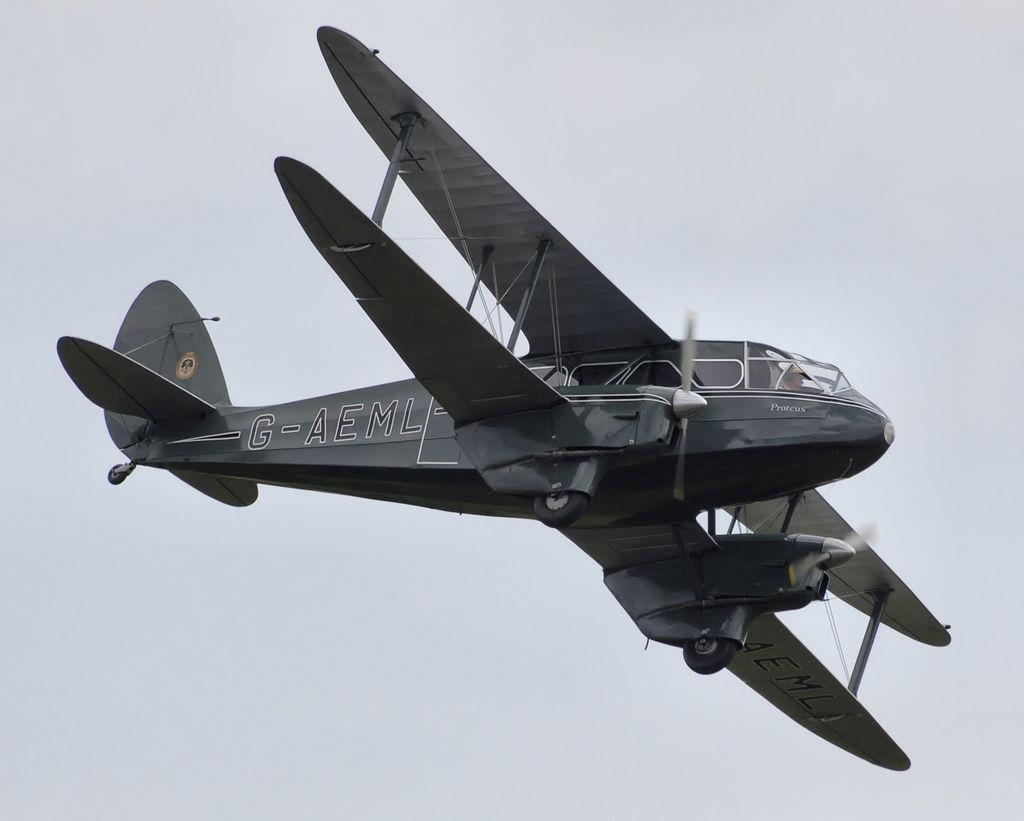
Hillman’s Airways Accident 2nd October 1934
Hillman's Airways was a 1930s British airline that later became part of British Airways. The company was formed in November 1931 as Hillman's Saloon Coaches and Airways Limited by Edward Henry Hillman who was a coach operator in Essex. His previous business had been sold to London Transport following a change in government rules on the expansion of bus routes. The airline's first service was a charter flight on 25 December 1931. It started a scheduled service on 1 April 1932 between Romford and Clacton using a de Havilland Puss Moth and a de Havilland Fox Moth; with a fare of £1 return it was operated every three hours due to the popularity. A de Havilland Dragon was bought to operate an international service between Romford and Paris Le Bourget.
From 1 December 1934 the airline was given a contract to fly air mail between London, Liverpool, Glasgow and Belfast formerly operated by the Railway Air Services. Following the award of the contract Hillman changed the legal name from Hillman's Airways Limited to Edward Henry Hillman Limited and the airline extended its services to continental Europe, including Ostend and Brussels. On 1 June 1934 the airline moved its operating base to Stapleford Aerodrome. Just before Hillman died, on 31 December 1934, aged 45, the company became a public company, although within a year it had been merged with two other airlines to form British Airways.
Aircraft Accident.
On the 2nd October 1934, a de Havilland Dragon Rapide aircraft, operated by Hillman’s Airways, took off from Stapleford Tawney airfield on an international flight to Le Bourget Airport, Paris. There were 7 persons on board. The flight departed at 10.00hrs.
Cloudbase was 700 feet (210 m) and visibility was 2 miles (3 km) but decreased in rain within half an hour of the aircraft's departure. At 10.47, the aircraft was approaching the coast and the pilot asked Croydon for a radio bearing. The bearing received placed him north of Dover. The normal route in conditions of bad visibility was from Dungeness to Le Touquet. The pilot turned south to regain his course, but about 11.02, the aircraft dived into the sea and was destroyed.
The location of the accident was 4 miles (6.4 km) off Folkestone. The crash was heard by the crew of a German ship and recovered two bodies.. Visibility at the time was poor in patchy rain. Other ships assisted in the search and three more boides were recovered. The victims were transferred to Folkestone. The Dover Lifeboat and a tug from Dover searched for the remaining two victims. Wreckage from the aircraft was landed at Dover and Folkestone.
The accident resulted in the first write-off of a Dragon Rapide, which had only come into service in 1934.
The inquest into the deaths of the five people whose bodies had been recovered was opened by the Folkestone Coroner at Folkestone Town Hall on 4 October. Evidence was given that the aircraft had probably crashed into the sea at high speed and all victims had died from multiple injuries. A verdict of "accidental death" was returned on all five victims.
An investigation determined the cause of the accident to be pilot error due to the pilot's lack of experience in navigation and blind flying.
POSTSCRIPT
On the 26 January 1935, de Havilland Dragon Rapide operating a mail flight from Aldergrove Airport, Belfast to Stapleford Aerodrome, via Speke Airport, Liverpool, crashed in the Isle of Man, whilst attempting to divert to Ronaldsway Airport during bad weather.
On the 21 February 1935, two sisters forced open the door of a de Havilland Dragon Rapide in flight and jumped from the aircraft and were killed in the fall. The aircraft had taken off from Stapleford Airfield. They were the only passengers, having bought all the seats on the aircraft, but claiming before take-off that their companions could not travel that day. The sisters Jane and Elizabeth were the daughters of the American consul in Naples, Court Du Bois.
Both women had been engaged to be married to pilots killed in the crash of a Royal Air Force flying boat off Sicily on 15 February 1935.
Their bodies were found on waste ground in Upminster, but the pilot only became aware of what had happened some time later when over the English Channel.
Article 10 of 11
Letters from the Front
The following article appeared in the Chelmsford Chronicle newspaper on the 25th December 1914.
GERMAN OFFICER’S CAMERA
ESSEX LANCER’S FIND
PICTURES DEVELOPED AND REPRODUCED HERE
INCIDENT AND HUMOUR AT THE FRONT.
We have been permitted to see a batch of letters written from the front by Tpr. Ernest Crisp, B Squadron, 12th Lancers, son of Mr and Mrs G. Crisp, of the Lodge Farm, Greensted, Ongar, and brother of Mrs Holden, wife of Pc. Olden of Woodham Ferris. Like many other brave fellows, Trooper Crisp makes no complaint of the hardships of the campaign, writes cheerfully all the time, and ignores has own brave acts. He was called up as a reservist on the general mobilisation, and has been in the thick of the fighting with the Expeditionary Force all the time. He has been lucky enough to escape with a severe cold. He is particularly grateful for the gifts sent out, and his letters prove how well everything is now working to meet the demands of the troops.
Trooper Crisp made one interesting find, coming across a camera, part of a German officer’s kit, and this he has sent home. Although he thought all the plates were smashed, two of them contained views, which have been developed at home, and are reproduced here.
Below will be found extracts from the trooper’s letters:-
TROUSER BUTTON SOUVENIRS.
Writing on Dec.10, he says the men are still in billets,
“but the horses have to put up with the rough weather we have been having, raining every day. We have to wade through mud, not quite up to our necks, to get at them. I suppose we shall have to stick it through the winter now. Things are very quiet here. We don’t hear or see much. The King was here last week, and General French saw us again the other day.”
One of the writer’s brothers, who has joined the Yeomanry, had asked him if he had a military cap badge to part with, and the Trooper replied,
“I don’t think there are half a dozen in the regiment. The girls ‘went nap’ on them at Havre. Some gave the buttons of their trousers for souvenirs. Did you read General French’s dispatch? Very good wasn’t it? General French did not mention when the war would finish. He said, ‘Don’t think because you have not yet advanced into Germany you have not done well.”
TOSSING FOR TOGS
Dealing with the retreat from Mons he says,
“I shall not forget that in a hurry. With our Brigade were the Scots Greys and 20th Hussars, and we did some good work.”
Writing early in October, Trooper Crisp spoke of nice weather, but very cool at night. Some warm underclothing was served out, but at that time was not enough for all, so they tossed for the articles. He adds,
“I have not been lucky enough to get any yet. I have turned my shirt and brushed it several times; not that I am ‘hitchy coo’ yet! Col. Wormald is back with us again. He got wounded in the first charge. The people out here are getting back home again – those that have homes to go to now the Germans have had what they wanted. Has the price of food, corn, etc., gone up much”
“Have you done much shooting? You might leave me a few, but I don’t suppose it will be this side of Christmas, although I hope it won’t be much longer than that.”
Shortly after this period, when frosts set in at night, he and his fellows were in billets. He also said, “We look like spending Christmas out here all right, so don’t forget the cigars and nuts!”
At this time he was getting plenty of clothes except underwear, and as he said, it would be a treat to have a change. He asked for nothing else, as he could not carry more. Referring to the difficulties of writing to all his relatives, he mentioned that the only chance he had to write was when they halted for a few minutes, perhaps for an hour or so, then
“off we go again, still looking for the Kaiser, but we have not come across him yet!”
LANCERS WITH BAYONETS
In another letter he acknowledged chocolate, soap, towels, tobacco, etc., and said they were getting plenty of shirts, socks, tobacco, etc., from private people and through the newspapers. He then had three shirts and plenty of socks, but not pants.
“All the cavalry are in the trenches now, and we have been issued bayonets, so now we are the 12th Foot! We are relieved now and again by the Indians. Five of them got wounded the first time up. They don’t like the trenches. They want to be ‘at em’ They don’t care for the shrapnel any more than we do. As I am writing this shrapnels are bursting only 200 yards away. The German col-boxes are terrible things. They burst in the earth, and the shock is enough to kill anyone. I had a narrow escape one day. The enemy were shelling our transport, and I took cover behind a stack of oats. I might as well have held a piece of paper.”
SHELLS AND WASPS
“The shells are falling all around me. I had not been there many minutes when I had some of Sid’s chums (wasps) buzzing around me, I was only standing in the front of the hole, but I decided to make a move, and lucky I did. I hadn’t got 30 yards away when a shell went straight through the stack and burst the other side, firing the stack. We can see the Germans in their trenches from ours, but they are fairly quiet. They send a few shells over now and again to let us know they are there.”
SHATTERED VILLAGES
“The Germans have made several night attacks, but they have been driven back. There is heavy fighting going on at the present time on our left. The country round here is ruined; villages and towns are shattered and burnt by the firing; and cattle are being killed every day. We fell asleep riding along, tired right out. Hundreds got lost through taking the wrong roads. We were in some very dangerous positions at times, but did not know until afterwards. We have heard that Italy and Holland have declared war, but do not know of it is official. The war cannot last much longer, I think. We are living well, and get plenty of smokes. The people at home are looking after us alright. So they ought, as the troops have something to go through before this is finished.”
In a further letter early in November the trooper expresses thanks for a parcel, says he is well fixed for clothing now, and that it was a treat to get a clean change on after so long.
GERMANS’ MUSICAL ATTACKS
He proceeds:
“The situation does not look much brighter yet. I see Turkey is causing trouble. We have been having a warm time of it here lately. The Germans have tried their utmost to break through our lines both night and day, only to be driven back with heavy slaughter. It is terrible. They advance with bands playing, just like a swarm of bees. We cannot help mowing them down. The battle is still raging, but they don’t think it can last much longer if this lot is beaten. They are putting all their strength against us. The prisoners now are boys about 16 and old men between 60 and 70. The London Scottish have had a rough time. They went into action last Sunday for the first time, but they gave the Germans all they wanted. The generals have congratulated them on their fine work, but the lost heavily.”
GERMANS IN KILTS
“Some of the Germans advanced dressed in kilts on the left of them, through the lines of the Carbineers – who thought they were the London Scottish – and set fire to the building in the rear of them. This was at night, so the Germans could see to fire in the trenches, and the shell fire was terrible, but still the Scottish kept them back. The Germans have been busy dropping bombs on the towns round here these last few days, killing more women and children. We fired at one aeroplane, but could not bring it down. They shell our aeroplanes every time they appear over their lines, but I have not seen one brought down yet, although they send as many as fifty shells at one. Bu some of them are close.”
BRUTALITY OF THE GERMANS
“We have seen some terrible sights. The Germans loot every town and village they come to, and sometimes burn them. I some the people have been murdered. It’s a shame to see the beautiful crops trodden down by the troops. There are very few people left in the villages, and they are pleased to see us. We put up at farms when we can, but most of them are deserted, and the binders are left in the fields with cutting half finished. The Germans kill all the chickens they come across, and we come on bullocks half cut up on the road. I could tell you a lot more worse things, but they are best left out. No one knows how the people suffer, especially the Belgians. They are nice people. They cannot do enough for us. Nearly all their men are at the front. I think the war will last longer than people expect unless something unusual happens. I suppose horses are very dear in England now?”
“We are having a draught of 60 men from home today to fill up the ranks. We do not draw any money. We could go if we wanted, but we can’t spend it. We have had two charges, and the Germans can’t stick them at all. It was very exciting, several hundred of Germans being taken prisoners. Most of them can speak English. Their big gun fire is very good, but I think they fire anywhere with the rifle. We had it hot the other day under a heavy shell fire from their siege guns, but we escaped all right.”
In expressing appreciation, under date November 19, of a parcel from his mother, he says a woollen cap from Mrs Hoare was very acceptable.
“Rotten weather” had been experienced, rain every day, and cold with snow, and sharp frosts at night.”
BOATING
“The roads are cut up by the traffic. Some of them you could boat through. We are having plenty of coats sent out, so you need not worry about me. We heard about the Emden before the papers arrived, also the death of Lord Roberts. I would like to hear the Russians are in Berlin by Christmas. But that is too much to hope for. I doubt. We shall be pleased to get on the move again from here, the same thing day after day. I cannot tell you anything of the situation. I know very little myself, but we are all happy, and hope for the best. I saw a sergeant in the 2nd Essex named Digby. He came out here with Charlie from Africa. You cannot tell the regiments by their cap badges, because they have given them away to the French people as souvenirs.”
WORDS OF CAUTION
Speaking of the crops at home the writer says,
“You will have to make spare of the good stuff, but you are not so badly off as the poor people out here – some of them burnt out, and where there is straw and hay the Government have it for the horses. The farms in the firing line mostly get burned down, and the cattle are killed by shells and bullets as they wander about to get their own living. We saw an aeroplane fight the other day, but could not see who came off best, for the clouds covered them, they were up so high. We could hear them shooting at each other.”
“We have heard you have conscription at home, but it may be only a ‘fizzer.’ We get plenty of them here. One fellow starts something and it goes round with something added to it. I should not think they will let it come to that. No doubt there are plenty walking about all day with kid gloves and stick, but I don’t suppose those who join now will be wanted out here. I hope not, but we expect them all to do their share in some way. They ought to see the state of things here in Belgium. It would make then buck up, I’ll bet. There was a sharp frost this morning. The roads are terrible, a foot deep in mud. I hope we shall soon make a move from here and the Germans in their own country or get them on the run, as they say. Got called out this morning, but was not needed. The Germans made an attack last night, so they must have lost again. They will soon get fed up with attacking. I should think. I had been hoping to be home by Christmas, but that is all over now. I saw in a paper where a French officer prophesied that the war will last three years. Not long when you say it quick!”
Biography:
Ernest Crisp was a trooper, 12th (Prince of Wales Royal) Lancers. He enlisted at Chelmsford, on the 14th August 1914. He died on the 31st May, 1918. Ernest was born in about 1898 in White Colne, Colchester, the son of George and Ellen Crisp. In the 1918 Register of Electors for Greensted, George and Ellen Crisp are living at Lodge Farm, Greensted.
He was entitled to the 1914 Star, the Victory Medal and the British War Medal.
Ernest is buried in the Melcombe Regis Cemetery, Weymouth, Dorset. According to the UK, Soldiers Died in the Great War, 1914-1919, his residence is shown as Great Baddow, Chelmsford. Military records show that he died in Burdon Military Hospital in Weymouth.
An article written on the military hospitals in Weymouth said;
Of the 85 deaths that we have studied in Weymouth, surprising few were due directly to wounds on active service. Most died from respiratory conditions such as bronchitis, pneumonia or tuberculosis (TB). Others due to kidney infections (nephritis) due to the damp conditions in the trenches.
[Source: weymouthanzacs.moonfruit.com/hospital]
Article 11 of 11
High Country Programme for 2019
High Country Programme for 2019
29 November
We Will Remember
Martyn Lockwood
(followed by wine and mince pies)
28 February
Postcards from the Front 1914-1919
Kate Cole
28 March
Annual General Meeting and Film Show
25 April
Tower of London and its Prisoners.
Brian DArcy
23 May
The Princess Alice Disaster 1878
Martyn Lockwood
27 June
The Darcy Spice Apple
Neil Wiffen
25 July
The National Memorial Arboretum
Maggie Piper
24 October
To be confirmed
21 November
‘In the land of beginning again: Essex in 1919’
Andrew Smith
Meetings are held in Toot Hill Village Hall.
Meetings start at 8.00pm.
Members £1 ~ Visitors £3.
Refreshments