High Country History Group
Contents
See images from this issue
Images from this issue
Article 1 of 6
Staying Connected
We are all challenged and changed by the cornavirus pandemic. The suspension of meetings, the closure of museums, concert halls and churches means we all have to do things differently, initially having to ‘Stay Home – Protect the NHS – Save Lives’.
As Chairman and Secretary of the High Country History Group we are determined to stay in touch while we are unable to meet for our usual meetings at Toot Hill Village Hall.
The AGM will happen when we return. Thank you for paying your annual membership subscription.
The closure of the Essex Record Office and libraries “for the duration” means that we have to be creative in the production of the Journal. Copies are being sent, for the time being, by email. For those not online we are printing the Journal at home and sending copy by post.
Until a few weeks ago most of us will not have heard about video meeting software called Zoom. Now many of us are using this to stay in touch.
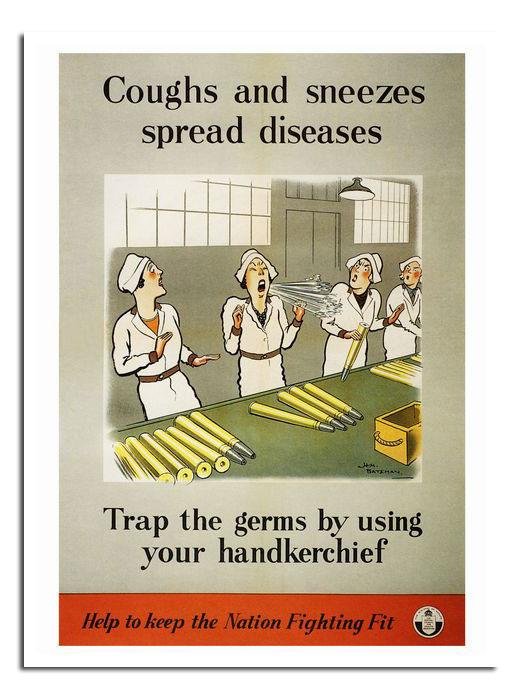
On Thursday 23 April a small number of us were able to get together for a catch up and brief talk about the times in which we live and reflecting on posters issued during the Second World War.
Some of us have allotments, which thankfully have remained open for us to use and enjoy. We shared what we had planted this Spring. Unlike my wife Elaine I am not a keen gardener. My grandfather though was a gardener by profession working at least at one of the big houses on Hutton Mount in the 1940s and 1950s. He always planted his potatoes on Good Friday, and it is always around that day that Elaine and I do the same because some think that the phasing of the Moon has an effect on growing plants. (Easter Day falls the Sunday after the first Full Moon after the vernal equinox.)
We reflected also on times in which freedom was removed or restricted. Patrick Griggs writes in this edition about the occupation of the Channel Islands by Nazi Germany from 1940 to 1945. If you ever visit Guernsey and Jersey this is a thought-provoking story. The Islands were liberated on 10 May 1945, two days after VE Day.
Commemorations for the 75th anniversary of VE Day have had to be cancelled. We will try to make up for this in this edition.
Such was the success of our experimental Zoom meeting that we have decided to get together every fourth Thursday in the month until it is safe to return to the Village Hall.
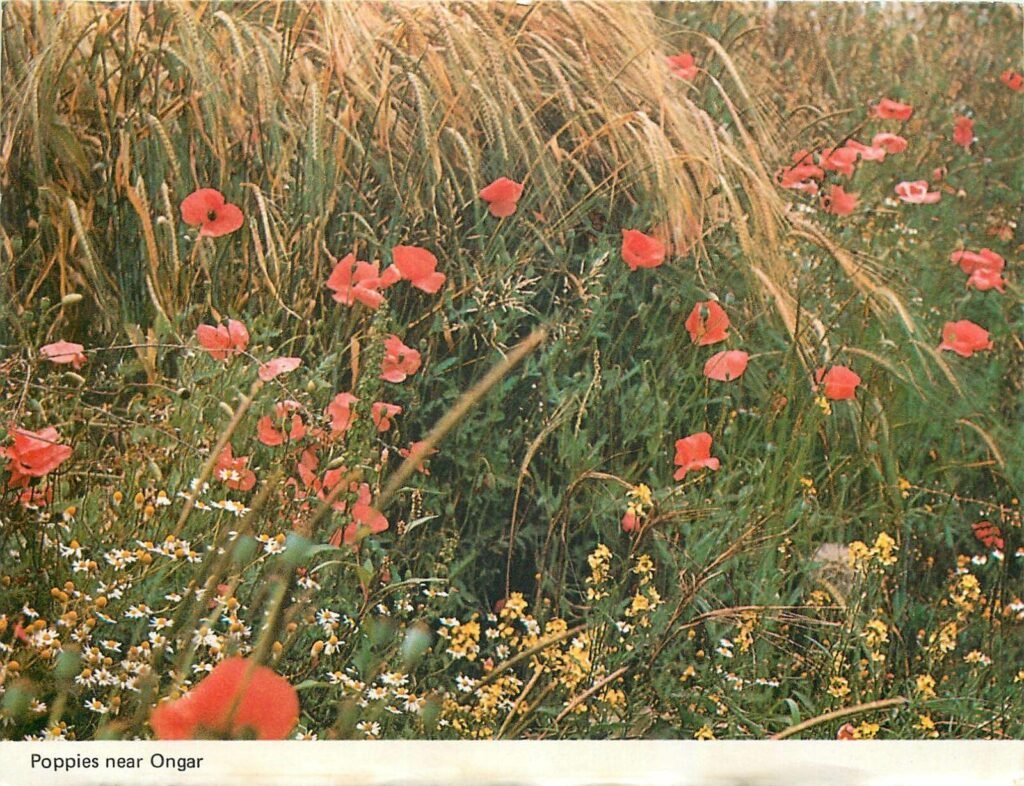
Our meeting on Thursday 28 May included a short talk by Andrew on ‘Rogationtide around Stondon Massey’ which included a short film of a walk around the parish boundary, or as close to the boundary as public footpaths etc allowed. With early May peaceful due to lockdown the birdsong was resplendent. The sound of the cuckoo was caught on film, a visitor not heard in this area for probably ten years, and magnificent bluebell woodland discovered. Kay Doyle heard the cuckoo near her home in Hook End, Blackmore, and Jane Adair wrote “Cuckoos must be more prevalent this year as John and I heard one at the beginning of May on a walk around by the North Weald radio station and then again by Ongar Park Woods. Could have been the same one who had flown on or maybe two different cuckoos - who knows?”
We will continue to stay connected by email and Zoom and hope it will not be too long before we can meet again at the Village Hall.
With best wishes
Images

Article 2 of 6
Jersey under the Jackboot
My maternal grandfather (Jack Cole) was born in 1878 in Guingamp, Brittany. His family, originally from South Molton in Devon, were in the leather trade and had moved from Devon to Brittany to open a tannery. At the age of 16 my grandfather was sent to Jersey as an apprentice to the shoe trade. He eventually married Gertrude Orviss, one of two daughters of J.W. Orviss who had started a successful grocery business in St Helier. This business was originally known as the Beresford Street Stores but as it opened a butchers shop, a fishmongers and a confectionary store it became known, simply, as J.W.Orviss Ltd. Their early married life was lived in some comfort and style at Grosvenor Lodge, a fine house in St. Helier where my mother and her two sisters were born. My mother and father married in 1932 and my mother moved to England leaving her mother, father, two sisters and a niece living in Jersey. Shortly after the war started the Jersey family moved to a modest house at Fauvic on the East coast of the island. So it was that when the war broke out in 1939 the families were separated.
After the occupation of Jersey by the Germans in 1940 communication with the family in Jersey was limited to occasional 20 word messages using the Red Cross Mail Service. People tend to forget that even though the Normandy landings took place in June 1944 it was not until May 1945 that Jersey was liberated. Against that background you should read this letter written by my grandfather to my mother in the days immediately after Liberation which (despite English being his second language) gives a vivid account of life under German occupation.
Sunday May 27th 1945. Ambleside, Fauvic, Jersey.
My dear Inez,
We were very pleased to receive your letter this morning and as we never receive letters on Sundays we were quite surprised when the postman arrived. There is so much to say that I don’t really know where to start so I had better start at the very beginning as far back as 1940. It seems ages ago. First of all let me put your mind at rest concerning us. Apart from the first and only air raid Jersey was the safest place in Europe this has been admitted several times and we do not deserve any kudos. Once the Germans were established here we never feared bombs etc as we well knew that England would not send planes to hurt us and neither would the Germans who were all over the place have sent any hostiles to hurt their own people, so we did not worry about that, but we worried a good deal about you all when we heard of raids over London and over all England and you must indeed have had a much harder and anxious time also much more uncomfortable than us here and it is you who deserve a VC for going through this terrible war always in danger and sleeping in cellars for months on end. We thought of you always and while we could go comfortably to bed at nights and sleep all night you were always in danger and we worried a great deal about that and relief was great when we had your first letter telling us you were alright. Thank God that is over so don’t pity us any longer. We had our worries but not as great as yours and when in Town on Friday I saw some photos of different towns in England including Southampton, Coventry, London and Newcastle and many others exhibited in Burton’s very large premises where the Germans also had propaganda leaflets and books etc at one time. When I saw these photos I knew that life in England must have been terrible and our sympathies go out to them in their dreadful trial. What we have gone through is nothing compared with what these poor people living in bombed areas must have gone through and I think you must all be very brave.
When we moved into this house in 1940 in the month of May we never thought of all this. At the time they thought of defending the island and extra troops were drafted here. They (were) suddenly taken away during the night and we heard that Jersey had been declared an open town. We thought we were safe but not quite as the Germans were overrunning Normandy and France everywhere. We could hear the guns all day long and one day we heard planes. We rushed out and hardly had we reached the end of the garden when we heard a hissing noise from one plane quite close to here and then a tremendous thump - good gracious - they are bombing us. We all bundled back indoors and crouched on the floor in the kitchen and for a time we heard no more. They had gone over the Town and we could hear muffled noise but did not know what was happening. The potato season was in full swing and there were any amount of lorries on the pier with their loads, people taking a stroll on the pier. All these were machine-gunned and all the lorries. Bombs were dropping on the houses there and people were taken by surprise never expecting this and many were killed. They came back over this way. We could hear the machine-guns going as they went off back to France. The first bomb dropped on the slipway at La Roque Harbour and several people were killed on their doorstep as they came to see what was going on. The roofs of several houses windows etc were smashed. The next day all the houses were told to put up white flags as the Germans were coming to take the island.
The Bailiff and others were told to be at the airport to receive the German General and so that was the first and only air raid thank goodness. After that the place was alive with planes and Germans all over the place. Proclamation after proclamation were posted up everywhere threatening people with the death penalty for nearly everything. It was not very pleasant. They soon took charge of everything and from then it was a gradual tightening of our liberties. Two persons were allowed to talk on the pavement together but not three or they wanted to know what you were talking about. Then they started taking our cars, then wirelesses were forbidden excepting German stations then they took them away altogether. Then some bicycles had to go as well. Curfew at 10 o’clock. Blackout very severe. After a time nobody worried about the numerous orders appearing in the papers. You were not allowed to cycle two abreast on the roads only in single file. After a while nobody took any notice of all these silly orders. Well, this went on gradually getting worse as the Germans knew they would lose. While the Germans were in Normandy there was always a certain amount of food coming from France. The States of Jersey sent representatives to live in St Malo to buy whatever they could find and we had rations of red wine sometimes or Camembert cheese. Clothing not in great quantities. We had French tobacco until North Africa was invaded then it stopped and we had to depend on our own crops. One year there were rumours of peace and we were greatly elated. This came to nothing and we were disappointed. Then came D. Day. We could again hear the guns which shook our doors and windows but this time they were English and American guns.
After a while they took Cherbourg and neighbouring places. We used to go up into the loft and watch the fires and puffs of smoke quite plainly. Some days the rattle of artillery and bombs shook the house and the doors and windows rattled. What it must have been like at close quarters I dare not think. It was bad enough with it 15 or 20 miles away. Then rumours again were rife and people said that the Americans would be here in 10 days and so it went on nothing happened and we thought we would be free by last Christmas but were greatly disappointed when everything was quiet again. We were then afraid that the Germans would fight. All sorts of rumours went round. We were afraid that a fight would mean the end of Jersey. The place is so small and was well fortified that it would have meant a terrible loss of life for us too. However, after long anxious weeks they gave up fortunately and here we are again with the smiling British Tommies instead of the hated Germans whom we ignored. Well you know all that has happened since and we again enjoy freedom and freedom of speech.
Our greatest fear was deportation. At first the least thing meant being sent to Germany where they decided to send the English residents away we also had our turn. One evening there was a knock at the door. The Constable and several others and a German soldier were there. The German soldier asked me if I was Mr. Cole and then handed me a paper telling me to be ready to embark the next day at 2 o’clock in the afternoon. Short notice, but I said I was not born in England. So he said if you have any papers take them to the Commandant at College House tomorrow morning . I could not sleep that night and we were all packing a suitcase each, not more, also a blanket and not more than 10 Marks (?) money. Doris and I went to College House next morning and I told the Commandant that I was born in France and had been all my life in Jersey. The officers had a talk together in German and then he said to me but your name is an English name. Oh I said there are many people in Jersey with English names. Then another confab together and suddenly he said alright – accepted and I was free.
We quickly went to Ethel Le Contun (sp?) next door to Grosvenor Lodge and telephoned the good news to mother here. It was a relief and then that afternoon we saw the poor unlucky ones leave in a special bus from Grouville and we might have been there too had I not been born in France or Jersey. Mother was not too well then and it was very worrying. We had a doctor’s certificate which we would have produced at the last minute but this was not necessary. It all seems like a bad dream now. We had privations certainly but not as you might imagine. I am now writing about us personally. I know there have been people who lived in Town where they could not get anything but the meagre rations doled out but as far as we were concerned here we were never hungry. We lacked luxuries and meat was not to be had very often but we produced food and our loft was always well stored with the fruits of our labour. Dried beans, apples, potatoes, wheat, which we had to hide bought at £8 per hundredweight – this was cheap, some had to pay £12. The Germans raided many houses for wheat. We used to help each other too - it is really marvellous how people used to manage and now there is food in the shops again and we have plenty. The rations are fine and tomorrow we are having 100 cigarettes and 4 oz of tobacco as well per person.
You said you had a parcel of food for us from South Africa but really we do not require it so if you can make use of it yourself. It is most kind of them to send it and is greatly appreciate it but it seems you are short of food too and if it would be useful to you have it.
The Red Cross parcels here are a blessing and now food is pouring in. I do not know if I have told you enough to explain the situation. There is so much in the years that I have forgotten lots of things I expect, however I shall write again shortly.
I am sorry Jack is so tired. I wish he could come over here but I am afraid they won’t allow travelling for some time.
We are longing to see you all and would like you to come over when you can. I had your wire but could not reply by telephone as the cable is not repaired and letter is just as quick that day. I could not get near the Post Office the queue was outside on the pavement. Much love to you all – we are very well and hope you are the same.
Daddy.
Footnote.
There is a reference in this letter to my grandmother being unwell. Sadly, she did not survive the war and I was never to know her.
My mother’s elder sister also wrote about life during the Occupation. Her accounts of having to bring all their livestock into the kitchen at night to protect them from German soldiers and escaped Russian slave labourers are riveting and I hope to make that the focus of a talk for the HCHG in the future.
Article 3 of 6
Rogationtide
“It was many times remarked that a suitable time was this of Rogationtide for a Perambulation, the country was looking at its best, and yet the crops not being sufficiently advanced to impede progress”.
These were the words written by Revd. Edward Henry Lisle Reeve, Rector of Stondon Massey, in 1909.
The month of May is, and has been in 2020, the perfect month for walking.
The ancient commemoration of Rogationtide is (or was) held five Sundays after Easter when fields are blessed within the parish boundary in the hope of a good harvest. In 2020 Rogation Sunday was on 17 May.
There then followed on one of the three days up to Ascension Day the Annual Perambulation (or ‘beating the bounds’) which declared the territory subject to tithing to the Rector.
In the book ‘A History of Stondon Massey’ published in 1900, Reeve wrote: “The Annual Tithe Dinner was given at the Rectory to tenant farmers of the parish. It was not so very long before Mr Reeve’s institution [see note below] that Tithe had been taken in kind, for the Rectors, had gone round the cornfields claiming the tenth sheaf of every crop and sending it home to the Rectory tithe barn. It was a rough and ready way of collecting their revenue. The reverend gentleman might commence where he liked in the field. All this is now over: the Tithe has been commuted at a certain sum in each parish, which in future was to rise and fall proportionately with the rise and fall in the value of wheat barley and oats, on the average of the seven past years, and Mr Reeve had only to wait the ingathering of the harvest to receive his dues from his friends and neighbours”.
[Note. Mr Reeve, who our Revd Reeve refers to, was his father, Edward, Rector of Stondon Massey from 1859 until his death in 1893. Our Revd. Reeve succeeded him remaining as Rector of the Parish until 1935.
In 1834, as Reeve mentioned, tithing was commuted when a Tithe-Rent-Charge Map was produced. Tithing was abolished in 1936.
Reeve also mentions the observance of the Perambulation is a ‘detached’ part of the parish of Stondon Massey, in what is now Margaret Roding, formerly owned by the Marks family:
“The same branch of the family that lived at Stondon appear also to have owned a farm at Margaret Roothing. It is still called after them Mark’s Hall. Previously to the year 1200, those who had tithes at their disposal were allowed to assign them to whatever church they pleased, and it is certain it is that ever since that time the tithes of that particular farm have been held by the Rector of Stondon. There was a chapel attached to the hall, and the Rector was expected, no doubt, to go over and serve it, or to provide for another priest when necessary to go over and represent it. The chapel was later not required, and was gradually allowed to fall into decay. No trace of the building now remains. When the custom was in force of beating the bounds of each parish every year at Rogation-tide, the rector and parishioners of Stondon took care to include Mark’s Hall within their perambulation, and did not consider that they had completed their rounds until they had paid a visit to Margaret Roothing”.
With regard to the term ‘beating’ I refer to an extract published in The Essex Review in 1896 pertaining to the Bishops Stortford area.
“On the morning of … Ganging Day, as it was called, a great number of young men assembled in the fields, choosing an active fellow as leader, whom they were bound to follow, though, for the sake of diversion, he led the way through ponds, ditches, and hedges. Everybody they met was “bumped” by being taken up between two persons and swung against each other. This Ganging Day must have taken its name from the old Church festival of Gangtide during the Rogation Days, with its solemn processions about the parishes, originally instituted as a preparation for the devout observance of Ascension Day. In 1550 a form of prayers was added for a blessing on the fruits of the earth. After the Reformation, the “curate and substantial men of the parish” were enjoined by Queen Elizabeth to walk about the parishes as they were accustomed, and at their return to church make their common prayers; at certain convenient places the people were to be admonished on the sacred duty of giving thanks to God and of respecting landmarks and boundaries. This degenerated into the custom of merely “beating the boundaries,” when the parish officials and older men took a number of boys round with them, who received a beating at each important landmark to help them to remember it. Bumping Oak, above Manuden Hall, must have been one of the landmarks against which the luckless youngsters were bumped as a gentle reminder.
A member of our church community in Blackmore recalled when his father was Rector of a Buckinghamshire parish in the late 1950s that he was given a gentle beating on a Rogationtide walk.
Reverting to Stondon Massey in May 1909 Revd. Reeve decided to re-enact this event using the perambulation of 1828. “I myself was still in good health”, he wrote, “and in possession of perhaps an unusual store of minute and local information: our new lord of the manor, Mr Herman J Meyer, has just succeeded to his responsibilities and was anxious to see what he could of the Parish, and a number of Parishioners were willing to give up the day to accompany us”.
The party assembled at Stondon Place at 10am, on Monday 17th May. “The round was, of course, taken at a leisurely pace, as we wanted if possible to identify all the old land marks. We did not think it necessary, as no legal issues were involved, to beat literally every corner and to crawl along brambly ditches or brave the Roding’s flood; but we took care to go so near to every boundary as to satisfy ourselves of it. We probably walked about seven miles in accomplishing the round.
“The Ancient Religious aspect of the Perambulation was observed in a short service of a few special Prayers and Collects held before luncheon at Woolmonger’s Farm”.
Reeve tells of the capital luncheon provided by Mr Brace and the loyal toasts given to the lord of the Manor and himself.
And so it was that in May 2020 I achieved that long-held ambition to walk as closely to the parish boundary of Stondon Massey as is legally permitted using the current Ordnance Survey Explorer map and the Perambulation of 1828 (published in Reeve’s book) as my Guide “crossing the road by Clapgate field, (fence to Stondon) to William Mullock’s barn [Woolmongers Farm]; dividing the barn; the [threshing] floor in High Ongar, the Cottage in Stondon, the Brewhouse in High Ongar: then in a line to a Hawthorn (at the) corner of Hill House Mead …”. The landmarks may have gone but the historic footmarks of our previous inhabitants are there.
Rogation Elsewhere in Essex
Brightlingsea
William Beriff, the elder, yeoman, in his Will dated January 9th, 1542, makes the following curious bequest:
“Item I bequetlie to Thomas my soon and a noother pcell (parcel) called turners keaping them well in reparacion and allso heaping a dryncking on gang Munday at this crosse in turners so that whoso ever shall enjoye the said lands and tenements shall be bounde to heap the foresayde dryncking on gange Mundaye at the saide crosse.”
This “ drynckjpg on gange Mundaye” signifies the necessary refreshments for those who took part in the religious processions and “ beating of the bounds” on Rogation Monday.
(Extract from The Essex Review 1904)
Earls Colne
An inventory of church goods in 1547 includes “Item 5 streamers and bannerclothes whereof 2 be very olde and decayed” which were used in Rogationtide processions.
(Extract from The Essex Review 1944)
Saffron Walden
The Churchwardens’ Accounts of this town are unique in Essex, for they commence in 1439 (17 Henry VI) and continue until 1485. They consist of 150 pages written on both sides and are in the library at Audley End ; this probably explains their preservation. They refer to expenditure connected with feasts, shows and plays organised by the Church. No details are given, but the references, written in a quaint mixture of English, Old French and Latin, prove that the May Revels, the Church Ales, Midsummer Fair, Rogation and Corpus Christi processions and religious plays were organised by the Churchwardens for the amusement and edification of the people as well as for, the pecuniary profit of the Church. The earliest reference is 1439.
(Extract from The Essex Review 1945)
Toppesfield
Noted in the Parish Register:
“Toppesfield Steple fell downe July the forth day 1689 and five beles and a little bel broke all to peeces”
“Toppesfield, on 1st page of Register, (writing c1600)
When Advent climes to take his time, then out goes wedding tide;
Like Artillary in come Hillary, with weddings at his side.
Septuagist takes the next hint, and bids them next adewe:
But Ester mass wth eight days past thou mayst goe wedd anewe.
Rogation did ye last forbid, & bid thee pray instedd:
But Trinity gives Liberty to make a marring bedd.”
(From the archives of the Essex Society for Archaeology and History)
Article 4 of 6
From the papers 1939-1945
From the Papers 1939 - 1945
ORGANIST AGED 12 Joyce Ellen Peacock, aged 12, has been appointed organist of Stapleford Tawney Church. She began her duties Sunday, giving every satisfaction.
The glass in the east and west windows of Stapleford Church has been restored after many months of the windows being boarded up following enemy action.
Essex Newsman 22 May 1943
NO BUS FOR SCHOOL SO THEY STAY HOME
By Murray Edwards
Young children in the isolated village Stapleford Tawney, must find their own way to school, seven miles sway, or their parents will be summoned. That is an order from the Essex County Council, which says it can no longer provide a school bus to collect the children and bring them home again.
And as parents refuse to let their children walk a mile to the end of the lane and then wait for the public bus by themselves, the children play on the village green instead of going to school. Some of them have been doing it since last Autumn.
Parents say that arrangements should be made either to re-open the village schoolroom for children up to 10, or provide a special bus.
FARMS HIT
Local Farmers are worried too. They cannot keep their workers.
Farmer Arthur Lamb told me yesterday that his men leave when they cannot find a local school for their children.
“They refuse to let their children walk miles to school, and I don’t blame them,” he said.
Mr George Richardson, who has four children of school age, said that under threat of prosecution some parents took time off from work to see their children get on the bus safely a mile away.
Mrs Messenger, a member of the Church Council and the Parish Council, explained the position.
“When the war began,” she told me, “the authorities closed the schoolroom in the village and made it a branch of the County library.”
TWO TRANSFERS
“The junior children were transferred to a school at Theydon Mount, six miles away. Two cars used to collect 20 of them and bring them back. Then that school was closed down and they were told to go to Coopersale, seven miles away, but for some reason the Council said they must find their own way and took off the cars.”
Mrs Messenger said the matter came to a head when she refused to send her own daughter Sheila to school.
“The education officers called- in a car – to see me,” she said, “and threatened to apply for a summons.”
“I told him to do his worst, and I wrote to the Education Committee in Chelmsford telling them the whole story.”
Daily Herald 18 September 1943.
Petrol for H.G. Duty: £5.
Peter E. Partridge. Stanford Rivers Hall, Stanford Rivers, summoned-before the Ongar Bench for unlawfully using petrol, was fined £5. He was stated to have used petrol, allowed for farm work, while on Home Guard duty.
Essex Newsman – 15th May 1943
STANFORD RIVERS CANTEEN DESTROYED.
On Monday evening Ongar Fire Brigade were called to an outbreak at Messrs. Piggott Bros, factory at Stanford Rivers. They found a large wooden building, used as canteen and store, blazing furiously. Difficulty was experienced in obtaining water from the River Roding, and the building and contents were destroyed. The Ongar Brigade was under Chief Officer Luck and Capt. Eley. Other fire fighting came from Brentwood, Abridge, Fyfield. Epping, Harlow, and Theydon Bois, and the fire was prevented from spreading to other buildings.
Chelmsford Chronicle 2nd January 1942
Article 5 of 6
Attacked by a Shark
CADET DAVID HAY'S GALLANT RESCUE
Diving overboard from his sinking ship the Eurylochus, which had been shelled by a German surface raider, Cadet David Hay reached a raft. Then, although sharks were about, he dived in again to rescue the radio officer.
Cadet Hay, an 18-year-old Etonian who joined the Merchant Navy as an apprentice, has been awarded the Lloyds War Medal for exceptional gallantry at sea in time of war.
He is the son of Major Lord Edward Hay, also an Old Etonian, of Hill Hall, Theydon Mount. The merchant ship in which Cadet Hay was serving as an apprentice was hit by several shells - the steering-gear was blasted, the gun was put out action, and the boats were smashed. Many on board had been killed or wounded.
As the ship was sinking Cadet Hay saw the radio officer struggling to reach a raft. Sharks were swimming about, but David Hay, a strong swimmer, six feet tall, dived off another raft.
As he swam to save his colleague, the sharks attacked him. One made a vicious snap at his legs and tore off his clothing He reached the raft as the shark dived to attack him again. The two men were lifted on to the raft, and the sharks swam away. Describing his swim afterwards, Cadet Hay said: "A shark had my trousers and a little skin, but I just managed to beat him to the raft before he could get some more of me."
The sea has always fascinated David Hay. He used to play in the boats at Frinton. His father fancied a business career for him, but although as a child he suffered from asthma and could not join in his school sports, he grew out of it, and joined the Merchant Navy. Now he is in a naval training school.
Footnote:
A German boarding party examined the cargo holds and found 16 heavy bombers. The German captain, Theodore Detmets, gave the order to sink the ship with a torpedo, but as it was fired a searchlight spotted a lifeboat crew trying to re-board the Eurylochus. Detmets tried to warn them with a "torpedo fired" message but it went unheeded. As the torpedo struck the lifeboat, its occupants disappeared. In all, 38 crew were lost but the remaining 42 were taken aboard the Kormoran.
Shortly after the incident, David transferred to the Royal Naval Reserve, and ended up in Freetown, Sierra Leone where he was Officer in Charge of a small Naval Police Force that had to keep law and order in the town. There was a considerable amount of civil unrest and rioting to deal with.
On 4th July 1941, the London Gazette announced that David had been awarded the Albert Medal in Bronze for life saving at sea, and on 29th July 1941, he received his AM at Buckingham Palace from King George VI. He later took part in the North African Landings, an experience which would affect him for the rest of his life with vivid nightmares.
Towards the end of the war, he was given his own command, a mine sweeper, HMS Neave. His task was to go around the British coastline blowing up wrecks that were a hazard to shipping. After demobilisation, David found himself with little money and no career. He decided to go into business with some friends and founded the Chelsea Traders. Shortly afterwards, he married the Honorable Sonia Peake and they went on to have three sons, Edward, Charles and Alastair.
The marriage ended in divorce in the mid - 1950s.
LORD EDWARD HAY.
Lord Edward Hay, who is being added to the Commission of the Peace for Essex, is again on active service, commanding battalion of the Essex Regiment. He and Lady Edward have lived at the beautiful old mansion. Hill Hall, Theydon Mount, Essex, since 1932, and he is now a member of the Essex County Council. Lord Edward Hay, who is 51 was formerly a Major in the 2nd Battalion Grenadier Guards, and is heir presumptive of the 11th Marquess of Tweeddale. Lady Hay is the younger daughter of Sir Thomas Latham, for many years a director of Courtauld's Limited.
In the last war Lord Edward served in France, Gallipoli, and Egypt; and afterwards he was at the Peace Conference in Paris, and was sent later various countries on special missions. While Sir Herbert (now Lord) Samuel was High Commissioner in Palestine, Lord Edward was Military Secretary.
Chelmsford Chronicle -1st December 1939
OBITUARY LORD EDWARD HAY
The funeral of Lieut.-Colonel Lord Edward Hay, Grenadier Guards, whose death by enemy action was recorded last week, took place quietly at Theydon Mount Church on Friday The Bishop Barking, the Rev. H. G. Barclay. C.F., and the Rev. E. W. Grevatt (rector) officiated. The coffin was draped with the Union Jack, and brother officers of the Grenadier Guards were present.
The mourners were: Lady Edward Hay, widow; Miss Sarah Birkin, stepdaughter, Mrs. Hamilton, sister-in-law: Col Sir Piers Leigh Major Arthur Penn. representing the Lieutenant- Colonel commanding Grenadier Guards; Major the Hon. P. P. Carry, representing Westminster Garrison Barracks: Guardsman Frank Oram. Sir Drummond Smith: the Rev C. B. Mortlock, vicar of Epping; Mrs. Grevatt; Miss Inskip: Messrs R 1. C. McNarry and R. B. P. Pearce representing Ongar Rural Council: Miss G. Waters: Mrs. and Miss Chapman; Mr. and Mrs. Prior: Mr. Tyler: Mr. Edgar Smith; Mr Herbert Chapman. Mr. Walter West, employees: and Mr. Bingham.
Chelmsford Chronicle 30th June 1944
Images
David George Hay, born 1921. Died 1979. He became the 12th Marquess of Tweeddale.
In 1971, the Albert Medal was discontinued (along with the Edward Medal) and all living recipients were invited to exchange the award for the George Cross.
Article 6 of 6
More Plague, Pestilence and Parish Registers
In Michael Leach’s interesting article in the March 2020 issue of the HCHG journal, he examined evidence for the plague and other epidemics in Essex, including from the registers of Chipping Ongar. This article, also written during the coronavirus pandemic, continues his theme and looks at evidence for the much smaller parish of Theydon Mount.
In 1428 Theydon Mount appears to have had a lower population than it had at Domesday. It was specially exempted from a house tax introduced that year because there were fewer than 10 households in the parish. Perhaps the population numbers had never fully recovered after the pandemic of the Black Death, which arrived in England in June 1348 and is estimated to have killed 40-60% of the population.
After the 14th century, the plague retreated but never went away, recurring regularly over the next 300 years, including in our area. London was understandably one of the epicentres, and it spread easily to the surrounding countryside because of the frequent movements of people (and their fleas) between the two. There was a known “great plague year” in London in 1563, for example, and the following year four unrelated children in Theydon Mount were buried on the same day at the end of June, with another child in August and an adult in September. (Plague tended to strike in the summer and autumn, then usually retreated after a few frosts.)
A possible visit to Hill Hall by Queen Elizabeth in 1570 may have inspired her Secretary of State, Sir Thomas Smith, to completely rebuild two wings as a suite of Royal apartments and decorate them lavishly with classical and Biblical wall-paintings. But plans for the visit were abandoned when in July Smith reported “the sudden death of certain persons very near his house”. The intended progress into Essex (Hill Hall, Leez Priory and St Osyth Priory) never happened. The registers of Theydon Mount only record two deaths in 1570 (about average for the time), so the cases must have been further afield. There were two farmhouses just over the parish boundary with Theydon Garnon only a few hundred yards from Hill Hall. Anyone dying there would have been recorded in Theydon Garnon registers.
There was a definite spike in Theydon Mount deaths a few years later in 1579, when nine people died between July and September, with one more – a 6-week-old baby – in early November. Four of the deaths were from the same family – a child John Love was buried on 12th July, his mother on 1st August, his father on 5th August and his sister on 7th September. On 31st July a maidservant from Hill Hall was buried and then a manservant the next day. A wife and then her husband were buried on 5th and 19th August. Two more unrelated children died, buried on 31st August and 1st November. As Michael Leach pointed out, several of these deaths may have been from any dangerous infectious disease, not necessarily the plague. But there had been plague in London and Norwich in 1578 which continued into 1579, when it also struck Yarmouth, Ipswich, Colchester and even Plymouth. And the spread of the disease across five separate households in the parish makes the plague seem the most likely cause.
The 17th century was a particularly bad time for sickness, when severe outbreaks of diseases afflicted the south of England again and again. The 1640s were plague years in London and beyond, often spread by troop movements, but typhus and influenza were rife too. Nine burials were recorded in Theydon Mount between March and December 1642, six of them in summer and four of them young children.
The political and religious turbulence of the Civil War meant that parish registers for this period are often patchy or altogether missing. Theydon Mount fared better than most. There is nothing for the three years after the incumbent rector was ejected in 1644, but then in 1647 a minister called Walter Welles took over. This may have been the same Dr Walter Welles whose preaching at a lecture in Godmanchester is credited with converting Oliver Cromwell to the Puritan view. Welles was a good record-keeper: he tried to reconstruct entries for the missing years and copied out the glebe terrier and churchyard fence liability from the old register book. In 1648 he reports that on June 10th, John North (his house is still known as North Farm) was “slain in the service of the Parliament at Epping”. The following year he wrote that “Edmond Nokes, Octob. 13 & his wife & one son all in a weeks’ space of a dysenterie. Jone Glascock her sister, of the same disease about 3 weeks after.” In early 1660 he tells us that Thomas Ward, an old servant at Hill Hall, was “esteemed at above 100 years old”. This was one of Welles’s last entries, because with the restoration of the monarchy in 1660, the ejected rector returned.
In 1663 Samuel Hall, another careful record-keeper who wrote in Latin, took over as rector. It was his unhappy lot to record the worst plague year of all in 1665, when the disease reached a crescendo and then seemed to burn itself out – literally, in the case of London. In Theydon Mount, the first two deaths were in June and July, but they were both older people, so perhaps unexceptional. Then four members of the same family were buried in September and October – first John Pitts, then his wife a fortnight later. A week later their adult son died, and his sister a fortnight later. In the margin of the register against each of these four names Hall wrote “peste” – Latin for “of the plague”.
Printed transcript of Theydon Mount burial register. Until 1752, the calendar year began on March 25th, so the two Hall entries were in what would now be reckoned as 1666.
Curiously, on the same day that Widow Pitts was buried, presumably in the churchyard, there was another burial. Hall wrote, “Gratia filia Johannis Lloyd Baronettae sepulta fuit Septbris25°”, ie ‘Grace, daughter of Sir John Lloyd, Baronet, was buried September 25th’. Grace was the step-daughter of Sir Thomas Smith, great-nephew of the Sir Thomas who rebuilt Hill Hall. The entry continues in English, “Shee lyes buried in the entrance of the chancel on the right hand, under the seat where the menservants of Hill Hall use to sit”. In the margin there is no reference to the plague, but Hall has drawn a hand with the index finger pointing to the entry, seemingly drawing attention to it. It would surely be unlikely, though, that she would be buried inside the church if she too had died of the plague. Although the transmission of diseases was not understood, noxious fumes (miasmas) were often blamed, which no doubt would emanate as the body decayed in its shallow grave beneath the seats – perhaps a rather queasy thought for those who usually sit there now.
Interments within the church itself are technically known as intra-mural burials. Fees were much higher than for burials in the churchyard, so they were only for the wealthy elite or the clergy. They were common in the Middle Ages and beyond, but fell out of favour before the 19th century, and were banned on public health grounds in 1850. Uneven or sinking floor tiles or slabs are often an indicator of collapsed coffins below.
Grace Lloyd’s burial within the body of the church was not the only one Samuel Hall recorded. In March 1666, he reports that his own little daughter Elizabeth, not yet two, “lyes buried in the ally [aisle] the feet of her Coffin agt the end of the seat belonging to Mr ffield and where the tenant of Munt Hall sits”. It seems that each property in the parish was allocated all or part of a pew, for which they would have paid a pew-rent. (Mr Field lived at Colemans Farm, and Mount Hall used to be just by the church.) This was the same system as described by Richard Gough in 1701, in which he goes through his parish church of Myddle in Shropshire, pew by pew, gossiping about current and former occupants of properties and pews.
Exactly a week after little Elizabeth was buried, tragedy struck the Hall family again. Her mother Margaret also died. “Shee lyes buried by her Child towards the women’s seat, the foot of her coffin even with the foot of the above mentioned.” Eight months later in November 1666, a citizen of London called Sarah Houghton was “buried in the alley below the before mentioned Margaret Hall along by the women’s seats”. It appears that the Hill Hall menservants and the women (presumably women servants) had their own seating, as well as the tenants of the various farms. Has anyone else come across similar records of burials under the church floor?
The year 1668 saw the deaths of the two highest-ranking parishioners – in March it was Lady Beatrice, second wife of Sir Thomas and mother of Grace Lloyd, and then in May Sir Thomas Smith himself. They are both described as being buried in the chancel, the most prestigious and expensive location. Today there is a crypt beneath the chancel containing coffins from the 18th and early 19th centuries, suggesting the crypt was not dug out until then. Lady Beatrice in 1668 was “in the chancell, part under the seat where the men servants of Hill-Hall sit, and part in the entrance into the chancel”. Sir Thomas was placed “in the upper end of the chancel close by the monument of Sir Wm Smith the Elder”.
From this time on, burial entries become fairly formulaic and routine, although Samuel Hall’s successor helpfully records the occupations of all the men. In 1697 he made a note that an unknown man was found hanging in the woods and after three days he was buried in the woods by the locals as a suicide. Because suicide was a crime, he would not have been allowed a Christian burial. Almost a century later, however, in 1783, local man Thomas Laundy died “in the King’s Bench”. This was a prison in Southwark, but mainly for debtors, not criminals, so perhaps that allowed him to be buried in the churchyard.
In the 1780s the registers start to identify paupers, who were exempt from the 3d Stamp Duty imposed in 1783 but discontinued in 1794, and a few entries have the word “Parish” added – buried at parish expense. In November 1787 a child died of smallpox, and two months later so did a 28-year-old woman. These were the last entries in the old register book to record a cause of death. In 1812 printed books for standardised register entries were introduced, leaving little scope for the individual clergyman or clerk’s additions.
It seems fitting to end with an epitaph. Mr Philip Gloyns, a farmer, died in 1806 at the age of 63. His gravestone in the churchyard carries a verse which, along with other monumental inscriptions and the old parish registers, was transcribed by J J Howard and H Farnham Burke (of Burke’s Peerage fame) and printed in a limited edition. The Rector at the time, the Revd Lewis Newcomen Prance, assisted with the commission and added some marginal comments in his own personal copy. Next to Philip Gloyns’s verse is the note “killed by a kick in his stable”, by way of explanation for the advice in the verse.
Stop, courteous reader, and contemplate here,
In pity drop one pious friendly tear
On one whom Death no warning chose to give,
Nor may not you – be careful how you live.
Images
Victoria County History of Essex, Vol IV, p 275
Hill Hall: a Singular House devised by a Tudor Intellectual, Drury and Simpson, p 260
A History of Epidemics in Britain from A.D. 664 to the Extinction of Plague, Creighton, 1891 [www.gutenberg.org,2013]
"Observations concerning the seats in Myddle and the families to which they belong", Richard Gough, 1701
Theydon Mount: Its Lords and Rectors, with a complete transcript of the Parish Registers and Monumental Inscriptions, J J Howard and H Farnham Burke, 1892