High Country History Group
Contents
See images from this issue
Images from this issue
Article 1 of 13
Law and Order
1642.
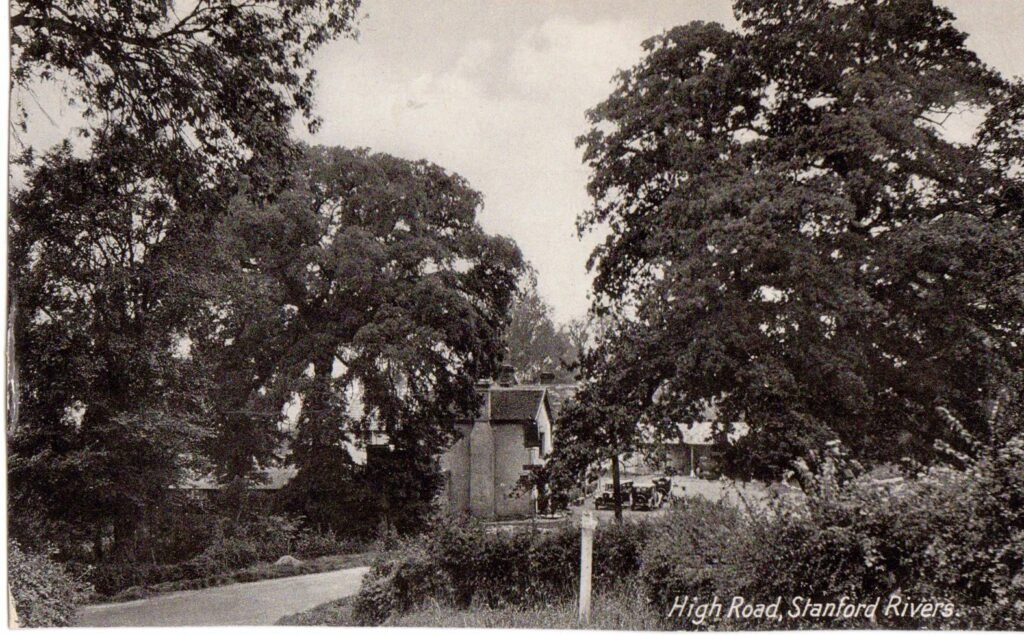
George Neale of Stanford Rivers, labourer, at Shelley, took away out of the church, ‘the books of Common Prayer,’ worth seven shillings, belonging to the parishioners and “did burn it upp,” near the church, saying, “this book is an idoll.”
1774
Thursday last Ambrose Miles, William Collis, and James Wright, were committed to our gaol (Chelmsford) by George Mason, Esq. charged on the oaths of Edward Rayner, Michael Elias, and Anthony Brasher, on suspicion with stealing five silver spoons and several other things the property of the said Edward Rayner of Stanford Rivers.
Ipswich Journal 4 Feb. 1774

Article 2 of 13
Benefactors to the Poor of Stapleford Tawney
A Rent Charge of £5 left by Thomas Luther to be paid out of the estate of Mrs Jones. A moiety of this estate has been sold to Sir W. Bowyer Smijth, Bt., who has ……half of the above rent charge by transferring to the official trustees of charitable funds the sum of £83.12.8 Consolidated £3 per cent annuities. The remainder of the above estate was left to Mrs Mark Lavender of Brentwood, who pays to the church wardens the yearly sum of £2.10.0.
A rent charge of £2.17.6 left by Mrs Luther to be given away in bread by the proprietors of Suttons, and five shillings per annum to be paid to the Church Clerk out of the same estate, for keeping the gravel walk clean.
A piece of ground called Church Lands left by a person unknown, in extent nearly 5 acres. In 1869 this piece of ground was sold to Sir. W. Bowyer Smijth Bt. For the sum of £495, which was invested in the purchase of £533.13.10 consolidated £3 per cent annuities, and invested in the names of the official trustees of charitable funds. Sir John Smijth Bt. In 1838 left the sum of £60 to the poor of the parish. The Revd. Sir E. Bowyer Smijth Bt., in 1840 gave the sum of £50 in augmentation of his late brothers legacy and invested the first sums in the purchase of £109 consolidated £3 per cent annuities, in order that the interest arising from it should be expended in coals, clothing, or food, to be distributed yearly among poor inhabitants of the parish, at the discretion of the rector for the time being. The above mentioned £109 consolidated £3 per cent annuities has been transferred to the account now stands in the name of the official trustees of Charitable Funds.
Article 3 of 13
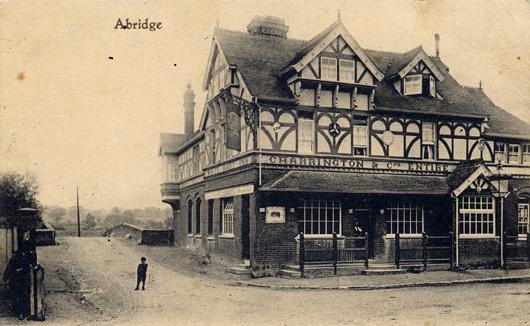
Fire at the Blue Boar, Abridge
Early this morning a fire broke out at the Blue Boar Inn, Abridge, by which the house, furniture, plate, and stock in trade, were entirely consumed. Mr Mansfield, the landlord, his wife, and other inmates, retired to rest about 1 o'clock. Soon after, Mrs Mansfield's attention was excited by a smell of smoke, and she awoke her husband, who thinking it only an imaginary fear on her part paid no regard to it. About 2 o'clock Mrs Mansfield again mentioned her suspicion, and at half past two insisted on Mr Mansfield getting up. On opening a closet in the bedroom, which is immediately over the bar fire place, a volume of smoke burst out with great force. They instantly aroused the inmates, and Mr Mansfield accompanied by a man named Reeves, went down stairs and forced open the taproom door. This room was filled with smoke, but they could clearly discern the flames issuing from the side of the bar chimney, where the fire must have commenced. A messenger was despatched to Epping for the engine, which shortly arrived, but unfortunately it was so much out of order as to be unserviceable. Mr Thomas Mead, a tailor and draper, who resides within two doors of the Blue Boar, then rode to Romford, a distance of seven miles, and returned with the engine of that parish within an hour. Plentiful supply of water was obtained from Mr Andrews’ brewery adjoining and from the river, the floodgates of Mr Stephen’s mill having been opened, and the engine played with great effect; the fire, however, had gained such an ascendancy, that it was impossible to save the house, but by the very praiseworthy exertions used on the occasion by all parties, the flames were prevented from extending to the stabling and the adjoining premises. The fire was not effectively subdued till between five and six o'clock. Mr Andrews's brewery was saved by un-roofing part of a storehouse, whereby the communication was cut off. A cottage, belonging to the inn, was much injured, and Mr Mead, whose house is adjoining, will suffer to the amount of £200, from the damage sustained in the removal of his stock and furniture. The value of the property destroyed is estimated at about £2,400; but we are happy to state that Mr Mansfield is covered by insurance in the Alliance office: the house, which is the property of Mr Andrews, is also insured in the same office.
A rumour was prevalent that a traveller perished on the occasion, but this has not been confirmed.
[Source Essex Herald 9th November 1830]
Article 4 of 13
Theydon Mount Wills during the reign of King James I (1603 – 1625)
The study of Wills allows local historians and genealogists to trace ancestry particularly in instances where Parish Registers do not exist. Ten Theydon Mount wills are preserved in the Essex Record Office during the reign of King James I. I have transcribed most. Having written two items on this set, this concluding note draws these documents together as a whole.
The ten Wills studied were:
1605 Richard Gilson, husbandman
1612-13 Robert Hill
1612 Thomas Bredge
1613-14 William Winter, husbandman
1614 Robert Knoppe, yeoman
1616-17 John Moore, yeoman
1623-24 Thomas Gilson, tailor
1624 Thomas Herd, yeoman
1624-25 Richard Gladwin, bricklayer
1625 Susan Winter, widow
Richard Gilson (d. 1605) was the father of Thomas Gilson (d. 1623). He names his wife, Mary, and children: Richard, Thomas, George, Elizabeth, Susan and Mary who were all under 21 years old at the time. When Thomas dies a bachelor eighteen years later he mentions his siblings: Elizabeth, who by then had a son Richard and two other children; Richard, who had 4 children; Marie (Mary); George; and John, who is unnamed in his father’s will so may have been unborn at the time of his death. Susan is not mentioned in Thomas’ will but his brother-in-law George Herd receives an inheritance as does his children, Thomas and William. We must assume that Susan had married into the Herd family but died. The Gilson and Herd families would want to search further.
When we look at the Will of Thomas Herd (d. 1624) we note he had a brother George with a son Thomas and realise a growing family tree. William is the other named brother of Thomas Herd. The testator has a son, Thomas, and grandson, Thomas. Family historians have to be careful not to omit a generation when constructing their family tree. He also leaves money to “John Heard my uncle George Heards sonne his fower Children that he had by his first wife”. John was Thomas’ cousin.
A Thomas Herd is mentioned as “my kinsman” in Susan Winter’s will of 1625, appointed as an overseer alongside the minister, M[aste]r Juby. She had three sons: Thomas, John and William. When her husband, William, writes his Will in October 1613 he mentions only Thomas (who was not 20 years old) and John “my yongest sonne” but later mentions “these my three Children”. Perhaps William was alive but did not receive an inheritance, or was perhaps unborn with a daughter not receiving an inheritance. A puzzle for the Winter family.
Robert Hill’s will (d. 1613) does not mention by name his family. “I give to my wife all the goods and Chatles as 7 beaste 26 sheepe 2 mares and 2 Colts with all my houshold stuffe and moufable goods also I giue to my 5 chilldren at 18 years of age 3 to oxenone of them”. He names Thomas Hill his brother as overseer. He names the people who owe him money. There is no note for write off but a reminder.
Robert Knoppe’s lengthy will (d. 1614) names his wife Mary, Robert his son and three unnamed children. It is full of conditions, including provision should “thre skore poundes” not be paid to “the residue of my children”.
John Moore, yeoman, wrote his Will on 16 November 1616. He was buried on 20 December 1616. He mentions firstly his wife, Catherine, his children William and Joan, and brothers and sisters, including the children of Thomas the older and Elizabeth. Here follows an extract, which has some interesting spellings and unusual bequests to modern eyes.
9 It[e]m doe giue and bequeath unto Cathron moore my wiffe twenty poundes of good and lawfull money to be paid
10 hir w[i]thin wone month after my goodes shall be sould by my Exec[u]et[o]r. Item I giue my daughter Joone forty
11 shillings to be paid her at the age of wonantwanty years or day of maridg by my Ex[e]c[u]ter. Item I doo will
12 and giue to my sonn William Moore the sum of threescore pounds to be paide him by my Ex[e]c[u]tors
13 upon he shall acomplesh the age of wonantwanty yeares p[ro]vided that my son William deseas
14 befoore hee shall com to the age of xxi years my will and mynd is that the remainder of his ledgesie I giue
15 and bequeath as followeth first I giue to my sister Elizabeths Children x Li[bor] pounds to be paid them when they
16 shall com to the age of wonantwanty years of p[ro]vided that if ether of them s[h]all deaseas befoore thay
17 acomplesh to thare Seavorall ages of xxi years then my will is that his or her porsion so deseas shall be
18 equally devidded amonste them that are living. Item I will that … shall rest in my Ex[e]c[ut]ors
19 handes shall be dividded amonste my brother Thomas Mores Children equally to be divided amonste them
20 upon they shall com to thar severall ages of xxi years p[ro]vided alwaies that if any of them shall suffer
21 to deaseas befoore thay com to the severall ages of xxi years then my will is that thar leggeses so deseased
22 is also equally dividded amonste them that are livinge. Item I will and giue to my brother Thomas Moore
23 the older three pounds of good and lawfull money to be paid him within six months after my deseas. Item I will
24 and giue to to Alys Ingold vis viijd to be paid by my Ex[ecu]ters which are underwritten. Item I will and giue
25 to catarne my wiff the bed steed which I liupon with the worshe fether bed and a pare of sheetes to blankets and
26 won pillow …
27 … will all her aparill with the yarne and a linne whode.
28 Item I will and giue to my older brother Hen Moore my Cloock and my best hat and all my wordadaie
29 apparill. Item I will and giue to my brother Thomas More the younger my best seute of apparill
30 and I do intreate my loving nabore Thomas Filde of theydon mount and William Start
31 of lucton … to be my Exsectors and Itim I giue them for thare pains xxs apece and
32 and I intreate my loving naber Thomas Feuens to be my overseer of this my last will
33 and teastament and I giue him for his pains xxs in witness wharof I the said John Moore hand hear unto sett to
34 my hand and seale the daie and yeare firste about written sined sealed made in the p[re]sent of us
35 whoos names are heare under written
36 The mark of John Moore
37 The mark of Joone Inggoll
38 The mark of Phillos Sharpe
39 [Probatum]
Richard Gladwin (d.1625), our bricklayer, had a wife, Susan, and two children, Richard and Bridgit.
Finally, the Will of Thomas Bredge (d.1612) led me to conclude that he died fairly young. He wrote his Will on 27 April 1612 and was buried three days later at Theydon Garnon believing that his wife, Agnes, was pregnant with their fifth child: “If it happen my wife to be with childe …”. A search of Registers may determine a baptism thus revealing a fifth child in addition to James, Margaret, Anne and Elizabeth. Also named were his brothers Robert and Richard.
D/AEW 13/78.
D/AEW 14/292
D/AEW 14/218. Full transcription in Journal 54. Thomas Bredge / Bridge was buried at Theydon Garnon. He wrote: “Item. I give to the rep[ar]acion of Theydon mounte Church ten shillings.”
D/AEW 15/22.
D/AEW 22/240
D/AEW 16/15
D/AEW 17/175. Full transcription in Journal 55.
D/AEW 17/209. Full transcription in Journal 55.
D/AEW 17/248. Full transcription in Journal 55. Sidesman and bricklayer who might have been involved in the rebuilding of the church?
D/AEW 17/296
Kinsman can mean a neighbour not necessarily a relative.
A repetition of pounds.
cloak
Perhaps Latton?
Article 5 of 13
Essex Quarter Sessions Order Book (1652 – 1661)
Stanford Rivers:
Whereas it appeareth unto this Court, upon Complaint made by the Inhabitants of Stanford Rivers in this County, that Susan Hamond, spinster, Covenant servant with Thomas Simonds [th]e younger of that parrish, is lately delivered of a bastard child likely to become a charge to that parrish, And upon examinac[i]on shee accuseing the said Thomas Simonds her Master to bee the Father thereof The said Thomas is thereupon feedd in token of his guilt and conveyed away by Thomas Simonds the elder, his Father, who in his absence takes upon him the disposic[i]on of the goodes of his said Sonne to prevent the execuc[i]on of Justice, It is thereupon Ordered by this Court that the Constables of Stanford Rivers aforesaid or any other parrish in this County Doe forthwith apprehend the said Thomas Simmonds the elder and carry him before some one of the Justices of the peace of this county to be bound over to the next Quarter Sessions of the Peace for this County, there to produce his Sonne or to be dealt withal as the Court shall then thinke fitting.
Article 6 of 13
Rector in Court Scene
Article 7 of 13
What the Papers Say (1945 – 1955)
Rectory To Big
The Rev. E. B. Rees, M.C., rector of Stapleford Tawney and Theydon Mount, has moved from his 28-roomed rectory to a former gardener’s cottage, because of heavy expense.
Essex Newsman 3 September 1948
Dawn Search Caught Two
By dawn to-day squads of police using torches and co-ordinated by wireless had recaptured two of the three good conduct prisoners who escaped from the prison without bars at Theydon Mount.
They were Harold Pryte and Jack Josephs. Pryte was recaptured when police closed in on a copse near Epping just before midnight. He was serving a two-year sentence for theft. Josephs, who was caught later, was sentenced for shopbreaking and theft.
Police and wood choppers were watching copses and thickets for the third man, William Henry King, in prison for receiving, was continued by daylight.
They had originaly been in Chemsford Gaol, but had become members of the working party at Epping because of their good conduct.
Essex Newsman 5 April 1949
Parson Wins Bus Fight
After five years of agitation, a group of North Essex villages have persuaded London Transport to run a bus service from Epping to Toot Hill, near Ongar, through Theydon Mount and Stapleford Tawney.
Chief protagonist for the villagers has been the Rev. E. Bennett Rees, M.C., Rector of Stapleford Tawney and Councillor for Ongar Rural District.
He says he will ride in the first bus – scheduled to run tomorrow.
When the villagers started their own service, the Transport Commissioners stopped them.
Essex Newsman 29 August 1950.
Article 8 of 13
Theydon Mount Constable
A petition from Theydon Mount in 1612 shows that even in rural areas they could, if sufficiently united appeal successfully against the will of the lord of the manor. In this case Sir William Smith of Hill Hall, had appointed George Mott parish constable seven years previously without the consent of the parishioners, and had not provided an opportunity for another constable to be elected, though George Mott was
‘one of the poorest men in all the parish, and a man of evil disposition and very bad qualities, who had wronged the parishioners very much, and made great strife amongst them.’
Sir William Smith, the petitioners stated would not allow another constable to be appointed because George Mott ‘serveth his term.’ They asked the justices to appoint instead,
‘an honest man, Thomas Field, a subsidy man and very sufficient for that office.’
Thomas Field was duly sworn after an investigation which revealed that no court leet had been held in Theydon Mount for more than twenty years.
[Taken from Essex Heyday, by William Addison, pub. 1949]
Article 9 of 13
Memories of Theydon Mount
Family
I, Ernest Freshwater, son of Edward Charles Freshwater, was born in Theydon Mount on 1st January 1893.I first saw light of day in the cottage at 3 Mount End] close to what was called the Horse pond, where the farmers watered their horses.
I had two older brothers, Walter, who was killed serving with the Grenadier Guards in France in 1916, and Ted, who is now 89 and lives at Bury St Edmunds.
My father died, aged 32, the year after I was born. Later on my mother married Walter Freshwater, no relation to my father (?). My step-father had been living with his grandmother in the back half of the cottage where we lived [2 Mount End]. He was the son of Harry Freshwater, who lived in the house at 8 Mount End.
[R V-H: Ernest's mother eventually moved into that house for several years until her death in 1960 at the age of 93. I used to pick her up from there and take her to church.]
School Days
I was three when I first went to school in the village. I can still remember my first day. Mrs Sparks and Miss Bower were in charge of the school at that time. The school building was smaller than it is now, and consisted merely of one main school-room in which, all at the same time, there was the babes class, and one or perhaps two other classes.
There were generally about 30-35 children attending the school. Each child had a desk and a slate. The books, paper and other school equipment seem to have been provided by Mr Prance, the Rector at that time. The children walked to the (old) Rectory at Stapleford Tawney on the footpath across the fields to pick up whatever was needed.
Once a year there was a party at the school, at which Mr Prance gave each child a Bible or some other book. On these occasions the children used to put on a play. I remember taking part in one of these with my friend Beatrice Fathers (eldest sister of Dora Fathers), in which we gave a little recitation which went:-
Grandad said, "To the mountain tops we climb.
It's not done in a minute; take one step at a time."
In another play, I remember having the part of a railway porter, and saying,
“I’m a busy porter man
Who puts the luggage in the van.
Blow my whistle and say 'All right'
Blow it again and show my light"
It was the schoolmistress who produced these plays, which were always a great occasion in the village and everyone came to them.
Another of my school friends was Flora Bardwell. By the time I left school at the age of I3 Mrs Darby had become the schoolmistress. I called on her when I came back to England in 1955 and shared many amusing recollections with her, including how badly we all behaved on her first day at school. She remembered but forgave me.
Work
My first job on leaving school in 1906 was milking the cows and looking after the pigs at Hill Hall. The Duke de Moro was living there then. The farm manager was a Mr Ames (or Haines?). Work started at 6 a.m. and finished at 6 p.m., except on Saturday when work ended at 5 P.m. We always had Sundays free. I was paid six shillings a week. There were no 'perks' in the way of free milk or farm produce. I stayed at Hill Hall for 2 or 3 years and then went to work at Little Tawney Hall. The owner was a Mr Bianchi, a bachelor whose father lived at Theydon Bois and who seemed to know- little about farming. The farm manager was a Mr English. Besides milking the cows I worked in the fields, hoeing mangolds and so on.
About 1913, I left there and went to work for Joe Hills, the grocers in Epping, whose shop was where the International Stores now is. My job was delivering goods in a pony and cart. I came up to Hill Hall nearly every day where, by now, Mr and Mrs Charles Hunter were living.
Life and Leisure
My mother made almost all our clothes when we were boys, but there was also a school clothing fund into which the children paid a penny or two pence per week and at the end of the year school clothes would be bought for them with the amount collected. These clothes generally came from Dearloves or Pynes in Epping. There was never a proper shop in Theydon Mount but my stepfather's mother sold sweets from her house, and we children would go there and buy a halfpenny's worth. Joe Hills, the grocers, used to come round the village on Mondays and collect the orders, and then return on Tuesday or Wednesday with the goods. Most people in the village collected their milk from Tom Miller's farm (now Sawkins Farm). They would generally collect a halfpenny or a pennyworth at a time. A halfpenny would buy about a quart. The milk was always skimmed. No one bought full cream milk as we do now. The meat came from Kirkby's, the butcher's in Epping. They would take orders one week and bring the meat round the following week. Most families had a meat meal about once a week. You could get a good joint for a shilling or two shillings, which would last the family almost a week.
The water tor the village came from a well near the blacksmith's (now Tarlins Farm), There was a tank alongside the well, which is still there, and a pipe ran down from this tank to the village. Another deep brick-lined well was at the top of school hill, but this is completely grown over now. Some people used to draw water from what was known as Weir Pond (near Roselands), but this was not advisable; Miss Mabel Sumner was once taken seriously ill because of drinking the water from this pond, from which the cattle also drank.
As a young man in Theydon Mount, I and others were in the habit of going into Epping nearly every Saturday night for recreation, walking across the fields most of the way. We did not normally visit any of the pubs in Epping. Our recreation generally consisted of buying winkles and cockles at Old Moore's fish shop and chasing the girls. You could buy hot fish and chips in Epping even in those days, but I do not remember ever doing so.
In the summer time Theydon Mount had its own sporting activities in the old back field behind where Mr Perry used to Live (where Mr Jack Chaplin lives now). We used to play cricket and rounders. We walked everywhere and thought nothing of it. When old Mr Latchford, father of Jack and Ellen ('Nellie', who later married Archie Prior) fell sick, Nellie and I walked to Abridge to get him a bottle of medicine from the doctor.
[R V-H: On the recording he is referred to as the Health Doctor, implying that there were other sorts of doctors, but he seems to have carried out all the normal GP's duties, inducting vaccinating the babies in the village.]
St Michael's Church
My stepfather was a Churchwarden at St Michael's. Every Sunday all the village children attended Sunday school, which was held up in the gallery at the west end of the nave. (Gallery removed about 1925) Miss Jessie Prance, one of the Rector's daughters, was in charge. We used to learn a verse or two of a hymn. After Sunday
school was over, at about 11 a.m., we came down into the body of the church for the service.
Some of the congregation used to sit in the gallery during the service; it was a particularly popular place for those men who enjoyed singing. Charlie "Waggles' Stubbins had a very fine voice. (Several of us had nicknames: why Stubbins was Waggles I do not remember I was called 'Old Toff. One of my brothers was called 'Six
Foot'. As far as I can remember, no nickname was given to Mr Prance, the Rector). Besides taking Sunday School Miss Jessie Prance also played the harmonium, which at that time, was placed halfway along the north side of the nave. Jack Latchford and I used to sit in the small pew alongside the harmonium.
My mother, generally alone, but sometimes helped by us children, was responsible for cleaning the church for many years. In particular every springtime everything was turned out and the church floors (which were then oak planks) were scrubbed. On this occasion, all the family were made to help, at least the girls, if not the boys
Our family was also responsible for lighting the fires in the church. Heating was provided by a large iron stove that stood in the corner near where the harmonium stands today. There was also a small stove in the vestry, line fires had to be lit by 7a.m. in time for the morning service. Mother also told us boys, when we lit the
stoves, to dust the pews. 1 guess she did not want the ladies to get their bottoms dusty - sorry, I mean their dresses dusty!
[Even at 85, there are still traces of boyhood humour in his remarks!- R V-H]
John Miller, a local farmer and one-time churchwarden, supplied the wood and coal required, which was kept under the stairs leading up to the tower. He always sat in the same place, namely the pew which used to stand just inside the door on the left, in the corner by the font. This pew was removed about 20 years ago because it was rotting away. In those days the church, when not in use, was always locked and we kept the key. Harry Sailing (the father of Billy Sarling) used to ring the bell, which could only be rung from up on the first floor of the tower. Miss Prance always looked after the church flowers which involved merely the contents of two small brass vases.
The children were generally confirmed about the age of twelve. The confirmation classes took place at the (Old) Rectory at Stapleford Tawney and the Confirmation Services were held in Tawney Church.
Mr Bardwell, the blacksmith at what is now called Tarlins Farm, made the Church gates. The forge and the adjoining house were owned by a Mrs Merriday (or so her name sounded). She had a deaf and dumb daughter and did a lot for the church. The Tarlin family came after her.
As children, Mr Bardwell puzzled us. Apart from having two wives (Nothing to suppose these were concurrent rather than consecutive- R V-H), he had a shed which we never managed to get into and in which we we're sure he was making something mysterious.
His church gates also had a bit of mystery about them. When I used to take the Hill Hall cattle down to feed in the field near the church, they would never walk on the church side of the drive near the gates, but crossed over to the other side near the
well, from which drinking water was taken up to Hill Hall by tank cart.
The 1914-18 War. Marriage and Emigration
At the age of 21, on 18th November 1914, I joined up in the Royal Artillery. My brother Walter had joined the Grenadier Guards before war broke out and had intended to make a career in the army but, as I said earlier, he was killed in 1916. My other brother Ted had an invalid wife, so he got an 'extension', when eventually conscription was introduced, and he went to work in a munitions factory at Woolwich, near where his wife was living. All the lads of my age in the village joined the Services voluntarily; there was no conscription in the early days. On joining the Army, I trained at Lewes in Sussex and at Aldershot. While in training in England I only had a few chances of getting back to Theydon Mount but on 10th July 1915, I got married to Ethel Hancock of Hamets Estate in Epping. We were married in Theydon Garnon Church. In September that year I was sent to France, and did not return to England until 1918. After a short time in action in France 1 was senl lo Salonika in Greece. I stayed there until 1918 when I was invalided home, unfit for further service due to malaria. Ethel and I lived for a short time in Pinner and then moved back to Theydon Mount. I was only officially demobilised from the army at the beginning of January 1920 and immediately, on 20th January, we emigrated to Canada with some of Ethel’s friends. I had long wanted to go there, and two of my closest friends from Theydon Mount, Tom Stubbins and Colin Cameron, were already out there.
The first of our three sons was born in Canada in 1921. Ethel and I brought him on a visit to England in 1924. (This son died in February 1978.) I was only able to stay for a few months, but she remained until our second son was born on Christmas Day 1924, and then she brought our two sons back to Canada in March 1925, where later on we had our third son.
70 Years On
Theydon Mount now (1974) compared with, say, 1904? Several things strike me. When you walk through the length of the village now, chances are there will be nobody about. Seventy years ago there were always friends and neighbours in the road, eager to have a yarn. The road through the village was a rough gravelled road. The two ponds were clear of weeds. There were, of course, many fewer houses. The school was the hub of the village. No electricity of course paraffin lamps were the rincipal source of illumination. Most of the footpaths seem to have disappeared. The small fields of the old days have been stripped of their hedges and made into less attractive large ones. In St Michaels Church it is sad that the gallery and the Hill Hall family pew have gone.
Above all, it is the deadness of the village that strikes me most - no visible life in it now.
[Note from Mr Robert Vernon-Harcourt: The tape-recorded conversation on which these notes are largely based was made during a short visit to England by Mr Freshwater in 1974, with a few points added in subsequent correspondence. For those who knew Ernest Freshwater, I am glad to report that in his last letter, dated 16th March 1978, he seemed in good spirits.]
Tragedy at Theydon Bois in 1940
On Monday 18th November 1940 60 men of ‘A’ Company the 6th Battalion Kings Own Scottish Borders were billeted at Yates Retreat, a huge pre-war tea room and playground in Coppice Row, Theydon Bois. A sentry on duty outside saw an object descending by parachute. He had heard an aircraft circling earlier, and assumed that it must be an airman who had been forced to bale out of his stricken aircraft. However the object was in fact a parachute mine, one of two dropped by an enemy aircraft. One landed in Piercing Hill, but the other brushed the roof of the Retreat before hitting the helter-skelter and exploding. The Retreat was completely blown apart, and thirty soldiers were killed, and a further sixty were injured.
There is a memorial to them in St Mary’s church in Theydon Bois. This was unveiled on the 18th November, 1998, on the fiftieth anniversary of the event.
[This is a copy of a transcript of a tape-recorded conversation with Mr Ernest Freshwater edited by Mr Robert Vernon-Harcourt in Summer 1978.]
Article 10 of 13
Tragedy at Theydon Bois 1940
Article 11 of 13
The Essex Great War Archive Project
This new project, in association with the Essex Record Office, marks the 100th anniversary of the outbreak of the Great War, and will run for the four years 2014 to 2018. During this period the Friends of Historic Essex aim to raise funds to provide archival resources for educational study, family history research, and community histories.
HOW CAN YOU HELP?
Do you have a family connection to the Great War in Essex, or hold photographs, letters, diaries, community records or official documents from wartime organisations? Your records can be digitally copied and included in the archive for public access, while you retain the originals. Alternatively, you may prefer to deposit your materials in the ERO for permanent preservation and safekeeping.
GIVE A DONATION
Donations will fund work to conserve, catalogue, and digitise the archives, both new acquisitions and some that are already held by the ERO. Examples of Great War records already stored in the ERO are: letters from The Front, photograph albums, school log books, wartime newspapers, written and recorded memories, military and civil defence records, and Great Eastern Railway plans.
HOW CAN MY DONATION HELP?
Your donation will help towards the permanent preservation of archives, increased public access, and provide a long-term benefit for future generations.
Archives may need to be catalogued and some repair work carried out to preserve the material before placing it in a protective folder or box. Where possible archives will also be digitised.
A selection of documents held at the ERO © ERO
Examples of costs are:
£3 provides a digital copy of one photograph (front and back).
£15 provides a handmade manila folder to store and protect up to 5 plans, or a digital copy of 10 sheets of letters.
£50 provides a digital copy of a 100 page volume.
How to Donate to the Project
At the Essex Record Office
Give your donation to a member of staff.
Send by Post
Send your donation, with details of your name and address, to the Hon. Treasurer, 11 Milligans Chase, Galleywood, Chelmsford, CM2 8QD.
Donate through Paypal
Visit our website at www.essexinfo.net/friends-of-historic-essex
Images
Article 12 of 13
Notable Anniversaries in 2015
Jan 1265 750th First English Parliament held in 1265
Jan 1965 50th Winston Churchill died
May 1945 70th VE Day
May 1865 150th End of the American Civil War
May 1915 100th Sinking of the Lusitania
Jun 1215 800th Magna Carta signed
Jun 1815 200th Battle of Waterloo
Aug 1945 70th VJ Day
Sep 1865 150th Britain's first woman doctor qualified
Oct 1415 600th Battle of Agincourt
Article 13 of 13
Programme for 2015